20K+ attend switching on of “Christmas Lights @ Central”

By Keziah G. Huelar


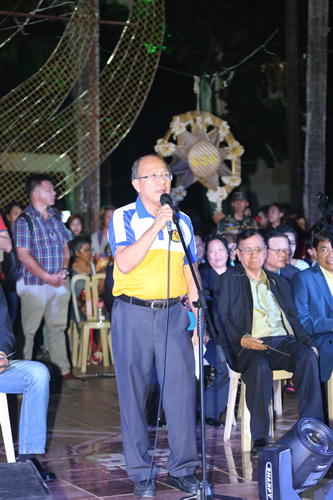
CPU President, Dr. Teodoro C. Robles, highlighted Christ as the center of the CPU Festival of Lights and Music.

Celebrating the Light of Life—The 2018 Festival of Lights and Music was attended by Centralians and guests who flocked to Central Philippine University to witness the switching on of “Christ Lights @ Central” at the Centennial Walkway on December 7, 2018.

The Festival of Lights and Music is an annual tradition of the University that has gone on for 27 years. The celebration ushers in the yuletide season and is an invitation to the alumni all over the globe to revisit the campus, rekindle their Central Spirit, and most importantly, celebrate Christ as the foundation and guiding light of CPU.
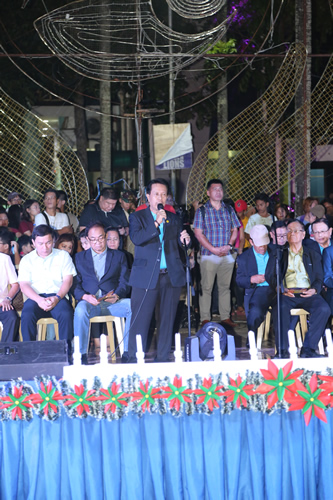

Engr. Isagani J. Jalbuena, President, CPU Alumni Association Inc. and Over-all Chairman, 2018 Festival of Lights and Music @ Central thanked the entire CPU community for their unconditional support to the events and programs of the CPU Alumni Association Inc.

Serenading the crowd and leading the gathering music was the CPU Symphonic Band with Mr. Ascension O. Bautista, Band Director, conducting. The invocation was then led by Rev. Cris Amorsolo V. Sian, Senior Pastor, University Church. It was followed by the singing of the Philippine National Anthem and the Alma Mater Song, with Ms. Crista S. Huyong, Coordinator, CPU Cultural Affairs Office, conducting.

For the Christmas greetings, Engr. Isagani J. Jalbuena, President, CPU Alumni Association Inc. and Over-all Chairman, 2018 Festival of Lights and Music @ Central, thanked the CPU community for their love of and support to the activities of the CPUAAI. He also highlighted that Christ is foremost at the center of the festival: “I would like to thank everyone who made this production successful. [We always hold emphasis that Christ is the Light of life and the center of this event.]”
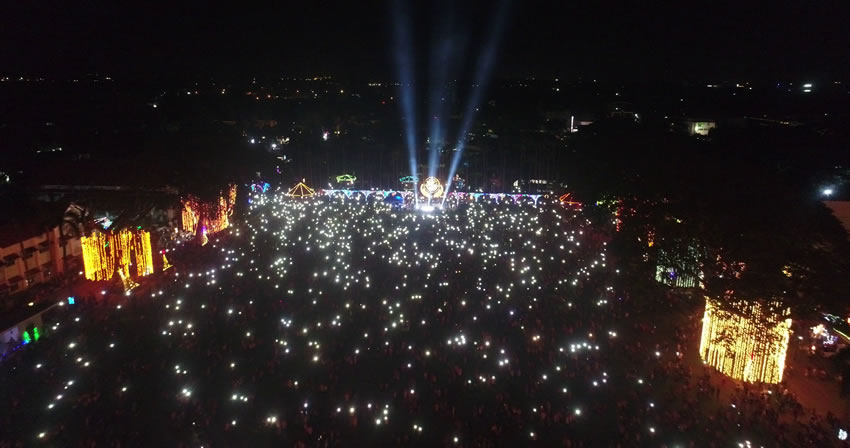

A sea of stars – more than 20,000 people came to witness the switching on of “Christmas Lights @ Central.”

CPU President, Dr. Teodoro C. Robles, welcomed Centralians and guests and acknowledged Christ as the center of the celebration. He also commended the CPU alumni here and abroad for representing Christ and CPU in their workplace: “We are thankful that you are able to share with us your precious time in celebrating the beginning of Christmas. [But] don’t think of this as just entertainment. This is to symbolize the celebration of the birth of our Savior, Jesus Christ and also, as part of the lights all over the world, our alumni who are serving many communities in different capacities.
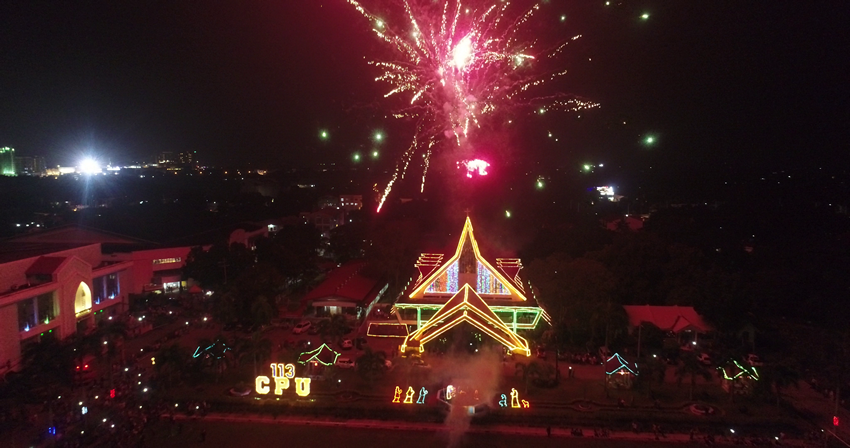

Celebrating the Light of Life—The 2018 Festival of Lights and Music is a testimony of God’s faithfulness to CPU.

Hon. Demy P. Sonza, Board Member, 2nd District, on behalf of Iloilo City Governor, Hon. Arthur R. Defensor Sr., extended the greetings of the provincial government. In his message, Hon. Sonza thanked CPU for conducting events that promote Iloilo. He also recognized the CPU Festival of Lights and Music as a tribute to Christ, the sole reason for Christmas: “This is a celebration of Christ who came as the Light of life. This evening, the CPU community is switching on [a representation] of the greatest gift our God has given us, Jesus Christ. God, our Father, gave His only son that whosoever believes in Him may not perish but have eternal life.”

Hon. Sonny M. Angara, Senator, Republic of the Philippines, in his message, recognized the cultural and historical role of the university in Iloilo City: “[CPU] is such an important part of the community, being a historic school.”

The speeches were followed by a special dance number by the CPU Stereo Swaggers.

After which, one by one, Dr. Robles; Atty. Von Lovel C. Bedona, Chairman, CPU Board of Trustees; Engr. Jalbuena; Hon. Angara; Hon. Jeffrey P. Ganzon, Vice Mayor, Iloilo City; Ms. Junel Ann P. Divinagracia, Iloilo Tourism City Officer, on behalf of Hon. Jerry P. Trenas, Congressaman, Iloilo City; Mr. Gilbert Garcia, former Brgy, Captain of South Baluarte, Molo, on behalf of Hon. Joe S. Espinosa III, Mayor, Iloilo City; Mr. Dominador Co, Executive Assistant to the Mayor; Mr. John Michael A. Suelo, President, CPU Republic; and Mr. Rodaniel G. Sevilla, 2018 CPU Alumni Homecoming King,  officially switched on the lights.

The main entrance of the university was lit, followed by the Administration Building, the flagpole area, the Smile Hill, the different college and department buildings, the trees and ornamental plants leading, finally, to the University Church. The switching on of lights is accompanied by Christmas carols played by the CPU Symphonic Band and a 15-minute fireworks display. An estimated crowd of 20,000 plus Centralians and guests attended the said opening.
Sen. Sonny Angara visits CPU

By Keziah G. Huelar


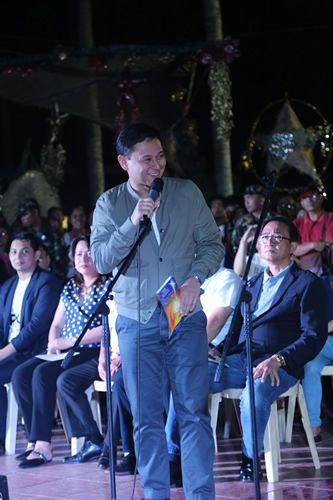
Sen. Sonny Angara addressing the CPU crowd during the 2018 Festival of Lights and Music.

Hon. Juan Edgardo Manalang Angara, widely known as Sen. Sonny Angara, visited CPU during its Festival of Lights and Music opening with the switching on of “Christ Lights @ Central” and induction of its CPU Alumni Association officers at the CPU Campus on December 7, 2018.

He, together with CPU President, Dr. Teodoro C. Robles; CPU Board of Trustees Chairperson, Atty. Von Lovel D. Bedona; CPUAAI President, Engr. Isagani J. Jalbuena; and other CPU and city and provincial executives switched on the Christmas lights and officially opened the 2018 Festival of Lights and Music @ Central.

With a deep love for Ilonggos, his wife, Elvira “Tootsy” Echauz-Angara, being an Ilongga, Sen. Angara shared his appreciation of the city and of CPU by familiarizing himself with the culture and history: “I love the warmth of the Ilonggo people. I feel very much welcomed here and I come here a lot. Today, I see how much [CPU] is an important part of the community because of its history and location.”

The senator also commended the growth and development of the city, highlighting that so much has changed since his last visit to Iloilo: “There has been a renaissance in Iloilo, [it] has been known as the Queen City of the South and Iloilo and CPU have that history not many have.”

As the Committee Chair of the Ways and Means and Local Government, Sen. Angara foresees more competitive workforce and industry that can compete in the ASEAN Region by providing more opportunities for investors: “We’re trying to lower corporate income taxes to attract more jobs. Our advantage is our people, our skilled young population. We want to be able to compete [among the] ASEAN [nations]. Especially [because we] have a common market, [we] can have a free market of goods and people.”

As a lawmaker, Sen. Angara makes it a goal to be informed of what is happening at the grass roots level: “You should have a good network of people in the locality. You just don’t rely on politicians. You also talk to civil organizations.”

Remembering his father, Sen. Edgardo J. Angara, he talked about the late Angara’s influence as a public servant: “Many times, if I had a problem, I would think how [my dad would] approach the problem. His work ethic, his values, taught me that the job of a lawmaker is to open doors for people [so] that they can walk through. It’s up to them to walk through that door but you have to open doors that are closed to them. That’s the main thing my father taught me.”

Sen. Angara is the co-author of  Republic Act 10653 which raises the take-home pay of Filipino workers by increasing the tax exemption cap for the 13th month pay and other benefits from P30,000 to P82,000; Republic Act 10708 or the Tax Incentives Management and Transparency Act (TIMTA)—a law that aims to promote transparency and accountability in the grant and administration of tax incentives to registered business entities; Republic Act 10754 or the VAT Exemption for Persons with Disability; RA 10699 or the National Athletes and Coaches Benefits and Incentives Act; the Free College Law and the Unified Student Financial Assistance System Act (UNIFAST); the Magna Carta for Women; and others.

Hopevale Martyrs continued to study while in hiding

By Francis Neil G. Jalando-on


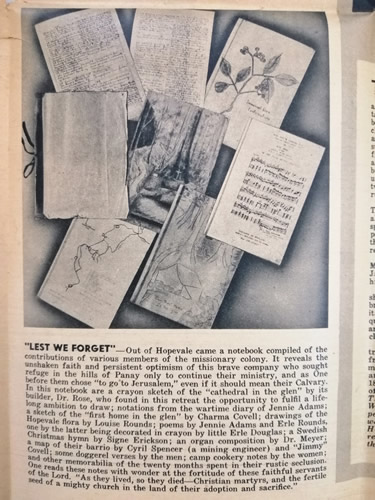
In the Cathedral in the Glen, our missionaries devoted their study of faith, flora and fauna.

How do we learn lessons? For most of us, we read books and study in schools like Central Philippine University, a school which ranked #18 in the country and #1 in Western Visayas with two CHED Centers of Excellence and four CHED Centers of Development.

While the American Baptist missionaries were in Hopevale, they read books to continue their learnings. After they were executed on December 20, 1943, one of the things that were recovered were their books. The list included novels such as the classic Count of Monte Cristo by Alexander Dumas and books on insight such as Prayers of the Social Awakening by a prominent figure in the Social Gospel movement, Walter Rauschenbusch. There were also those containing stories and poems. The topics varied from Christianity and religion to history, economics, biography, the sciences, as well as technology. All in all, there were 100 books about multiple topics that they read, and were later recovered.


Amidst the war, the American Baptist missionaries were able to write poems, compose songs and draw portraits inspired by their refuge in Hopevale.

Aside from reading books, they also observed their surroundings and learned from it. One of the Hopevale Martyrs, Jennie Claire Adams, a missionary nurse who was assigned to work in the Capiz Emmanuel Hospital, made a poem about a “Forest School.” She gave this poem to the three American children who were in Hopevale on February 1943. These three boys, Erle Douglas (son of American missionaries Mr. Erle Frederick Rounds and Mrs. Louise Cummings Rounds), Johnny and Terry (sons of Mr. Mark Walsh Clardy and Mrs. Fern Clardy, Americans who sought refuge with the missionaries) were bayoneted to death on December 20, 1943. Their young lives ended tragically, and they never got the chance to study at Central Philippine College again.

Here is the poem that describes the rich lessons that these three boys learned in a “Forest School”:

“Have you watched a butterfly in the rain

Or heard a tree frog’s glad refrain?

Have you waded in the brook on a sunny day

And gathered snails along the way?

Have you chased a lizard away from the chicks

Or watched the monkeys’ funny tricks?

Have you watched them scamper for berries and fruit?

Did you think their antics clever and cute?

The baby clinging so tight to its mother

The others chattering and chasing each other.

Have you dug in a hole for a crab or two

Or watched to see what a tagpo could do?

Can you tell a boyud from a centipede

Or budjapa leaves from a common weed?

Have you seen an orchid or a wild fig tree?

Can you name one half of the things you see?

How many bird names can you tell?

Have you found a cicada’s empty shell?

Have you hunted shoots from the bamboo clumps

Or gathered mushrooms from banana stumps?

Have the orchid blossoms dropped at your feet

Or the Doña Aurora flowers sweet?

Have you watched a mother bird or her nest?

Have you heard the darawidaw sing

Or watched a blackbird on the wing?

Have you noticed the way a hawk will fly

Like a diving plane against the sky?

Have you seen a wild pig or a deer

Or watched the hunters with net and spear?

If you have not learned these lessons sweet

Your education is not complete.

Let’s wander into the forest shade

Where a little hut of grass is made.

We will sit on a log or a bamboo stool

And learn many things in the forest school.

There are many things we ought to know

That in a forest live and grow.”

Rev. Dr. Francis Rose monitored the CPC campus during wartime

by Francis Neil G. Jalando-on


Rev. Dr. Francis Howard Rose was optimistic to come back and re-open Central Philippine College after the war. Although he did not see the campus rise again, his legacy is forever built in the tradition of excellence and faith of Centralians.

Before the American Baptist missionaries evacuated into the mountains of Tapaz, Capiz in 1942 due to World War II, Rev. Dr. Francis Howard Rose was the Acting President of Central Philippine College from 1938 to 1941. Before that, he was the Acting Principal of Jaro Industrial School from 1914 to 1916.

There were no classes during the war and technically, one can say that Dr. Rose was still the president during that period. Indeed, Dr. Rose still acted in that capacity when he continued to monitor what was happening in the campus.

In a letter dated May 18, 1943, marked “Strictly Confidential” (due to the content of the letter that described their whereabouts), and addressed to a certain “Dr. Decker and all at the Rooms” of the American Baptist Foreign Missionary Society in 152 Madison Avenue in New York, Dr. Rose narrated a report of what happened to the campus of CPC.


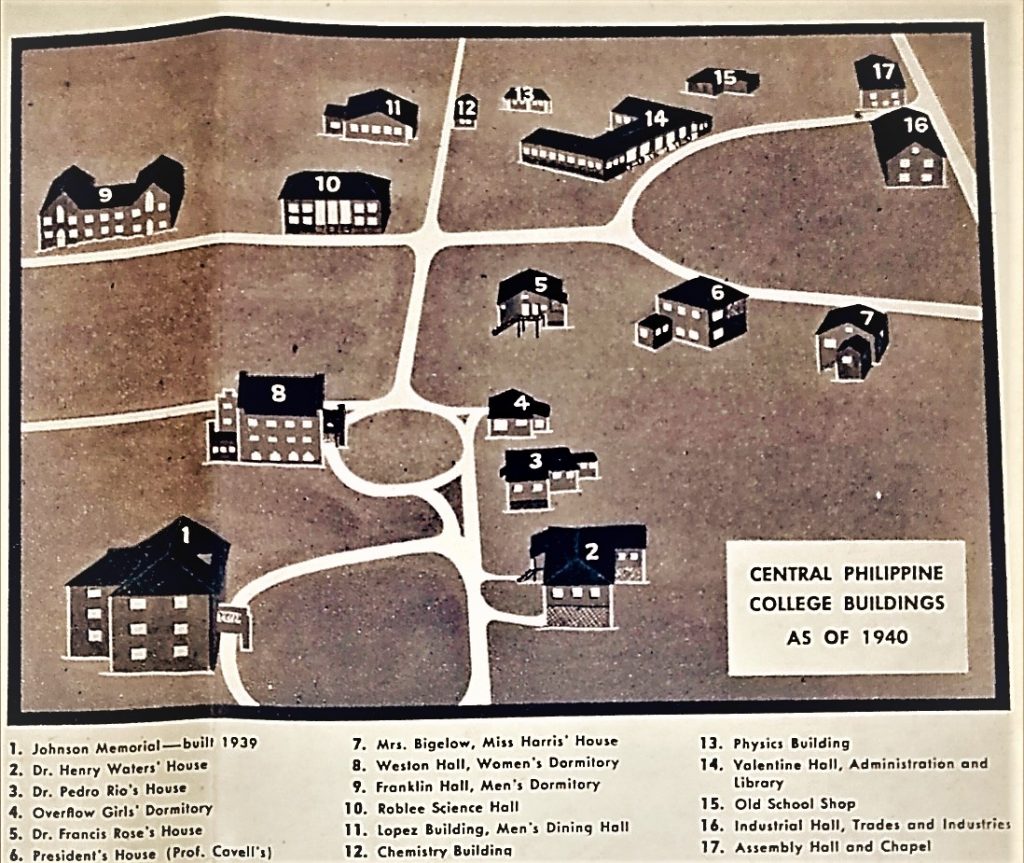
An aerial map of Central Philippine University before World War II.

Here is a portion of his letter:

“At C.P.C. the following have been destroyed: 1. All our books in both libraries, together with the buildings housing them, i.e., the building named after the former Industrial School head (note: Rose was referring to William O. Valentine Hall) and the new building named after the first head of the B.M.T.S. (note: Rose was referring to Anna V. Johnson Hall). These constitute by far our greatest loss, equal perhaps to 50% of our C.P.C. property evaluation, or close to $200,000, as our recent inventory rated them. These were burned by our guests; 2. The chapel has been burned with all furniture except what had been previously looted, together with our new three-manual pipe organ (note: this was located in what is now the Kabalaka Center/Medical Laboratory Clinic); 3. Industrial Hall containing our campus lighting plant and our mission press (which was almost half paid for) (note: this was located in front of the Half-moon drive near the Lopez Jaena St.); 4. The frame house near the road (where the widow lived); 5. The concrete residence, gutted by fire. Nos. 2,3,4 and 5 were burned under the “scorched earth” policy – folly in this instance, as only a very temporary gain was obtained. Still undamaged are, therefore: 1. The Dining Hall for men; 2. The Men’s Dormitory; 3. The Women’s Dormitory; 4. The Science Building; 5. The temporary chemistry building; 6. The temporary Physics Building (new), and 7. Four remaining missionary residences, all frame houses. Apparatus and equipment has very likely been taken or looted.”

Dr. Rose was optimistic that they would come back and re-open CPC after the war. He wrote, “However, there is still a considerable amount of property available for reopening our work when hostilities are over, as the above list will suggest, especially to you who have seen the campus.” But this was not meant to be. Seven months after the letter was sent, the 11 American Baptist missionaries, including Dr. Rose and his wife Gertrude, were martyred because of their Christian faith in Hopevale, Tapaz, Capiz.

Dr. Rose was never able to report anymore because of his death. But after the war, the reported undamaged buildings—Weston Hall, Franklin Hall, and Roblee Hall—were later destroyed during the war.

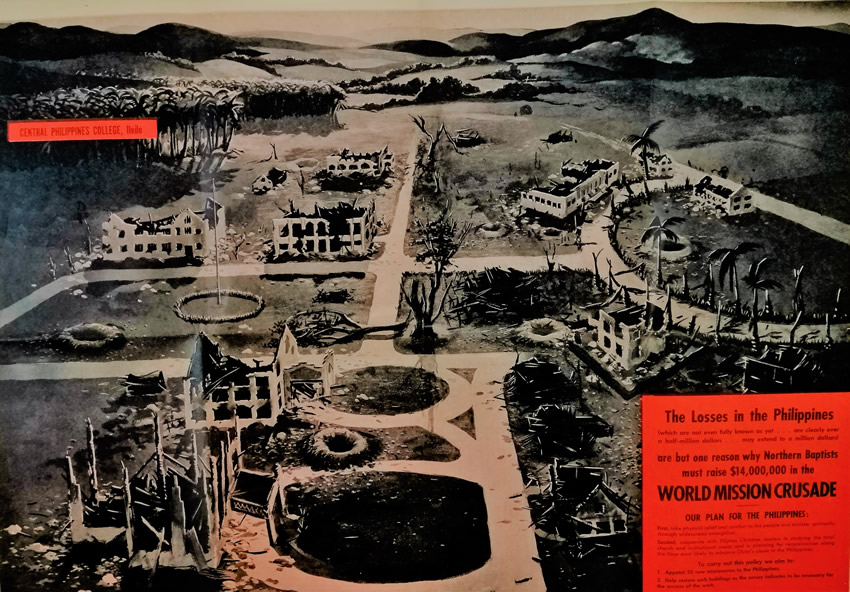
Recently, some archived materials have come to light: an aerial sketch of the campus of Central Philippine College before World War II and another aerial sketch of the destruction that happened in the campus after World War II. What is very interesting in the campus map sketch is that House No. 5 was the home of Dr. Rose and his family. It was destroyed during the war. This was the main reason why the CPC administration decided to build the original Rose Memorial Hall in the very place where Dr. Rose lived. It was indeed a fitting memorial.

On December 17-20, 2018, the Convention of Philippine Baptist Churches will spearhead the Hopevale Diamond Commemoration to be held in Central Philippine University, Filamer Christian University and in Hopevale, Tapaz, Capiz. If you attend, you will surely hear more stories about these American Baptist missionaries and their Filipino counterparts.

The difficult trail to Hopevale

By Francis Neil G. Jalando-on


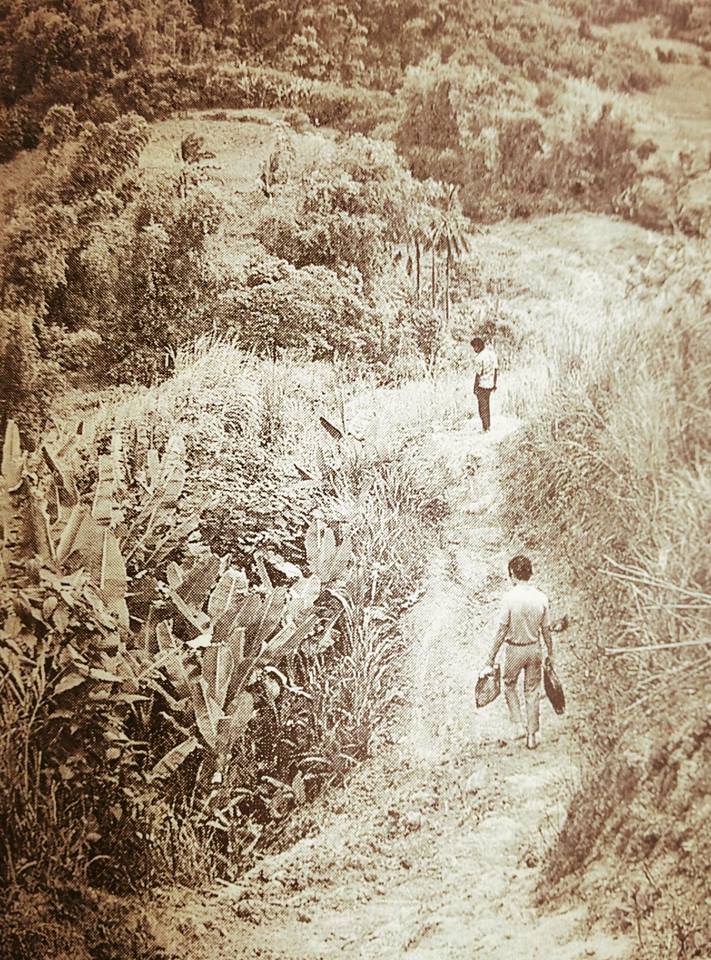
The wandering trail that leads to the Hopevale Memorial is visited every year by Convention of Philippine Baptist Churches members.

As of 2018, the trail to Hopevale, Tapaz, Capiz is still difficult. However, there are now ongoing efforts to make a Hopevale pilgrimage trail so that people can go there to contemplate and reflect on what happened there. Looking back, more than 75 years ago, one can only imagine the way to Hopevale as the American Baptist missionaries evacuated to that area to hide during the war. There were no trails yet, no pathways to lead them where to go. They were trailblazers who were walking with faith and hope that the war would soon end so that they could go on with their missionary work.


Reflection and remembrance – the trail is a reminder that God paves the way for those who trust in Him.

Jennie Claire Adams, a missionary nurse, evacuated together with 10 other missionaries from then Central Philippine College, Filamer Christian College, and Capiz Emmanuel Hospital between April to May 1942.

On July 12, 1942, Missionary Adams penned a poem relating the trail to Hopevale to her own life’s pathway. Here is her poem:

Life’s Trail on my Wanderings

Through all my wanderings

My Lord has cared for me,

Although the path ahead,

I could not always see.

What though my feet should slip

What though my strength should fail

My Savior holds my hand,

While climbing up life’s trail.

The rocks may bruise my feet,

The thorns may pierce and tear

And heavy seems the load

That I am called to bear

But O, the heavy load,

Christ bore on Calvary

His nail-scarred hands and feet,

Were wounded there for me.

Then I should not repine

A little grief to bear

While He walks by my side

And I am in His care.

His promise I will claim

And trust Him day by day,

He never will forsake

He leads me all the way.

More than a year after writing this poem, specifically on December 20, 1943, Adams and 10 other American Baptist missionaries were martyred because of their Christian faith in Hopevale, Tapaz, Capiz.

On December 17-20, 2018, the Convention of Philippine Baptist Churches will spearhead the Hopevale Diamond Commemoration to be held at Central Philippine University, at Filamer Christian University, and in Hopevale, Tapaz, Capiz. If you attend, you will surely hear more stories about these American Baptist missionaries and their Filipino counterparts.

American Baptist missionaries lived in grass huts in Hopevale

By Francis Neil G. Jalando-on


Where safety and quietness reign, with room for thoughts and dreams and hopes, of peace on earth again – the poetic words of Jenny Claire Adams describing their refuge in Hopevale.

On April 10, 1942, Mrs. Ruth Meyer, wife of Dr. Frederick Meyer, wrote on her diary, “Bataan has fallen.”

The night before, April 9, 1942, 3rd Lieutenant Norman Reyes read the announcement written by Captain Salvador P. Lopez. The opening sentences read, “Bataan has fallen. The Philippine-American troops on this war-ravaged blood-stained peninsula have laid down their arms. With heads bloodied but unbowed, they have yielded to the superior force and numbers of the enemy.”

Six days later on April 16, 1942, the diary of Mrs. Meyer had this entry: “The enemy invaded Capiz and occupied the Mission compound. Frantic times. Night of the bodega looting.” On the following days, the missionaries and nurses in Capiz decided to evacuate and escape to the interior towns or into the mountains. They decided to scatter. On April 25, 1942, Mrs. Meyer wrote, “Evacuated our group to the Ula-ugan River. A new experience to live in grass huts—a feeling of safety in our seclusion.”

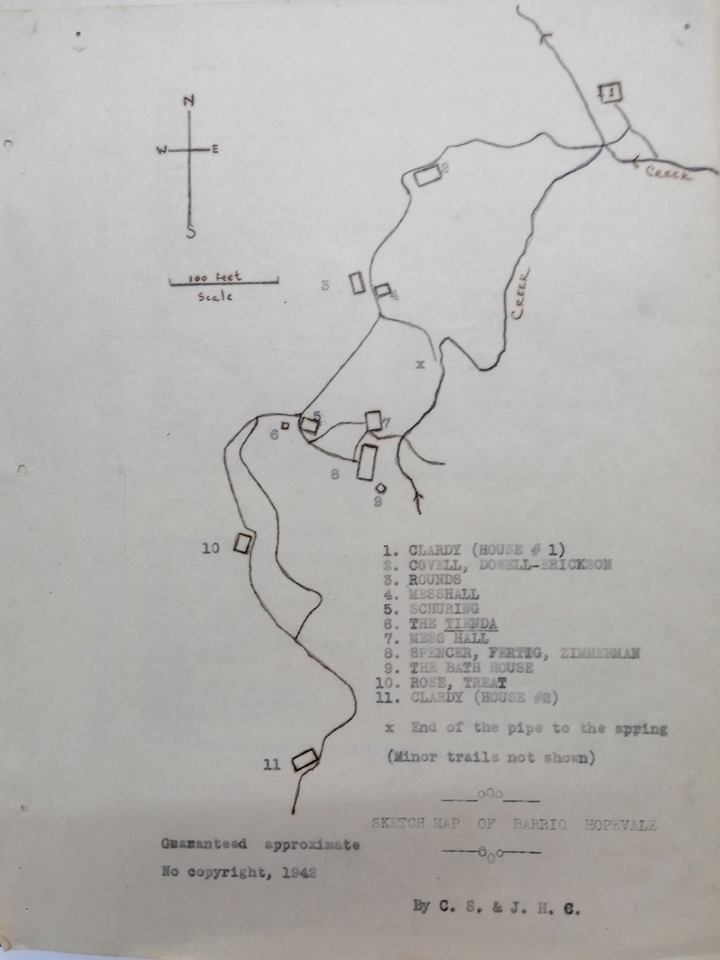
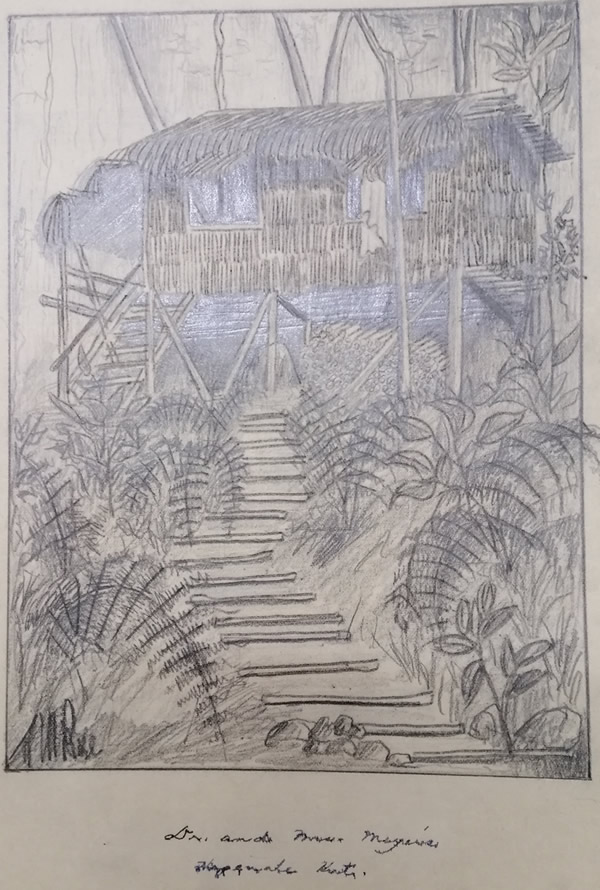
Later on, when the American Baptist missionaries settled in Hopevale, Tapaz, Capiz, they built grass huts as their home. Dr. Francis Howard Rose made a pencil drawing of their grass hut. The original drawing of their home in Hopevale is preserved in the Archives Section of the CPU Henry Luce III Library.

Jenny Claire Adams, a missionary nurse in Capiz Emmanuel Hospital, was with Dr. Frederick and Mrs. Meyer when they evacuated to Hopevale. Upon settling in their place of refuge in the mountains, she wrote a poem, dated May 23, 1942, describing the grass hut of the Meyers. She gave this poem to Mrs. Ruth Meyer on the occasion of her birthday on November 19, 1942.

Hut in the forest

By Jenny Claire Adams

There’s a little grass hut in the forest

Where the trees stand stately and tall,

Lifting their leaves to the sunlight

And catching the raindrops that fall.

Entwined by garlands of verdure

And flowers fragrant and fair

Boughs decked with clinging orchids,

Like flowers in the hair.

O little grass hut in the forest

Where birds gay-feathered and free

Join their sweet songs in medley,

Sharing their joy with me!

Bright fireflies flitting at night time

Like twinkling stars in the trees

Give a cheerful glow to the darkness,

And life to the spicy breeze.

O quiet grass hit in the forest,

With a crystal brook running near,

Gurgling and tumbling over the rocks

Its water so cool and clear

Lovely green ferns grow unhindered

Along the moist rocky banks,

Begonias lift blossoms dew-covered

And offer their silent thanks.

O peaceful grass home in the forest

Where safety and quietness reign,

With room for thoughts and dreams and hopes

Of peace on earth again.

O lovely ravine in the forest,

Where we patiently wait for a while,

Till the noise of the battle is over,

And we end our long exile.

More than a year later after writing this poem, on December 20, 1943, the 11 American Baptist missionaries were martyred because of their Christian faith in Hopevale, Tapaz, Capiz.

On December 17-20, 2018, the Convention of Philippine Baptist Churches will spearhead the Hopevale Diamond Commemoration to be held in Central Philippine University, Filamer Christian University and in Hopevale, Tapaz, Capiz. If you attend, you will surely hear more stories about these American Baptist missionaries and their Filipino counterparts.

Dr. Meyer continued his medical mission amidst wartime

By Francis Neil G. Jalando-on


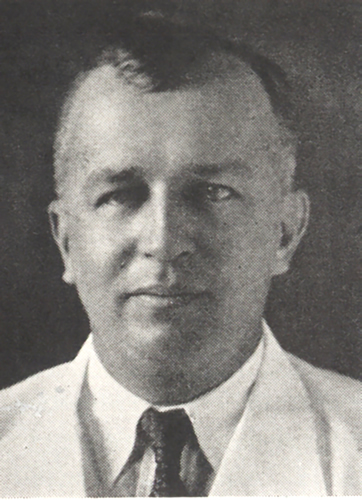
Dr. Frederick Willer Meyer – a devoted friend, a faithful servant and a Hopevale martyr. 

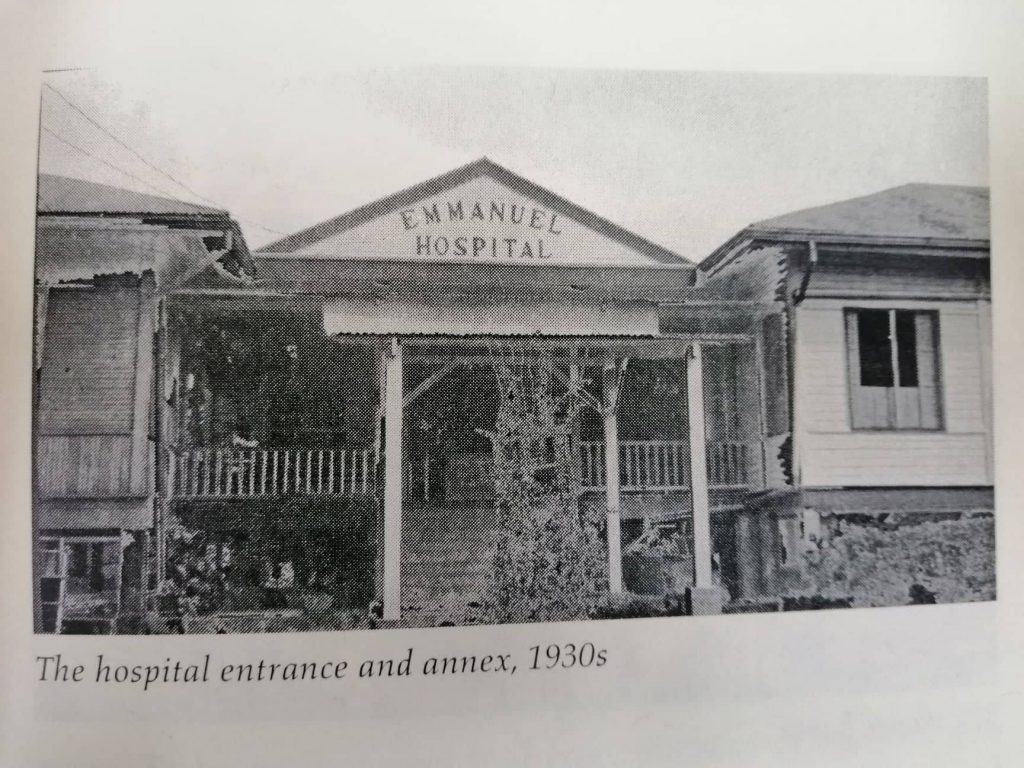
Dr. Frederick Willer Meyer, a medical doctor, his wife Ruth Violet Schacht Meyer, and a nurse, Jennie Claire Adams, were assigned as missionaries in the province of Capiz, specifically, to the Capiz Emmanuel Hospital before World War II broke out.

In one of Dr. Meyer’s letter to Dr. J.W. Decker of the American Baptist Foreign Missionary Society based in 152 Madison Avenue, New York, dated May 17, 1943, he described with a hopeful spirit the underlying foundation as to why they continued the healing of ministry of the Lord Jesus Christ even in the midst of war. He wrote, “Our hospital—therefore—with no equipment, hardly any medicines with its missionary residue of personnel in grass hut buildings in jungle, sends our home folks loving greetings. We carry on—because of Emmanuel—God with us.”


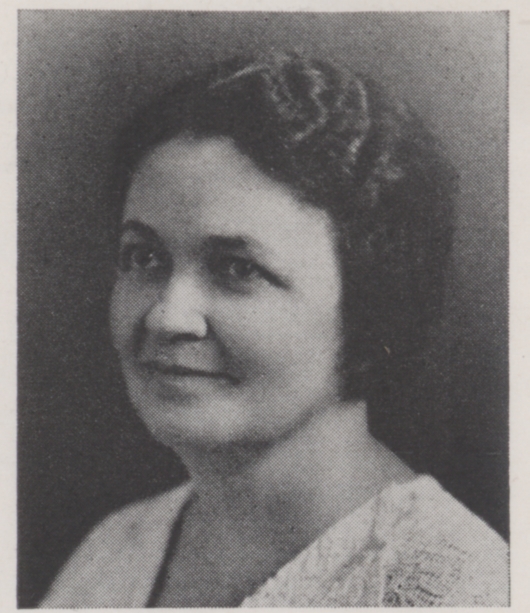
Ruth Violet Schacht Meyer, the devoted wife of Dr. Meyer.

The American Baptist missionaries who chose not to surrender during World War II fled to the mountains of Tapaz, Capiz in a place they later called Hopevale. Dr. Meyer acknowledged Dr. Francis Howard Rose’s creativity in finding a place of worship. He narrated, “Dr. Rose’s beautiful outdoor cathedral is the Sunday meeting place.” In a separate letter dated May 18, 1943, Dr. Rose wrote that it was Mrs. Ruth Violet Schacht Meyer who would always sing during the Sunday worship service, and it was Dr. Meyer who provided a folding organ for their music.

Dr. Meyer recounted that due to the scorched-earth policy of the Japanese Imperial Army, their place was burned, some buildings, as well as, sadly, also their library, were destroyed. He likewise wrote that their compound (Capiz Emmanuel Hospital and Filamer Christian Univerisity) were used by the Japanese forces as a fort. Because of this, the hospital was evacuated into the interior parts of Capiz. Despite all these, the healing ministry continued. They scattered the hospital beds to different hill clinics and Dr. Meyer and Ms. Adams would do a lot of consultations after some long hikes. Dr. Meyer reported that the “residue of Emmanuel have been of daily service to the district; medical missions can carry on even in very trying surroundings.”


An old picture of Capiz Emmanuel Hospital.

A physician-surgeon by profession, Dr. Meyer was the Director of Capiz Emmanuel Hospital in Capiz from 1919 until 1943 with furloughs between 1924 to 1925, 1930 to 1931, and 1937 to 1938. He performed as a one-man physician-surgeon-administrator every day. In 1938, he was adopted by the Capiz Provincial Board as “a worthy son of Capiz.”   He also founded the Capiz Medical Society.

Despite of the war, the missionaries found peace and calm assurance because of their faith. Dr. Meyer described their life in Hopevale: “The forest is a wonderful residence, monkeys, gaily colored birds all around us; sympathetic mountaineers, loving barrio folks, make our lives happier… We are very poor in earthly possessions, but God inspires our neighbors to be of great help, so there has been plenty of food.”

At the end of his letter, Dr. Meyer hoped that when peace would come, he could bring the whole story to the world. He assured his son, Milton Frederick, Jr., that they are praying for him and his brothers and that the couple missed and love their children very much.

Sadly, a few months later, on December 20, 1943, the 11 American Baptist missionaries, including Dr. Meyer and his wife Ruth Violet, were martyred because of their Christian faith in Hopevale, Tapaz, Capiz.

On April 12, 2002, Capiz Governor Vicente Bermejo, posthumously gave a plaque to the Meyer family for Dr. and Mrs. Meyer’s “selfless service” to the province of Capiz.

On December 17-20, 2018, the Convention of Philippine Baptist Churches will spearhead the Hopevale Diamond Commemoration to be held in Central Philippine University, Filamer Christian University and in Hopevale, Tapaz, Capiz. If you attend, you will surely hear more stories about these American Baptist missionaries and their Filipino counterparts.

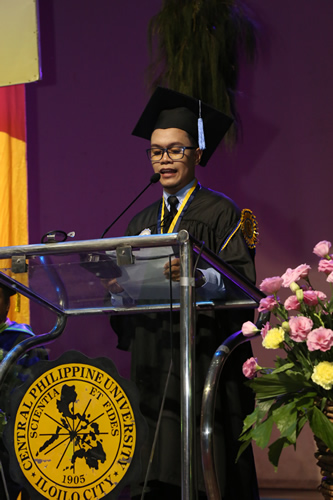
Response on behalf of the Graduates given by Bryan Paul L. Espinosa, magna cum laude, delivered during the CPU 91st Commencement Exercises of the Colleges at the Rose Memorial Auditorium on November 11, 2018


Bryan Paul L. Espinosa, magna cum laude, BSEd Major in English, encouraged his fellow graduates to excel for the Lord.

To our University President, Dr. Teodoro C. Robles, our guest speaker, Dr. Rumalie Corvera, all members of the Board of Trustees, the administrators, the deans, our professors, the staff, our parents, family, friends and most especially, my dear beautiful and handsome graduates, hello! Good afternoon! How are you?

Today is 11.11. In the field of numerology, 11.11 is an auspicious sign, a sign of enlightenment and insight, a way for the Universe to tell us that we are on the right path towards growth and development. Among the Chinese, 11.11 is that one day in a year for people who can’t find true love to celebrate being single by wallowing themselves in online shopping. But to us, midyear graduates, 11.11 means a celebration of success. Reaching this point was not easy, and I am sure that we all share common stories. We all had days when we walked like zombies towards school for lack of sleep just because we stayed up in the wee hours of the morning to comply with a requirement. We also experienced having to see our friends graduate ahead of us because we failed a subject although we tirelessly did our best. Whatever the case was, for a moment, remember what you have gone through to reach this point. Indeed, it was not easy but it was worth it.

My journey towards this point was not a walk in the park either. I had to go to school in the daytime and to avoid adding burden to my parents, I have to go to work at night as an online English teacher from 6 till around midnight. Thank God, I didn’t have 7AM classes or I’d be dead. Because of my hectic schedule, the only time I really had to study was at school. I’d go to the library or find a room in OV or NV to study during my vacant periods. I promised to do my best in my studies even if that meant being awake for 24 hours—which happened only twice. However, despite how strong my spirits always were, I could never evade exhaustion. I remember while waiting for my next class, I would go to the Half-moon field, find a bench, and ask a friend to watch over me as I nestled comfortably with my bag as my pillow.

I was also a board member of the student council in my third year, a team captain of the COED debate society for two years, and thank God, I am still alive. I was relentless and still very healthy. I had goals and I was ambitious. I worked hard and it paid off. But mind you, I didn’t accomplish what I did on my own.

You see, I have amazing, great friends who are mostly work students; they added color to my stay here in Central. I have passionate teachers who inspired, motivated, and encouraged me—the faculty of the College of Education and our dean, Prof Junsay, the faculty of the English Department, and the other departments. Outside Central, I have my ever-supportive parents, my siblings, my Uncle Leo, the Espinosa and Landar families. I also have my Chinese students who have become my friends. Definitely, I thank the heavenly Father for giving me the best opportunities and for preparing me for them by sending me these amazing people. Indeed, I didn’t reach this far on my own.

Graduates, we didn’t reach this far on our own. So, on behalf of all the graduates, dear Central Philippine University, I thank you from the bottom of our hearts. You have been our home for the past three to five years. The memories we shared will always be here in our hearts. To our parents, teachers, and friends, do know how much you all mean to us.

Dear Graduates, God sent many wondrous people who shaped us and fostered in us values and principles to live by. So, as we go on our way and dance to the hymn of life and ascend towards success, let us not forget to breathe a prayer of gratitude for those who helped us get here and there. When setbacks and failure drop by however, let us embrace them and hear their whisper. Listen to what failures have to say, and drop them to your feet as fertilizers to help your branches bear flowers and fruits. Life was never easy and it will never be, but when we plant seeds of faith and hope in our hearts, we’ll grow wings and fly. As we take flight, remember not to compare the span of your wings with others, for you will wither in vain, because there will always be someone better and lesser than yourself. Fly at your own pace and at your own time. Enjoy the view. Appreciate. Love. Live. Always affirm that as we glide through the skies, God sends the wind, both cold and warm, to prepare us for a journey farther from where we are now. We have braved many storms, but we have also witnessed many rainbows. We have been prepared for many great things like gold molded in a burning furnace into precious jewelry. Now, we emerge victorious as instruments of God’s divine will.

Dear graduates, with everything that we have gone through, and now finding ourselves here, we deserve a loud applause! Do tell yourselves and your seatmates, “You are glorious.” Remember to embrace every single person who helped you find your pedestal and who helped you stand where you now find your feet. Let us remember to keep alive and burning the spirit for learning that Central has nurtured in our hearts, and let this burning fire be like a star that reaches and guides many people. Let us fill our cup to the brim with optimism and gratitude, with love and faith in the Lord. Let us carry Central in our hearts, and wherever our wings may bring us, let us remember God.

We are here because of Him. He has always been here. Right now, He is here, celebrating and enjoying this victory with us.

Congratulations, dear Centralian graduates! Let us all spread our wings and fly!

Plant a Tree, Plant a Life

By Cyrus A. Natividad


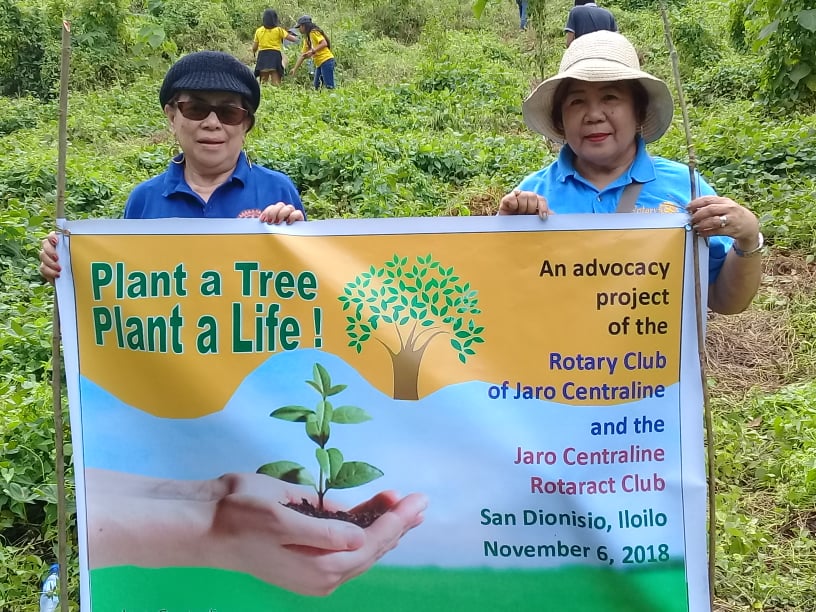
RCJC President Evelyn Rose A. Catilo (right) and RCJC Auditor Rtn Dolores Mendiola at the Tree Planting site in San Dionisio, Iloilo.

The CPU-Rotary Club of Jaro Centraline once again showed its commitment to serve. On Tuesday morning, November 6, CPU-RCJC, in partnership with the Community Environment and Natural Resources Office (CENRO-Sara Center), carried out a tree-planting activity in San Dionisio, Iloilo at Barangay Pangi. The youth organization, CPU-RCJC Rotaract, was also involved in the said activity. Seedlings were provided by the Department of Environment and Natural Resources.

The tree-planting activity is in response to the government’s reforestation program. More than 800 hectares is dedicated for the project of reforesting and generating income for several community volunteers including the Pangi Active Community Development Association (PACDA).

DENR provided seedlings to the volunteers who will receive PhP 25.00 for every tree that grows in 10 months. The CPU-Rotary Club of Jaro Centraline waived the incentive and instead asked that it be awarded to PACDA.

The successful activity was fully supported by Mr. Rene Grande Abordo, Officer in Charge of CENRO Sara Area of Operation.

CPU– RCJC President Evelyn Rose Abordo Catilo promises more such programs and projects to be pursued this year. “The CPU-RCJC will have more community service activities since the partnership of our club and Central Philippine University has benefited many communities in Iloilo,” Catilo said.

CPU-RCJC has been reaching out to recipient communities and organizations on projects such as medical and dental missions, education, and other advocacies.

The missionary zeal of Rev. Dr. Francis Howard Rose

Francis Neil G. Jalando-on


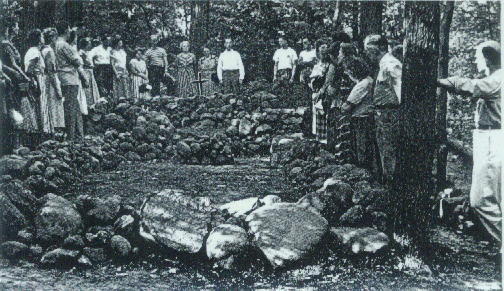
American Baptist missionaries and CPBC members visited the “Cathedral in the Glen” after World War II.

In a letter dated May 18, 1943, marked “Strictly Confidential,” addressed to a certain “Dr. Decker and all at the Rooms” of the American Baptist Foreign Missionary Society, Rev. Dr. Francis Howard Rose described their situation in the mountains of Tapaz, Capiz after 13 months.

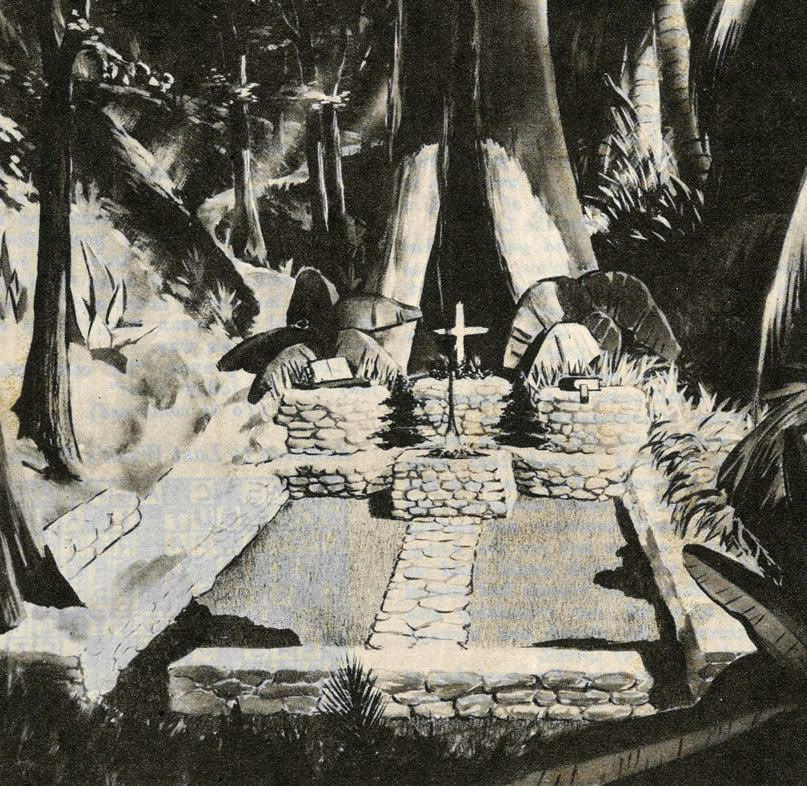
Dr. Rose, a gifted artist, described the setting of the “Cathedral Glen Community Church”—a label that he himself made. He wrote, “Near our camp there is a beautiful deep dry gorge with giant trees growing in it. Here during the first weeks of our pilgrimage I built seats, altar, pulpit and lectern, all of wild or uncut stones and small rocks and we have conducted worship in this place every Sunday…” Furthermore, he narrated, “Several missionaries take their turns at conducting worship and the doctor’s wife sings solos frequently. A folding organ is provided by the evangelistic missionary from the Doctor’s compound.”

As a pastor, Dr. Rose continued his pastoral ministry in “Hopevale.” He recounted, “One Easter Sunday, I had the joy of baptising a thirteen year old boy, son of one miner couple here, in a beautiful shady pool in a little mountain river that flows by not far from our camp. About a hundred attended this Easter service.” He even visited some nearby churches: “Church work is going on in town and country with remarkable fortitude on the part of pastors and congregations. Last Sunday I preached at a country church about eight miles from the nearest enemy outpost and a half mile from the provincial highway; eighty people present, mostly women and children, however.”


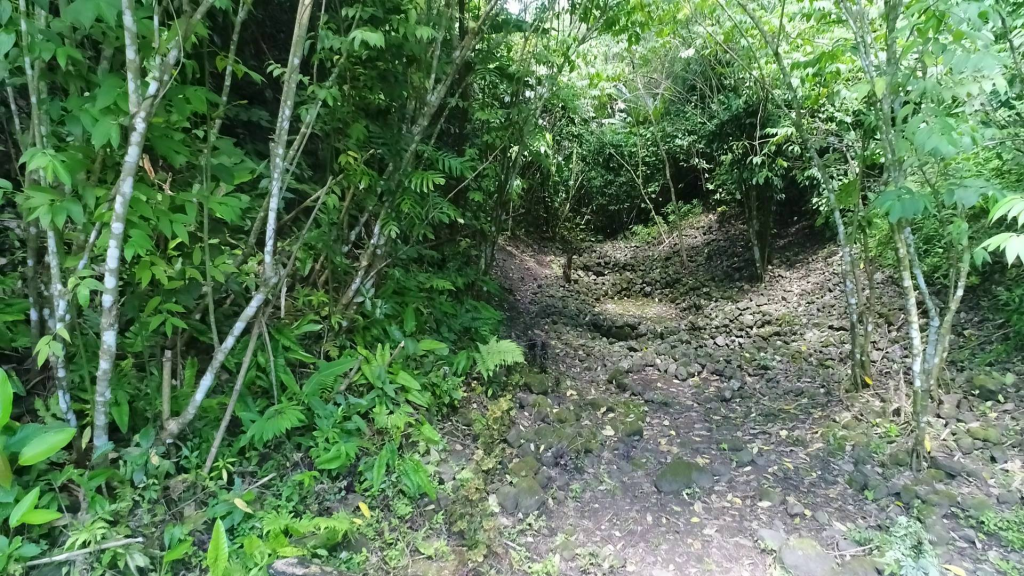
This pathway and lush forest stood witness to the testimony and faith of the Hopevale martyrs.

As the American Baptist missionaries were with fellow evacuees, Dr. Rose praised the generosity of the Filipinos who were with them. He wrote, “They have proven to be very helpful to us and all are of a disposition pleasing to live with even in such trying circumstances. Some of them have lent us money liberally to help us along until we are able to draw our salary again… The national protestant Christians near here have been extremely helpful in getting supplies for us… Some have risked their lives for us, not once nor twice, but some several times.” He described what they were eating: “We have always had plenty of food here; some canned goods, but mostly native things, with plenty of good fruits in season, pork and carabao meat occasionally, as with sweet potatoes and sweet corn.”

The letter signed by Francis and Gertrude Rose ended with these words, “God be praised it so well with us to date. Love to all.”

Seven months after the letter was sent to New York, USA, the 11 American Baptist missionaries, including Dr. Rose and his wife Gertrude, were martyred because of their Christian faith in Hopevale, Tapaz, Capiz.

On December 17-20, 2018, the Convention of Philippine Baptist Churches will spearhead the Hopevale Diamond Commemoration to be held in Central Philippine University, Filamer Christian University and in Hopevale, Tapaz, Capiz. If you will attend, you will surely hear more stories about these American Baptist missionaries and their Filipino counterparts.