The Remedy of Trust

By Keziah G. Huelar


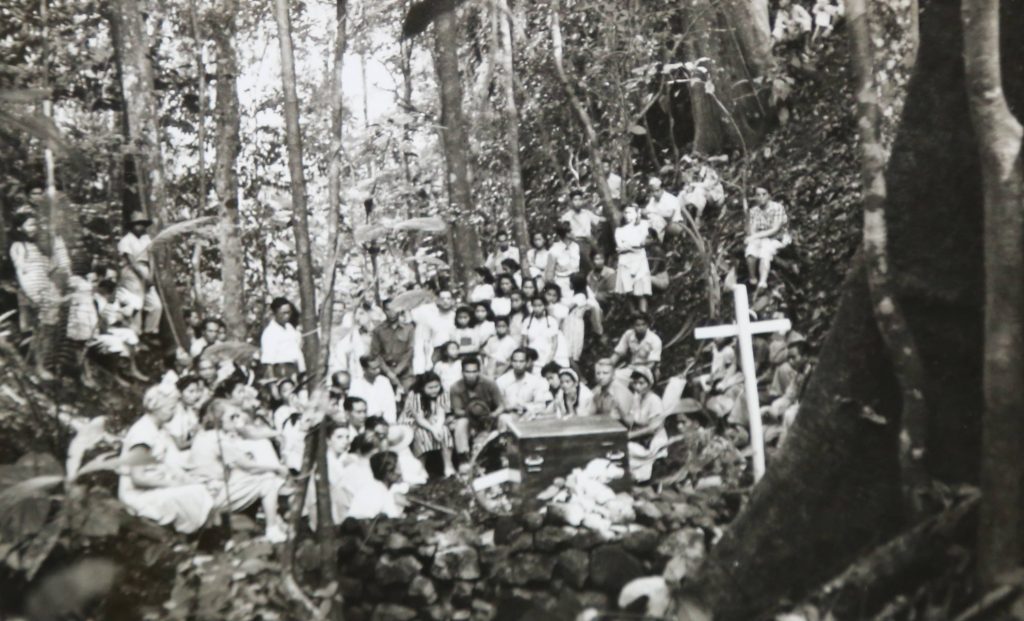
After World War II, CPBC members started a tradition of pilgrimage to the Cathedral in the Glen also known as the Hopevale Memorial.

At some point of our lives we have considered giving up. Our soul seeks rests, our hearts wishes to retreat into solitude. There are things in this world that may be too much for us to bear—the pressures of life consume us all. Yet despite these moments of denouement, we persevere not only as a necessity but as a response to the choices we make.

Such a choice has been testified through the life of the Hopevale martyrs. Up to the end of their lives, they chose to persevere and trust in the Lord—11 men and women of faith—whose lives we now emulate as we reflect upon pursuing a life of faith with fervor.

In one of her poems entitled “I am weary of war”, Jennie C. Adams, one of the martyrs, talks about a longing for rest and ease;

I am weary of war and its worries,
The life in a forest wild
The haunts of a lovely hermit,
A captive too long exiled
Ever ready to flee still further
When the warning cry is heard,
Whether that cry be official
Or proves but a rumored sword
The vigilance ever required
When enemy troops grow bold,
Or when thieves alone molesting,
Or but termites, mildew and mold.

I am weary of war and hatreds,
When a friend may become a foe;
A nation, a neighbor or brother
Into a traitor may grow.
Need presses hard upon people
One grasps from another’s pain
Out of some poor man’s misery
A neighbor grows greedy for gain.
One clamors for share and profit
A place, a position or fame,
One lives or dies a hero,
His brother lives in shame.

I am weary of war and its sufferings,
The nameless dreads and fears,
The needless wounds and heartaches
The women’s bitter tears
The children in rags growing hungry,
Hunger on every hand,
No schools for their idle hours,
With pestilence stalking the land.

I am weary of war and destruction,
A land once so verdant and fair,
Busy and prosperous and peaceful
Is scorned and seared and bare,
What wanton waste of nations
Whose country with beauty was filled,
The gems of civilized nations
That years have required to build.
The treasures of homes and nations,
That ages so dearly have brought
By ruthless war’s destruction,
In a moment is put to naught

How hard it must have been for the Hopevale martyrs to retreat to the mountains, away from the comforts of civilization. They found themselves in the midst of primitive living where they made an altar and a pulpit from rocks and wood at hand.

But oh, how hopeful they were! In the heart of the Japanese-American War, we had missionaries gathering together to worship God in the midst of all the doubt and uncertainty. On Easter Sunday of 1943, it is said that 100 worshipers, both Americans and Filipinos, were in attendance to glorify God. Several missionaries took turns in conducting the worship services.

How beautiful it is to worship God in the midst of trial—like Paul and Silas when they prayed and sang songs of praise in prison, when Stephen exclaimed, “I see heaven open and the Son of Man standing at the right side of God!” right before those who were about to stone him, and when the Hopevale martyrs asked for an hour to pray and to sing hymns before they were led to the mountain top and killed.

Whenever life drags you down, the remedy is to praise God, to trust in His promises. At times, the greatest blessing is not the fulfillment of the promise but the ability to believe and to hope that what God has spoken will come to pass. As what 2 Corinthians 1:20 says, “For all the promises of God in Him are Yes, and in Him Amen, to the glory of God through us.”

Adams, in her poem “Let me live bravely,” published in the 1946 Centralite, encourages us to learn to trust God before, during, and after life’s troubles.

“Let me serve faithfully;
Content with work to do, Whatsoever life may bring,
I’m serving others well, Thus do I serve my King.
May I not weary grow, When tasks seem burdensome,
Nor turn aside distraught, Before life’s work is done.
As others served, proved true, Let me be faithful too.”
In focus at Looking Forward: Rev. Joniel Howard H. Gico

By Cyrus A. Natividad


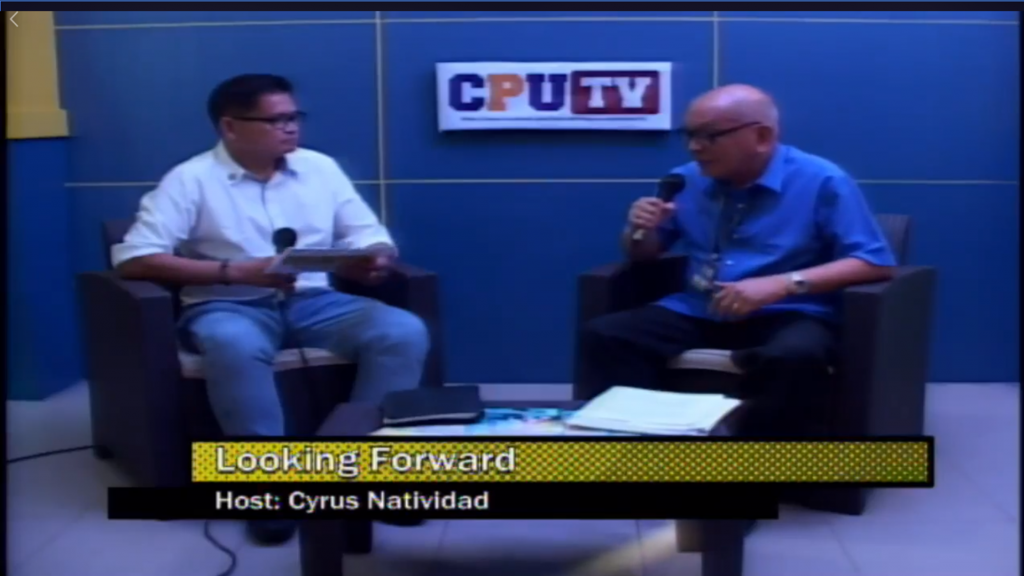
CPU Vice President for Student Affairs (VPSA), Rev. Joniel Howard H. Gico talks about his years of service in CPU.

CPU Vice President for Student Affairs (VPSA), Rev. Joniel Howard H. Gico, was a guest in Looking Forward, a program on CPUTV Facebook Channel, last Friday October19. The 30-minute interview included issues on the functions of the VPSA office, its achievements and programs for the students and the student organizations.

Gico’s position as VP for Administration before his appointment as VP for Student Affairs effectively contributed to his efficient management of the affairs of students inside the campus, which include discipline, strategies, and parameters on student organizations and fraternities (qualifications and restrictions on student groups ) before they are certified as members of a standard student organization by the VPSA Office.

Gico was upbeat on the development and progress of students in the University, and that of the student organizations. He also talked on the achievements of the current CPU student republic (CPUR) to which he gave credit for the many achievements it has done for the students and the campus.

In support of CPUR, the VPSA provides certain policies that enable CPUR officials to make programs for the benefit of the campus and student organizations. The VPSA deems it important to support any and all qualified student organizations in relation to its programs and projects in the University.

Reverend Gico is a graduate of Mechanical Engineering from Central Philippine University in 1976 and has worked with La Carlota Sugar Central and San Miguel Corporation Packaging Division as shift engineer. He has been the president of the Convention Baptist Bible College – before coming back to serve Central Philippine University.

He is a continuing student taking up Doctor of Management with focus in Development Management at CPU. He is a graduate of Master of Theology from the Southeast Asia Graduate School of Theology (SEAGST) and Master of Divinity Major in Pastoral Ministry, College of Theology, Central Philippine University.

He is currently the Chairman of Iloilo Mission Hospital Construction Committee, a member of Iloilo Mission Hospital Corporation and Central Philippine University Corporation, among others.

The Cathedral in the Glen: What does it look like?

By Francis Neil G. Jalando-on


A replica of the Cathedral in the Glen in Greenlake Conference Center in Wisconsin.

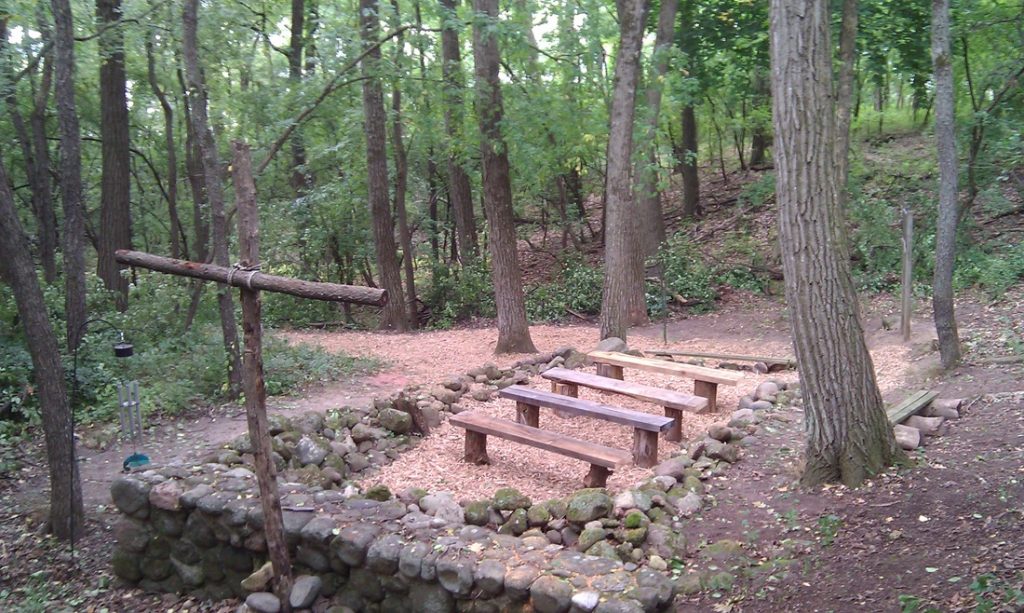
Situated in Central Philippine University, between the Henry Luce III Library and the Rose Memorial Auditorium, is the Hopevale Memorial. There stands a creative rendition of the Cathedral in the Glen, an open-air church designed and built by Dr. Francis Howard Rose in Tapaz, Capiz. A similar replica of the Cathedral in the Glen can be found in Green Lake Conference Center of the American Baptists Churches in Greenlake, Wisconsin.

Can you picture the Cathedral in the Glen or the Hopevale Memorial in your mind? What does it look like?

Four months before the 11 American Baptist missionaries were martyred because of their Christian faith in Tapaz, Capiz on August 16, 1943, Jeannie Claire Adams, a missionary nurse assigned in Capiz Emmanuel Hospital, described the Cathedral in the Glen through a poem she dedicated to Dr. Francis Howard Rose entitled “Woodland Cathedral.”


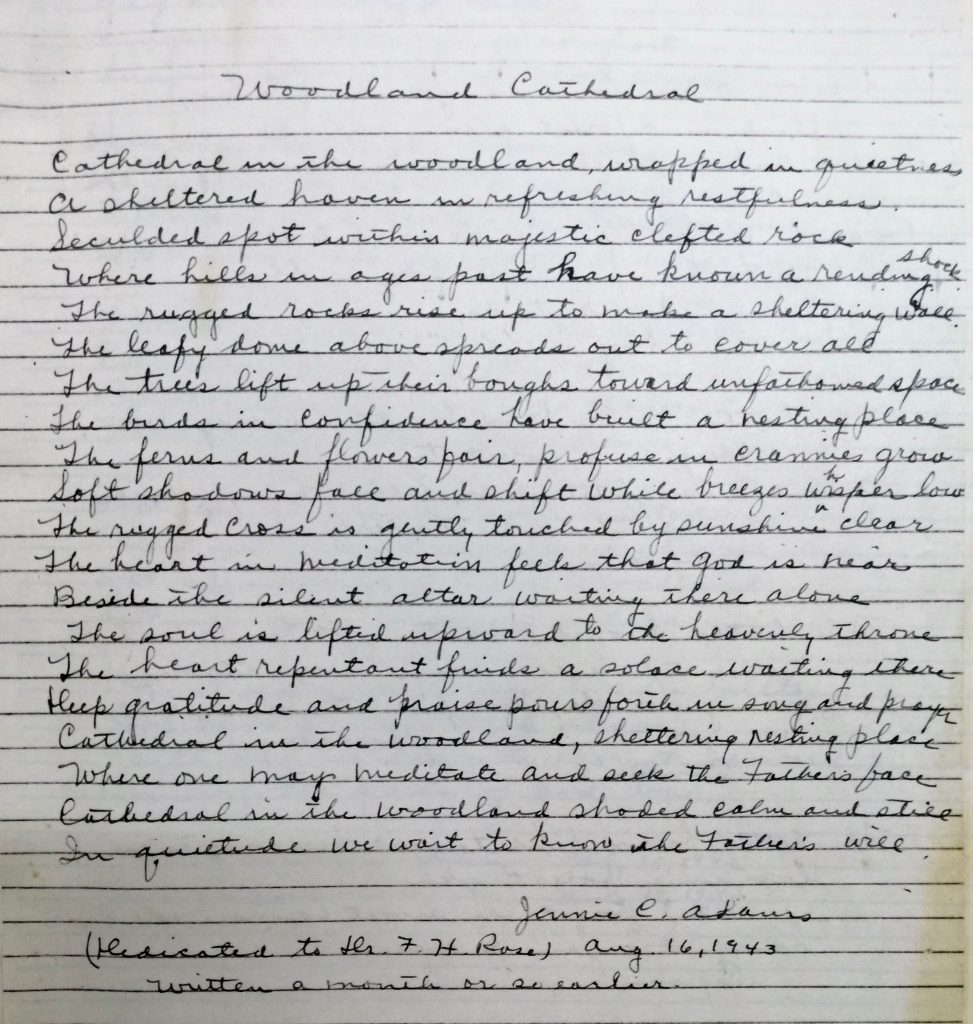
The original poem entitled Woodland Cathedral handrwritten by Jennie Claire Adams in 1943.

Here is the poem:

“Cathedral in the woodland wrapped in quietness

A sheltered haven in refreshing restfulness

Secluded spot within majestic clefted rock

Where hills in ages past have known a rending shock

The rugged rocks rise up to make a sheltering wall

The leafy dome above spreads out to cover all

The trees lift up their boughs toward unfathomed space

The birds in confidence have built a nesting place

The ferns and flowers fair profuse in erannies grow

Soft shadows fall and shift while breezes whisper low

The rugged cross is gently touched by sunshine clear

The heart in meditation feels that God is near

Beside the silent altar waiting there alone

The soul is lifted upward to the heavenly throne

The heart repentant finds a solace waiting there

Deep gratitude and praise pours forth in song and prayer

Cathedral in the woodland, sheltering resting place

Where one may meditate and seek the Father’s face

Cathedral in the woodland shaded calm and still

In quietude we wait to know the Father’s will.”

Louise Reid Spencer also described the Cathedral in the Glen in her book Guerrilla Wife. She and her husband, Cyril L. Spencer, a mining engineer, took refuge with the American Baptist missionaries in Hopevale. Unlike the 11 martyrs, they were able to escape and were subsequently rescued by the Allied Forces.

Here is what Louise Reid Spencer wrote in her book:

“The HOPEVALE CATHEDRAL was a gem of outdoor architecture… Dr. Rose built the cathedral himself every stone of it. It was open to the sky, and, in its contours, formed by nature herself. The gulley where we had first taken refuge was transformed, by the loving labor of Dr. Rose, into a vision of beauty and inspiration. Descending from the caingin down the slope to the level clearing between the two walls of rock. One entered the cathedral back the altar and walked the length of the church to be seated. Here, at the back, was a stone bench where about six people could sit. Straight up the center of the church from that bench ran the aisle, a stone walk wide enough for two persons to go abreast. It led to a small rectangular block of stone, where each Sunday Clifford built a fire. A few feet beyond this firebox there were three stone steps leading up to the stone altar. About three feet before the altar, one on each side, were two oval stone reading desks. Standing straight on the center of the altar was a rugged wooden cross.

At each side of the church was a stone bench where twelve people can sit. There were [sic] a hard-packed dirt terrace bordered with stone which ran in front of all three benches, the small one at the back and the two at the sides. This terrace spread out in a fan shape at the front of the church, and the organ could be placed on either side. The organ lofts were planted with wild forest bloom, so that the organist sat in a living bower of color. At the base of the altar and the reading desks Dr. Rose had also planted shrubs.

The floral decorations for the top of the altar were arranged each Sunday by Mrs. Covell, who had studied the art of flower arrangement when she lived in Japan.  It seemed ironic to me that while we hid from our brutal enemy, one of his ancient arts contributed to the decoration of our House of God.

Dr. Rose had spent months on this cathedral, his only tools his hands, a small shovel, and a chisel. He had created something so beautiful that we caught our breath when we came to it.  But he was never finished with the work of building it. He added and perfected its details constantly. The maintenance alone was quite care [sic], for there were always fallen leaves to be brushed away, and rocks and stones that crashed down from the precipitous walls on either side to be cleared and their damage repaired.

I went often to cathedral and sat there quietly for a while, watching the trees above wave gently in the breeze, watching the small, agile monkeys, high up, swinging in the vines that twined among the trees. It seemed an entirely different place the gulley we had come to as a hide-out on the 18th of April 1942.  The transformation was complete.  It truly seemed the house of God, and from it we drew confidence and faith.”

On December 17-20, 2018, the Convention of Philippine Baptist Churches will spearhead the Hopevale Diamond Commemoration to be held in Central Philippine University, Filamer Christian University and in Hopevale, Tapaz, Capiz.

If you wish to attend, you will surely see the area where the Cathedral in the Glen was constructed in Hopevale, and also the replica in Central Philippine University.

The United Nations celebrations: What it is to us

Insight
by Cyrus A. Natividad


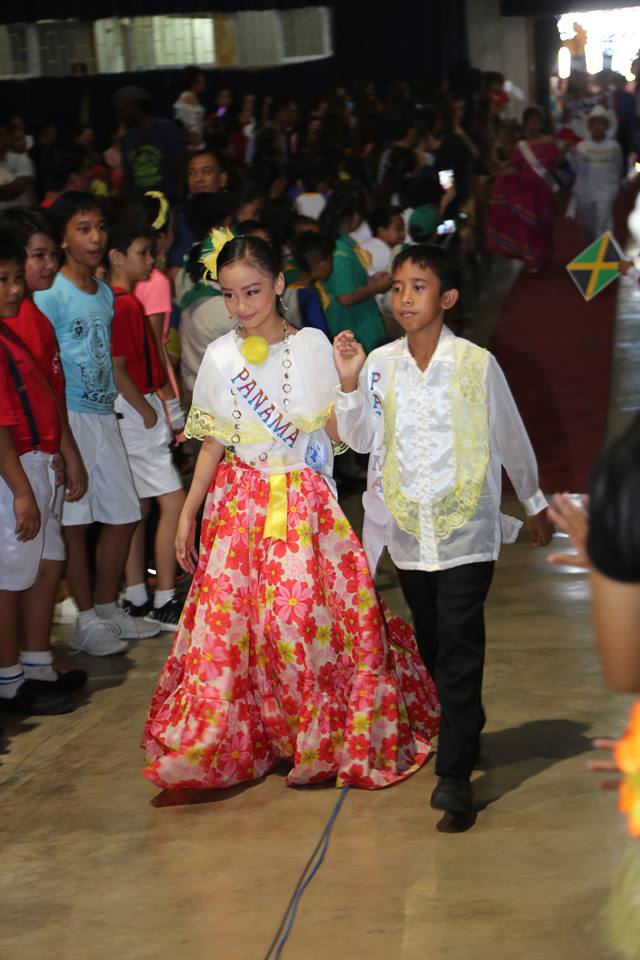
CPU’s United Nations Celebration highlights the value of respect and appreciation of all cultures.

Before we had the parade of nations—the parade of costumes and international flags to celebrate the United Nations—there was the League of Nations. The League of Nations differed from the United Nations in that the former was consisted of European countries. Due to its inefficiency, most of the small member nations pulled out of the organization, which was formed after Word War I and whose main objective was only to prevent war.

On October 24, 1945, in San Francisco California, the United Nations organization was founded. Its aim, among others, is to prevent another international conflict after World War II.

One of the aims of the United Nations is the United Nation’s Development Plan (UNDP), which focuses on issues relating to poverty. UNDP understand poverty as “not having education.” As of late, the UN reports that about 1.3 billion all over the world are affected by multi- dimensional poverty, which includes education. According to the report, half of them are kids or teenagers.

This understanding of poverty is one of the reasons why we celebrate the United Nations with the representations of colorful costumes and flags of different nations. Through these symbols, we wish to espouse solidarity for world peace and eradication of ignorance.

No only these celebrations but through the University’s overall mission and vision, CPU wishes to take part in providing workers and citizens who are educated and contribute to the development of the world and of humanity.

Re-telling Values: The Story of Tatay Cris Cyril Villanueva Balladares

by Keziah G. Huelar


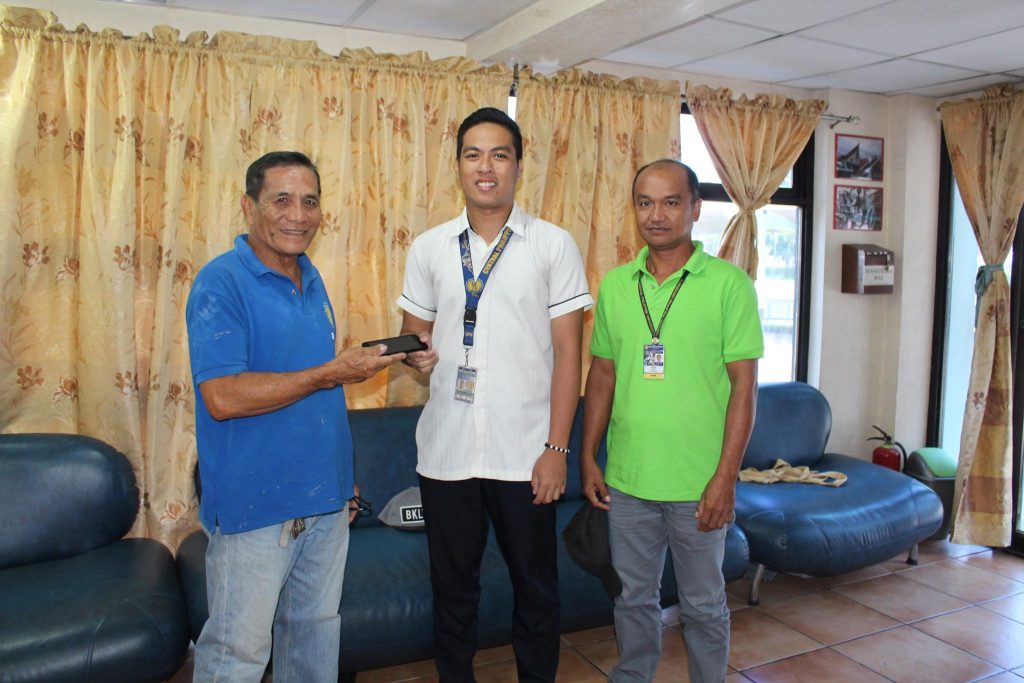
The life of Tatay Cyril reminds us that beyond success, a man of good character is more worthy of praise. In Photo: Tatay Cyril together with James Estinico, Head, Grounds Department, returning the lost cell phone to its owner, Leo Torres, a CPU BS BABM student.

Despite being 64, the only crease one can see in Tatay Cyril’s face is a friendly smile, greeting teachers and students in the campus. One could always see him cleaning the College of Engineering Building, even the Big Field. Simple these tasks of cleaning the school campus may be, but they have contributed to CPU being named as one of the most beautiful campuses in the country by www.buzzfeed.com in 2015.

Tatay Cryil started serving Central Philippine University in 1985 as one of its grounds personnel. For 33 years, Central Philippine University became his second home. Here, he labored for the dreams for his children and for his love for Christ, believing that all things work together for good to those who love God and to those who work according to his purpose.

“Una ko di nga ubra sa CPU pamanday, ilis sang mga sin sang atop, pang- lawn mower,” Tatay Cyril shares. According to him, he chose to work at CPU because the University was known to be a good employer: “Ang mga opisyales sa CPU mahapos isturyahon. Gapasalamat guid ko okay anom ko ka bata diri nag-graduate sa CPU. Biskan ang apo ko gani diri na naga-eskwela.”

As part of the ground personnel, he has seen how students would be negligent in throwing their garbage: “Hambal ko gani sa mga upod ko dapat malipay kita kay tungod gapang-haboy ang mga estudyante. Amo na nga may ubra kita. Pero dapat man nga maging responsabli kita sa kung ano nahaboy ta.”

Of his six children, three graduated from the College of Hospitality Management, two from the College of Business of Management, and one from the College of Education. Tatay Cyril shares that he wanted his children to study in CPU because of the high standard of education and the free-tuition program CPU has allotted for its faculty and staff.

After his wife died in 2001, Tatay Cyril raised his children alone: “Sang 2001, nabungguan sang jeep akon asawa. Dala niya to ang amon agot sang gin-bongguan siya, pero nabuhi ya ang amon agot kay gin-pahigad siya sang asawa ko.”

Tatay Cyril met his wife in Iloilo in the 80s. She was working as a manicurist when they fell in-love: “Ga-manicure siya sa isa aka parlor. Suki niya na day Ma’am Libo-on kag Ma’am Padernilla.”

He never married again, sharing that after his wife died, he decided to focus all his time and effort to raise their children: “Siguro kung nang-asawa ko liwat, wala ko guid napatapos ang akon mga kabataan.”

When asked how he managed to have the strength to persevere despite the many challenges he faced in life, Tatay Cyril shares that praying and reading the Bible has been a source of encouragement and faith: “Ga-pangamuyo ko sa Diyos tapos gabasa Bibliya. Kag dapat indi mo lang pag-basahon. Kilanlan ubrahon mo man kung ano ang naka-butang. ”

In the first week of October 2018, Tatay Cyril returned a cell phone left at the SMILE Hill on the Half-Moon Drive. After getting the said phone, he gave it to the office of Rev. Francis Neil G. Jalando-on, Director of the CPU Communications Office and his former chaplain in the Grounds Department: “Pag-kita ko sa cell phone, basa siya, tapos low-battery ti gin-charge ko anay. Tapos gin-hatag ko sa Information Office sa kay Pastor Jalando-on para mabutang sa Link kag makita kung sin-o ang tag-iya.”

Tatay Cyril shares that it is common to find lost things when cleaning the campus. It has been a protocol in their office to post a lost & found announcement at their office as a commitment to be honest in all their affairs: “Halin sang una, kapin pa kung may event, may kadula gid kag gaka-bilin nga mga gamit. Ga-butang na kami announcement sa office kung may makita kami tapos gina-hatag sa Information Center.”

On October 29, Tatay Cyril will be turning 65. As for his birthday wish, he prays for good health and success for his children. Retiring next year, he hopes to study automotive through a TESDA program and to see his four grandchildren grow in faith and prayer.

CPU Clinical Laboratory: Serving the University, helping the community

by Cyrus A. Natividad


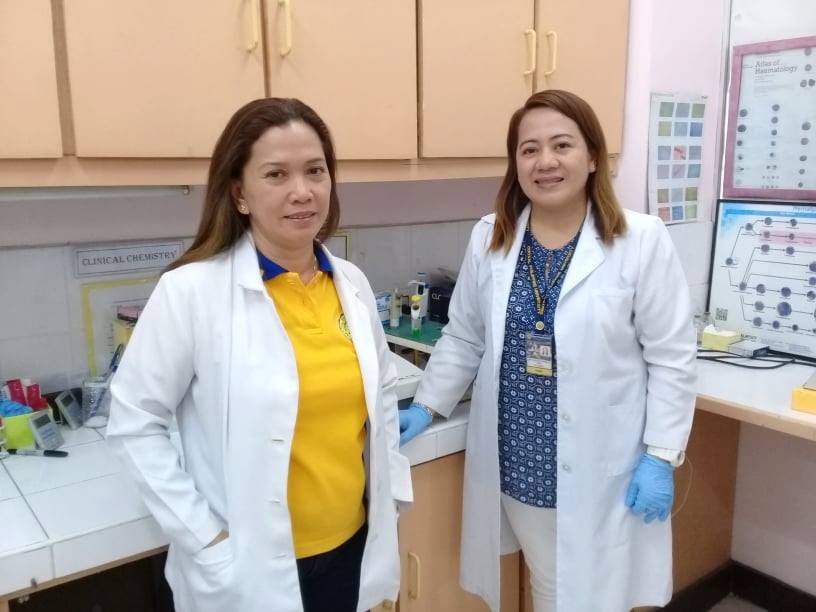
Clinical Laboratory Coordinator Mrs. Grecilda Cabral Lee (Left) and Staff Medtech Ma. Hazel Filipinas G. Villareal (Right).

The CPU Clinical Laboratory is under the direction of the clinical pathologist, Dr. Mariam Margarita Lena, who administers the day-to-day operation of the laboratory. Dr. Lena is also responsible for the in-service training of the laboratory personnel and screening for employment of qualified personnel. Dr. Lena establishes quality control and assurance procedures in order to maintain excellent service.

On the other hand, the laboratory coordinator is Mrs. Grecilda Cabral Lee, a full time senior medical technologist. Mrs. Lee’s presence while lab tests are being performed is a must although she is also readily available for personal or telephone consultations even after office hours. Moreover, staff medical technologist, Mrs. Ma. Hazel Filipinas G. Villareal, is the one that refers cases that arises in the clinical laboratory to the pathologist.

The work student assistant, also known as laboratory aides, perform several tasks needed in the laboratory, such as receiving laboratory requests and specimens, maintaining cleanliness of the laboratory, washing glassware and other instruments used in the laboratory tests, typing and recording of laboratory results and performing other  the medical technologist and pathologist.

The CPU Clinical Laboratory serves the needs of the University while fulfilling the University’s social responsibility towards the surrounding communities.

Jennie Claire Adams foresaw her martyrdom in Hopevale

by Francis Neil G. Jalando-on


A woman of faith and prayer – Jennie Clare Adams has devoted her life by serving God as a missionary nurse in Capiz Emmanuel Hospital.

Last December 20, 1943, 11 American Baptist missionaries and a little boy became martyrs of the Christian faith when they were killed by the soldiers of the Japanese Imperial Army in the hills of Tapaz, Capiz. One of these Hopevale Martyrs was Jennie Claire Adams, a missionary nurse who was assigned to the Capiz Emmanuel Hospital.

Jennie Claire Adams was fond of writing in her diary. She was also very poetic. Her record of wartime events, culled from her diary, is now known as The Hopevale Booklet. In one of the poems that survived World War II, Miss Adams wrote about the commitment of missionaries even in the face of death. Here is her poem published in the Centralite 1946:

“Let me live bravely;
For life has many battlefields, Where valor must be shown,
Many darkened corners, Where pain and fear are known,
Life calls for sacrifice, To share the highest good,
To serve courageously, Sometimes to give life’s blood.
As others lived and gave, Let me be brave.

Let me serve faithfully;
Content with work to do, Whatsoever life may bring,
I’m serving others well, Thus do I serve my King.
May I not weary grow, When tasks seem burdensome,
Nor turn aside distraught, Before life’s work is done.
As others served, proved true, Let me be faithful too.

Let me die heroically;
Steadfast in faith and calm, When that great day is near
Knowing no hour of dread, Feeling no anxious fear,
For death is but a door, Closed tight on pain and strife,
A door that opens up That we may enter Life.
As heroes die, Still brave and true, Let me die, too.”

Jennie C. Adams attended the Western Reserve University School of Nursing, Bailey Training School for Nurses and the Nebraska Wesleyan University for her nursing care education. As a missionary nurse she became the superintendent of the Capiz Emmanuel Hospital from 1923 to 1943. She also became the head of the hospital’s Training School for Nurses in 1923. She worked together with Dr. Frederick W. Meyer at Capiz Emmanuel Hospital and stayed in Capiz for twenty years up until she died in Hopevale.

It can be recalled that during the World War II, the United States Army moved the mission hospital from Roxas to a schoolhouse in Dumalag. But Miss Adams and several nurses chose to remain in Capiz the Emmanuel Hospital building to attend to patients.

On December 17-20, 2018, the Convention of Philippine Baptist Churches will spearhead the Hopevale Diamond Commemoration to be held at Central Philippine University, Filamer Christian University and in Hopevale, Tapaz, Capiz.

Who is Francis Howard Rose?

By Francis Neil G. Jalando-on


Rev. Dr. Francis Howard Rose was the epitome of the Central Spirit.

Rev. Dr. Francis Howard Rose is a very popular name in the campus of Central Philippine University. One reason may be because the Rose Memorial Auditorium was named in his honor. However, there is more to Rev. Dr. Rose than this.

He was the Acting President of Central Philippine College from 1938 to 1941. Before that, he was the Acting Principal of Jaro Industrial School from 1914 to 1916.

He was the one who designed the CPC/CPU seal in 1923. He was also the one who designed Weston Hall in 1932. He named the hall in honor of his son who died during the construction period.

He composed many of our Central Songs, and through one of these songs, he is credited with coining the term “Central Spirit.”

He was also a good fund raiser. He spearheaded the campaign for the construction of Weston Hall, Franklin Hall, and Valentine Hall in 1932.

During World War II, he was one of the 11 American Baptist missionaries who went to Katipunan, Tapaz, Capiz when the Japanese forces invaded the Philippines. He became a martyr on December 20, 1943.

Here is a martyr’s hymn entitled “Christ Died For Us–W e Die For Christ” by Rev. Dr. Francis Howard Rose, one of those who died in Hopevale.

All human progress up to God
Has stained the stairs of time with blood;
For every gain for Christendom
Is bought by someone’s martyrdom.

For us he poured the crimson cup,
And bade us take and drink it up.
Himself he poured to set us free.
Help us, O Christ, to drink with thee.

Ten thousand saints come thronging home,
From lion’s den and catacomb.
The fire and sword and beasts defied;
For Christ, their King, they gladly died.

With eye of faith we see today
That cross-led column wind its way
Up life’s repeated Calvary.
We rise, O Christ, to follow Thee!

This year is the 75th anniversary of their martyrdom. The commemoration of their faith and courage will be on December 17-20. You are all invited to go to CPU and celebrate their life and ministry with the Convention of Philippine Baptist Churches, Central Philippine University, Filamer Christian University, Capiz Emmanuel Hospital, Iloilo Mission Hospital, Capiznon Kasapulanan of Baptist Churches, Bacolod Christian College of Negros, and Antique Christian Center with our international partners: the American Baptist Churches, International Ministries, Japan Baptist Union, and Canadian Baptist Mission.

Jiggy Manicad: The truth behind the stories

By Cyrus A. Natividad


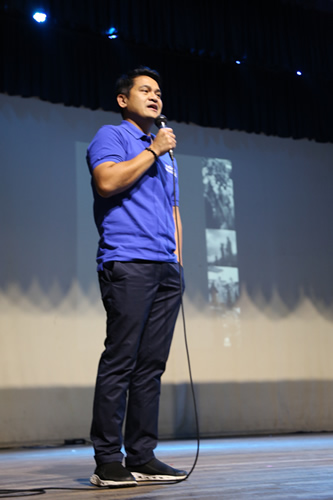
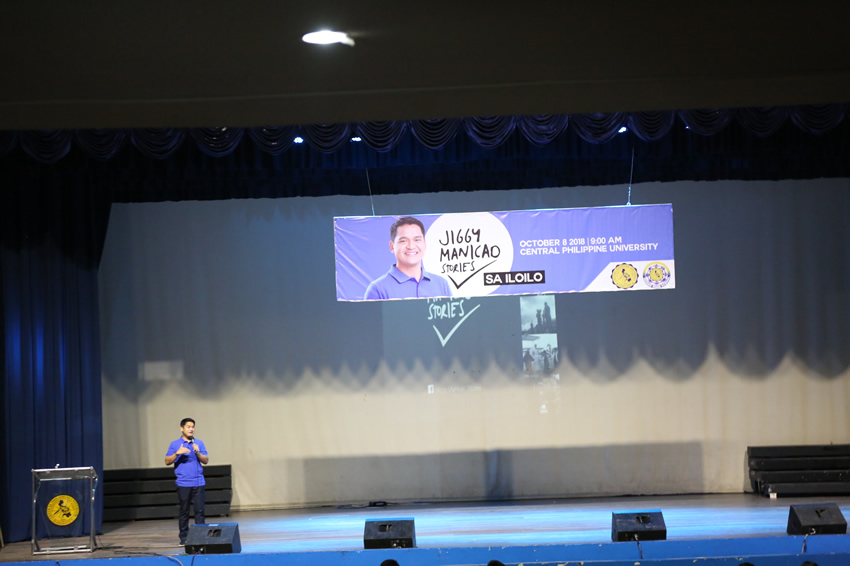
Jiggy Manicad shares the inspiration behind his stories to Centralians at the Rose Memorial Auditorium. 

The University Senior High School was privileged to hear the story of one of the country’s outstanding broadcast journalists, Jiggy Manicad of GMA’s 24 Oras. The lecture entitled Jiggy Manicad’s Stories was held at the Rose Memorial Auditorium on Monday morning, October 8, 2018.

The storyteller shared the essentials of broadcast journalism through his narrative of his experiences in the field. His encounters in the field taught him how to climb the “ladder of success” through patience, perseverance, and dedication. One of his ultimate achievements is becoming a part of the team of reporters who climbed Mount Everest.

In his own life story, Manicad endured the hardships of being his own supporter for his education and a “hunter for opportunities” for his future.

After finishing high school, Manicad was uncertain about going to college because he knew that his family could not afford to send him to school. He worked, earning from his writing and other odd jobs. He had decided to enroll in a vocational course so he could quickly help his family. However, his friends prevailed upon him to take the journalism course in UP Los Baños instead.


Manicad encourages Centralians to be storytellers.

So he could afford college, Manicad availed of UP’s Socialized Tuition and Financial Assistance Program and worked part time writing for the College Editors Guild. Life, though, was not easy for Manicad even after college. Upon graduation he worked as a production assistant/driver. His first coverage work was with ABSCBN’s Magandang Gabi Bayan.

Manicad worked on various tasks while he was with GMA. He first worked as a scriptwriter for GMA’s Kapwa Ko Mahal Ko. His assignments included being a photographer, reporter, until he was given the job as newscaster.

All of what he learned and mastered in broadcast journalism is a result of working without complaining. His achievements were also a reward for volunteering his concepts and strategies and offering big ideas. In fact, the Mount Everest project was his idea.

The Kuratong Baleleng rubout, a combat mission in Basilan, the infamous Ozone Disco fire in Quezon City where among his first big stories. His development in investigative journalism was what made him a name in broadcast media. His tip: start with a big story. In an interview, he suggested that a reporter should ask the right questions, no matter how hard they may be and to capture the people’s emotion with a strong video. He concludes that what really makes a story sensational is the truth behind the story.

JM Suelo: On leadership and action

By Cyrus A. Natividad


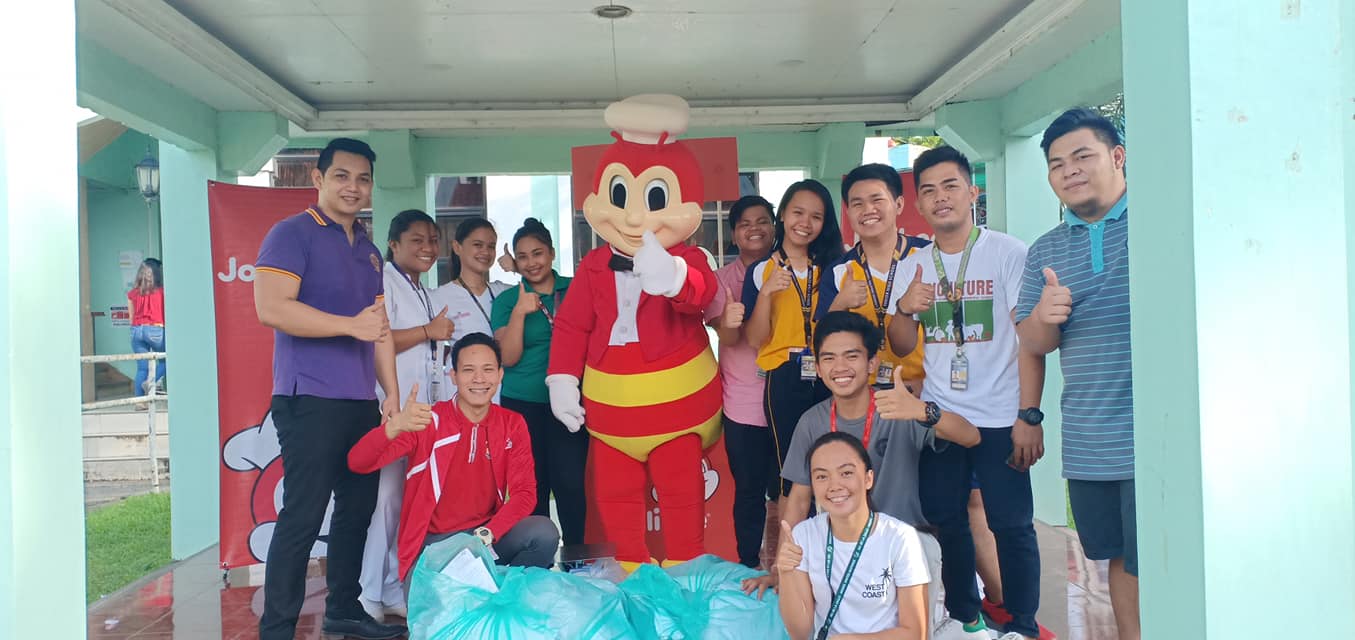
Suelo together with CPUR officers and representatives of Jollibee Food Coorporation.

Central Philippine University Republic (CPUR) President John Michael Suelo talked about his achievements, plans, and desires during an episode of Looking Forward, a public affairs program on the CPU TV Facebook Page last Friday, October 5, 2018.

The interview was a great opportunity for Suelo to tell all Centralians about how “realpolitik” works for CPUR and CPU: “That’s loving both my Republic and my Central.” This principle has resulted to many admirable projects and programs that Suelo successfully implemented, such as “Hope from Scratch” project where scratch paper were transformed into useful notepads distributed to underprivileged students. This was in partnership with Jollibee Foods Corporation. Another was the PETMALU (Plastic Elimination to Make a Livable University) project to minimize the proliferation of empty plastic bottles and containers inside the campus.

Through the initiative of the CPUR President’s Office, Suelo was able to bring two National Senators, Bam Aquino and Riza Hontiveros, to speak in the CPUR sponsored Iloilo Youth Forum on the Philippine Economic Situation and the Iloilo Mental Health Summit, respectively.

Through his office, Suelo has also extended financial assistance and sponsorships to student activities particularly to the work students.

The CPUR President sits as Ex-Officio Member in the CPU Board of Trustees. Suelo has perfect attendance in the Board of Trustees Meeting.

Suelo easily won the votes of student in the last election due to his promising programs that would make “everyone matter in the campus” and where “matters of concern [would] be addressed.”

In an interview with some of his classmates, Suelo is said to be very creative and innovative, successfully pursuing many good programs and projects for the students and the campus. However, he is not done yet. He is still working on many other plans and projects for the students and the University.

For his part, JM Suelo would like to be remembered as an effective president who did his best to succeed for the betterment of the studentry—even long after his term in CPUR ends.

Suelo will be going to Hong Kong on October 25 to 27, 2018 to attend the 7th Pro Bono Conference spearheaded by the Asian Law Student’s Association.