CPU and the Philippine Baptist mission: How are they connected?

By Francis Neil G. Jalando-on
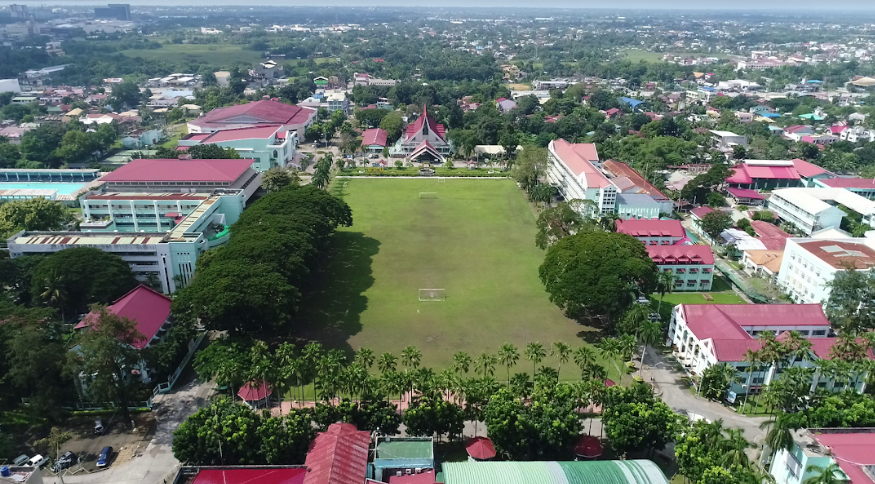

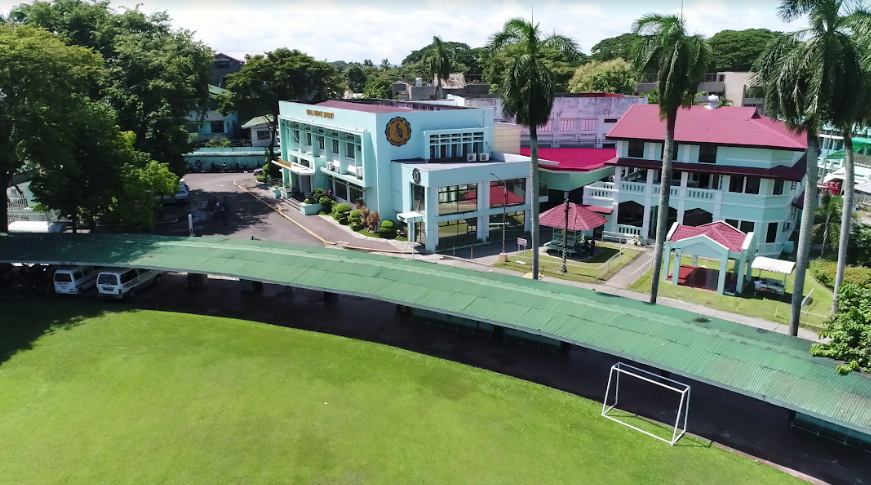
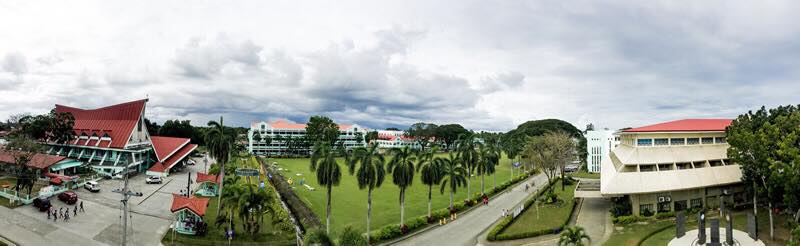
A testimony of faith – Central Philippine University stand witness to 113 years of Baptist heritage and perseverance.

The birth of Central Philippine University is connected to the beginnings of the Baptist mission in the Philippines.

In 1898, Rev. Dr. Eric Lund, a Swedish Baptist missionary, baptized Braulio Manikan, a native of Aklan, Panay, in Barcelona, Spain. Manikan became the first Filipino Baptist. The two soon planned to undertake mission work in the Philippines. While waiting for that opportunity, they embarked on translating the Gospels and Acts into the Hiligaynon language.

Their opportunity was materialized when the American Baptist Foreign Mission Society (ABFMS) commissioned and financed their mission work. They arrived in Iloilo City, Philippines in May 1900.

The Philippine Baptist pastors and American missionaries developed a three-pronged mission work, patterned from the ministry of Jesus Christ—preaching, healing and teaching. This pattern was developed as a means to minister to the “whole man” and not just his spiritual needs.

The preaching ministry resulted in organizing churches in Iloilo, Negros, and Capiz. For instance, Jaro Evangelical Church was organized in September 1900, Bacolod Evangelical Church in 1902, and Capiz Evangelical Church in 1908.

As to the healing ministry, the Philippine Baptist mission established two hospitals in the Panay Island. In Iloilo, the Baptists partnered with the Presbyterians in operating the Iloilo Mission Hospital (IMH) in 1901. Later, the IMH became an exclusive Baptist institution in 1925 when the Presbyterians turned over their mission work to the Baptists. In Capiz, a medical mission was started in 1902 which later became the Capiz Emmanuel Hospital in 1912.

The Philippine Baptist mission soon started a Baptist Home School in Capiz in 1904. Later, this became known as the Filamer Christian University. In Iloilo, a Bible School for women was established in 1904 through the leadership of Anna V. Johnson. This later became the Baptist Missionary Training School (BMTS).

In June 1905, the Bible School for men was also opened. A few months later, in October 1, 1905, another school was opened—the Jaro Industrial School. The Philippine Baptist mission commissioned Rev. Dr. William O. Valentine, a pastor and teacher, to head both schools.

CPU, in its core, is a product of the Baptist mission in the Philippines as can be seen in its history. This is the reason why the CPU Constitution and By-laws stipulates that 33 out of 65 of the members of the CPU Corporation and at least 10 out of 15 of the CPU Board of Trustees should come from member churches of the Convention of Philippine Baptist Churches.
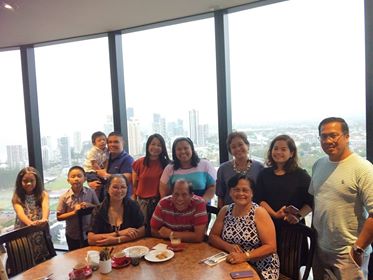
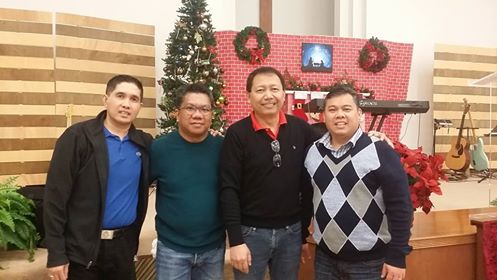
Centralians worldwide celebrate holidays in December 2018

By Cyrus A. Natividad

There are three important celebrations in the Philippines during the holiday season in December. These are the Christmas Eve, the Christmas Day, and the New Year’s Eve. Filipinos being closely knit, more often than not, celebrate with family, relatives, and friends. Even when they’re in other countries or places, they always find a way to get together and celebrate though away from home.

Social media provides the means for many to reach out to their loved ones around the globe through pictures, videos, and greetings posted online.

Here are some of the greetings of Centralians around the world:


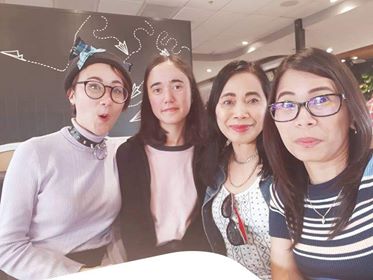
Greetings from Centralians in Australia headed by Mauro Somodio.

Greetings from Maynard Fernando, Sherwin Banusing, Pinoy and Roy Libatique in Houston, Texas. Pinoy Gonzales is the President of CPUAA South Houston and Regional VP of CPUAAFOA.

Greetings from Mrs. Lulette Libo-on Carne, CPU Political Science Batch 83. She celebrated Christmas with her family in Christchurch New Zealand.

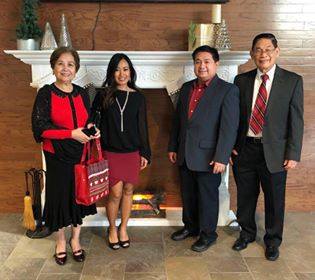
To all fellow Centralians worldwide: Wishing you God’s best in the New Year. Happy New Year from Dr. Manny Palada (Member, CPU Board of Trustees) and family here in Gainesville, Florida USA.

Looking forward to 2019

by Cyrus A. Natividad


Let us claim 2019 as a year of gratitude and blessing – looking forward to experience the faithfulness of God.

My father gave us a lot of meaningful advice before he left for the afterlife. They’re practical—relevant for today as we set our minds for the New Year 2019. One of those was “yesterday is already a dream, tomorrow is only a vision; but today, well-lived, makes every yesterday a dream of happiness and every tomorrow a vision of hope”.

He always reminded us not to live in the past, nor think about the future in excess—over or beyond what normal human beings can expect from the future. Of course, he said, “It is always good to learn from our mistakes in the past; correct it and live with it; enjoy with it as well. The enjoyable moment is at the present, not in the past or the future.”

According to a psychologist who said “health is in our head,” the cause of depression is mostly the recollection (thinking back) of bad things that happened to us in the past. Depression is only felt in the present. With lack of assurance and feelings of insecurity, what we feel for the future is anxiety. The present is very important when we speak of health. Enjoying the present is relevant; it should prepare us and put us in the best condition when crossing over to another year.

The year 2018 has ended and our minds are now set for 2019. Let us forget the unpleasant past. Instead, let us enjoy the achievements of yesterday. Remember this from an unknown author: “What you are today is a result of what you have done yesterday.”

A good reference verse for this is found in Philippians 3:13, 14: “But one thing I do: Forgetting what is behind and straining toward what is ahead, I press on toward the goal to win the prize for which God has called me heavenward in Christ Jesus.”

Planning ahead is also important as we approach this New Year. Our attitude in the present will impact our situation or success tomorrow. Do not be afraid of what will happen to us in 2019. Look forward and be confident in yourself as God has plans for us. Just read what He said in Jeremiah 29:11: “I know the plans I have for you, plans to prosper you and not harm you, plans to give you hope and a future.”

The prevailing evils of society today are hatred, envy, and lack of love (HELL). On the other hand, understanding and kindness will bring goodness to humanity in the New Year. As Paul wrote, “Therefore encourage one another and build each other up.”

Welcome 2019!

Facts about Central

By Keziah G. Huelar


With its unwavering commitment to excellence and faith, CPU is set to make history in the upcoming years.

Central Philippine University’s 113 years of existence hold a rich testimony of historical breakthroughs. A center of academic, cultural excellence, and faith, the university holds true to its mission of producing Exemplary Christian Learners for Life throughout the years. Here are some notable facts from CPU’s establishment to the present:

  • Central Philippine University was established in 1905 through a grant given to the American Baptist Foreign Mission Society by business magnate and philanthropist, John D. Rockefeller.
  • CPU is the first Baptist university and the second university established by Americans in Asia (the first being Silliman University in Dumaguete City).
  • In 1913, CPU (previously known as Jaro Industrial School) began to admit female students.
  • Iloilo Mission Hospital, the university hospital established in 1901, is the first hospital and nursing school in the Philippines.
  • Dr. Henry S. Waters is the first dean of the CPU College of Nursing from 1947-1948.
  • The CPU Republic is the oldest student government body in Western Visayas.
  • On April 1, 1953, through a charter, Central Philippine College was named Central Philippine University.
  • CPU’s first Filipino president is Dr. Rex D. Drilon.
  • CPU is recognized by the Iloilo City Government as a tourism site.
  • Dr. Linnea A. Nelson is CPU’s first female president.
  • The CPU Library is one of the biggest libraries in Asia.
  • The Valentine Hall used to be the administration building of the university.
  • CPU currently has the most number of Centers of Excellence and Centers of Development in Western Visayas.
  • CPU is the only fully autonomous university in Iloilo.
  • The first Filipino anthropologist, Felipe Landa Jocano (1920-2013), is a Centralian.

Yes, we can!

By Cyrus A. Natividad


“Paskwa at Central” – a night filled of fun, food and friendship. 

There is a story about a teacher who arrived in his class where the students have started to make much noise. He knew that he would be giving them a difficult exam that day. There were some students who anticipated the exam negatively, setting an atmosphere of reservation and uncertainty in the classroom. The teacher moved in front of the class and with a piece of chalk wrote, “I can’t.” Students howled in reaction to what he wrote. Then he asked, “What will you do to pass my exam?” A long moment of silence passed, but no positive reaction came from the class. Then from a seat at the back, a quiet boy went to the board and erased the apostrophe and the letter T. The whole class stood up to see what was written on the board this time and in a chorus read, “I can.”

As we welcome the new year, let us set aside who we are, where we come from, what belief and principles we have, whether we are rich or poor, of higher or lower educational achievements. For whatever desire or plan we need to achieve in 2018, none of those I mentioned is the greatest factor in gaining success. Many popular, rich, and powerful people in history have, in later years, landed in jail, committed suicide, or have become unpopular.

Success, or the lack of it, may be attributed to faith and commitment. It is a matter of mind-set combined with faith in God and a belief in one’s capacity. But above all, let us accept Jesus in our lives for only he can provide us the strength and perseverance, and will make us able. In the Bible, we are reminded by the words of the angel Gabriel to Mary, “With God, nothing is impossible.”

Yes, we can!

Let us commit to change for the better

By Francis Neil G. Jalando-on


Let us usher in the new year with a heart of thanksgiving, expectant of a higher and greater Central.

Happy New Year!

The word “year” in Hebrew is shanah. It has three meanings in the original root word:

1. Division of time

2. To repeat, do the same

3. To change, alter

Will this 2018 be just a passing of time? Will the coming year be just a repetition of the past years? Or will 2018 be a year when we will change for the better?

We would often hear the word change. It is so broad that the one who wants to change does not know where to begin. For those who profess to be Christians, the answer is straightforward: We want to be like Jesus. Like Paul, we too should say “imitate me as I imitate Christ.”

If we want to pattern our lives to that of Jesus, then we need to see the pattern. Where can we see this pattern? The Bible. If this is so, then the resolution to change and to pattern our lives to that of Jesus involves our commitment to read the Bible and reflect on what is written there. The ethical question WWJD—What Would Jesus Do—can be answered if we read and understand the Bible.

If reading the Bible is not yet in your New Year’s resolution, then please put it there and start reading. When you make a reflection, start asking questions about what God wants to change in your life through the passages that you have read. Pray for it and ask for the empowerment of the Holy Spirit. In doing so, you have made a commitment to change for the better. The Greek word “power” in relation to the Holy Spirit is dunamis which means “able” and “can do.” This tells us that when the Holy Spirit empowers us, we are able to do the things that we thought we were not able to do. Our mentality of “I can’t” is changed to “I can.”

This year should not just be a passing of time or a repetition of the last year but a commitment to change and follow in the footsteps of Jesus.

Happy New Year everyone from the CPU Office of Communications!

A Christmas reflection

By Keziah G. Huelar


CPU faculty and staff showcase their talent in singing and dancing during the “Paskwa sa Central 2017.” 

Charles Dickens’ popular novel “A Christmas Carol” has given a literary account of Christmas through the eyes of the old Scrooge who was later on transformed into a joyful character after having been visited by the Ghosts of Christmas Past, Present, and of the Christmas Yet to Come. This tale brings into our consciousness that we can discover the reasons why we celebrate Christmas through our own account and experience.

Christmas, being one of the most beloved holidays for Filipinos, gathers families near and far. It ushers in the holiday spirit of cheer, goodwill, forgiveness, and generosity as we celebrate the greatest gift given to humanity—the birth of our Lord and Savior Jesus Christ.

From Dickens’ tale, we learn that each Christmas celebration we spend with friends and family adds to the long list of Christmas lessons that can make us wiser throughout the years.

Christmas is indeed a grand celebration but it is no more important than how we celebrate each day of our lives filled with God’s blessing and faithfulness. Thus all year round, we should have Christmas in our hearts. Every year we should out-give ourselves. We should be as generous, as kind, as forgiving, and as faithful the entire year as we are on Christmas. Every Christmas should be a testimony of how we will strive more to be like Christ to both our friends and enemies. The Christmas spirit should stand against despair and hopelessness as we come to celebrate not only the birth of Christ but of His promises that we will live life to the fullest, that He will be our protector and aid, that we will be more than conquerors because through Him who loved us—and that will only happen if we have Jesus in our hearts; if we choose Him over fear, worry and doubt every day of our lives.

Let us celebrate Christmas all year round. Let us be like Scrooge, who, after full realization said, “I will honor Christmas in my heart, and try to keep it all year. I will live in the past, present and the future. The spirits of all three shall strive within me. I will not shut out the lessons that they teach.”

Rev. Jalando-on shares lessons Baptists can learn from the Reformation


Rev. Francis Neil G. Jalando-on, Director, CPU Office of Communications received a plaque of appreciation from the HER committee.

During his talk at the Hopevale Education Reformation Conference in honor of the 74th Anniversary of the Hopevale martyrdom and the 500thAnniversary of the Protestant Reformation at Filamer Christian University, Roxas City, Capiz on December 19, 2017, Rev. Francis Neil G. Jalando-on, Director of the CPU Office of Communications, shared four lessons Baptists can learn from the Reformation, and the Renaissance.

It was on October 31, 1517 when Martin Luther sent a letter that included the 95 Theses to the Archbishop of Mainz. Luther also nailed these Theses disputing the practice of indulgences. According to Rev. Jalando-on, Baptists are sons and daughters of the Reformation and the Renaissance.

The first lesson was ecclesia reformata semper reformanda (“the reformed church must always be reformed”) or always reforming. “We must not stop reforming. We must acknowledge that we are all a work in progress, and that we must allow God to work in and through us.”

The second lesson was, “challenge tradition, challenge everything. What are the things in our denomination (Convention of Philippine Baptist Churches) that we need to challenge? We need to challenge the tradition of the principle of local autonomy which has caused dissention among us.”

The third point was cogito ergo sum (“your mind is the limit”). “Rene Descartes coined the saying, ‘I think, therefore I am.’ This means that we must not blindly accept what is before us. We must continue to dig deeper and learn more.”

And the last point was, “explore beyond borders. This started the exploration of the world. This means that we must go out of our comfort zones. Because of this, the missionary movement was once again reborn. This is the reason why Christianity came to the Philippines.”

Hopevale martyrs remembered


Rev. Job Santaigo leads the prayer during the 74th Anniversary of the Hopevale martyrs.

On December 20, 1943, 74 years ago, 11 American Baptist missionaries and a little boy were executed by the Japanese soldiers. Twenty months before their martyrdom, these 11 missionaries chose not to surrender but evacuated to Katipunan, Tapaz, Capiz where they found a hide-out in the mountains which they called “Hopevale.” They even built an open-air chapel, the “Cathedral in the Glen.” This Cathedral in the Glen became an enduring symbol in that many replicas were made in the United States and in the Philippines to immortalize their martyrdom.


Remembering the lives of the martyrs by inspiring the next generation through their legacy.

Rev. Jerson B. Narciso, CPBC General Secretary, Dr. Melvin Mangana, Director, Capiz Immanuel Hopsital, Rev. Job Santiago, Chair, Capiz Emannuel Hospital and Dr. George Cortel, President, Filamer Christian University offer a wreath of flowers during the 74th Anniversary of the Hopevale martyrs.

In celebration of the 74th anniversary of their martyrdom, the Convention of Philippine Baptist Churches and its member institutions (Central Philippine University, Filamer Christian University, Capiz Emmanuel Hospital, Iloilo Mission Hospital) held a memorial service on December 20, 2017 at the Hopevale Garden near the Capiz Emmanuel Hospital.

A hymn written by Rev. Dr. Francis Howard Rose, one of the martyrs, prophesied his martyrdom for the faith. Rose is remembered as a talented composer of most of the Central Songs, the designer of the CPU seal, and the one who coined the term “Central Spirit.”

Martyr’s Hymn by Francis Howard Rose

(To the tune of “Lord, Speak to Me That I May Speak”)

All human progress up to God

Has stained the stairs of time with blood;

For every gain for Christendom

Is bought by someone’s martyrdom.

For us he poured the crimson cup,

And bade us take and drink it up.

Himself he poured to set us free.

Help us, O Christ, to drink with thee.

Ten thousand saints come thronging home,

From lion’s den and catacomb.

The fire and sword and beasts defied;

For Christ, their King, they gladly died.

With eye of faith we see today

That cross-led column wind its way

Up life’s repeated Calvary.

We rise, O Christ, to follow Thee!

We remember the Hopevale martyrs:

Jennie Clare AdamsCharma Marie Moore CovellJames Howard CovellDorothy Antoinette DowellSigne Amelia EricksonFrederick Willer MeyerRuth Violet Schacht MeyerFrancis Howard RoseGertrude Hazleton Coombs RoseErle Frederick RoundsLouise Beulah Cummings RoundsErle Douglas Rounds 

Centralians speak at the HER


Dr. Domingo J. Diel, member of the CPU Board of Trustees encourages the participants to emulate the life of the martyrs.

Celebrating the 74th Anniversary of the Hopevale martyrs and the 500th Anniversary of the Protestant Reformation, Dr. Domingo J. Diel, Jr., Member, CPU Board of Trustees, and Centralians Rev. Francis Neil G. Jalando-on, Director of the CPU Office of Communications; Dr. Liza B. Lamis, newly elected new Executive Secretary of the International Committee for the Fellowship of the Least Coin; and Rev. Dr. Melvin Mangana, Director of the Capiz Emmanuel Hospital, shared their knowledge and expertise during the “HER: Hopevale. Education. Reformation,” A Church People’s Conference at Filamer Christian University, Roxas City, Capiz on December 18-20, 2017.

The talk was organized for several reasons. The first was to reflect on the 500 years that has passed since Martin Luther’s Protestant Reformation; another was to speak on matters of faith and culture in the modern times, and to remember the martyrdom of Hopevale missionaries. The event was also to gather CBMA affiliated ministers, to cater to their need of continuing theological education on the specific topic of Protestant Reformation and CPBC heritage and history, to organize a CPBC dialogue regarding pastoral skills that are most needed in the existing theological seminaries, and to inspire the apt reformer in each participant and challenge them to address areas in their life and relationships that need reformation. The talk was also a prelude the 75th year anniversary of the martyrdom at Hopevale next year.

In his opening address, Dr. Diel highlighted the importance of remembering the lives of men and women whose faith has inspired the present believers. He also encouraged the participants to emulate the lives of those who have both died and lived for Christ.


Participants of the Hopevale Education Reformation share insights during a group session.

Remembering the life of the Martyrs, exemplifying their faith through practice.

Rev. Jalando-on’s talk focused on the challenge of Reformation. He encouraged every Baptist to pursue his or her faith with passion and perseverance and not merely adhere to what is popular or accustomed. He also shared lessons and reflections on the Reformation and Renaissance of the Baptist denomination throughout history.

Dr. Lamis talked about the importance of Reformation in education. She shared that education is an essential tool to reformation and vice versa—one should work hand in hand with the other to pursue faith grounded in knowledge, wisdom, and  in obedience to Christ.

On the other hand, Dr. Mangana encouraged the participants to be firm believers and to have a heart for others by serving Christ not only through the church but also through the everyday purpose God has given to each and every one. He also emphasized that as a Christian, one should not forsake the basics, that is, “going back to the Bible.”

The conference was organized by the Pastoral Placement, Theological Education, and Ministerial Concerns (PPTEMC) department of the Convention of Philippine Baptist Churches (CPBC). The Director of PPTEMC is Pastor Jec Dan S. Borlado, and the General Secretary of the CPBC is Rev. Dr. Jerson B. Narciso. Both of them are also Centralians. CPBC is planning a bigger celebration next year for the 75th Anniversary of the Hopevale Martyrdom and it will be held at Central Philippine University.