CPU’s highlights in 2018

By Keziah G. Huelar


May the New Year be a celebration of God’s faithfulness and a commitment to His purpose.

Celebrating the Lord’s faithfulness to Central Philippine University, let us recall the highlights and accomplishments in 2018, looking forward to the another year of His goodness and grace.

June

Centralians Khent Brian Valenzuela and James Carl Tuazon qualify for the Philippine Football Team Under 15

Centralians Jan Christian Española, John Elmer Loretizo and Charles Arthel Rey hailed TOSP, Western Visayas

Centralian Fiona Geeweneth Guirhem ranks first during the 19th ASEAN Age Group Chess Championship

July

CPU and Myanmar Institute of Technology explore MBA partnership

CPU CARES ranks 10th in highest passing rates for ALE

CPU celebrates 10th Global Reunion

Centralian Clem Marnel Burgos hailed over-all champion during the 5th International Competition of Arts and Culture in Yerevan, Armenia

Dongduk Women’s University and CPU discuss future academic partnership

CPU Elementary School alumna Danielle Liza G. Molina attends 2018 HPAIR Harvard Conference

CPU Elementary School hailed over-all champion during the Regional Cluster Journalism Workshop and Golden Pen Awards

Centralian Peter John B. Abaygar receives Diplomacy Award in 2018 ASEAN Foundation Model

CPU TV goes Global

August

Centralian Eagle Scout Vance Raphael Anthony S. Praire ranks no. 1 in the 2018 Search for Outstanding Boy Scouts of the Philippines, Western Visayas

Centralian John Elmer Loretizo tops the 2018 GMA Network Excellence Award, Technology Based Category

Centralian April Joyce C. Catalan 5th in the 2018 Pharmacy Board Exam

CPU TV launches Jamming at Central

CPU TV airs President’s Time

CPU tops IECEP Regional Quiz Show

Centralian Susie Jennings receives the Audrey Kaplan Inspiring Women of the Southwest Awards from the Southwest Jewish Congress

September

Centralian Cindy Joy Diasnes represents the Philippines in the 2018 Poomsae Championships held in Taiwan

Centralian Jeff Huinda named Executive VP of Administration, Chief Financial Officer of Drury University

BSP awards CPU Outstanding Regional Partner

Centralian Iñigo D. Garingalao named “Dangal ng Bayan” awardee by the Civil Service Commission

Royal Institute of Singapore confers CPU College of Nursing Dean, Atty. Salex Alibogha, with titles Fellow of Royal Institute of Nurses and Fellow of Royal Institute of Lawyers

CPU American Corner holds SCS Certification Workshop

CPU holds 11th Genaro “Totik” D. Diesto Jr. Memorial Lecture

Centralian Audery Dusaran-Albason showcases designs in Lodon Fashion Week

Dr. Robles officially signs Contract of Renewal as University President

October

CPU holds 113th Foundation Day

CPU College of Nursing holds 2nd Natividad C. Caipang Memorial Lecture

CPUAAI holds 2018 CPU Alumni Homecoming and General Assembly

CPU CHM hailed 1st Runner Up during the 5th Tabuan Ilonggo Heritage, Cooking Competition, Dessert Category

CPU signs MOA on Social Welfare Outreach with DEMInc.

Malacañang posthumously hails Centralian alumnus, Atty. Ramon Muzones, National Artist for Literature

Centralian Jynea Baldevarona wins Best Paper in 7th Annual International Conference on Journalism and Mass Communications in Singapore

November

CPU holds 91st Commencement Exercises and Baccalaureate Service

CPU Iron Women, Jacqui Rose V. Lamparero, clinches top spot during the Black Arrow Express 5150 Triathlon, Female 15-19 Category held in Subic

CPU joins 1st China International Import Expo 2018

CPU, ZUIT pioneer 1st Filipino-Chinese International Research Collaboration in Visayas Region

Centralians bag top spot during 2018 CineMAYBANK Short Film Festival

CPU, DA hold 8th Organic AgriFair Seminar and Exhibits 2018

Centralian Marc Louise M. Failon ranks 10th in the 2018 Chemical Engineering Board Exam; CPU garners 100% passing rate

Centralians John Elmer Loretizo and Jan Christian Española named TOSP National Finalists

CPU signs MOA with Palm Concepcion Power Corporation

Central Echo bags awards at COPRE 2018

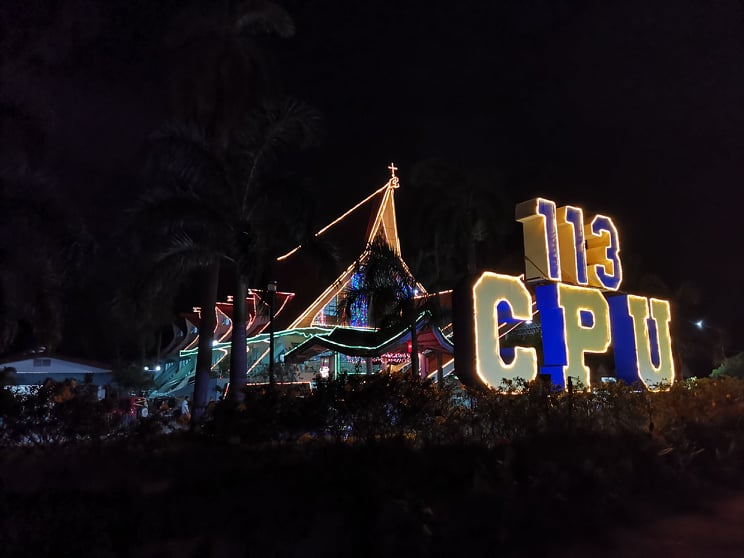
20K+ attend switching on of “Christmas Lights at Central”

Centralians Jeziel Kuan Wong Vargas and Mae Anne Kristel Casco Depra rank 7th and 9th respectively in the 2018 Nursing Licensure Exam; CPU garners a passing percentage of 81.33%

CPU commemorates 75th Hopevale Memorial
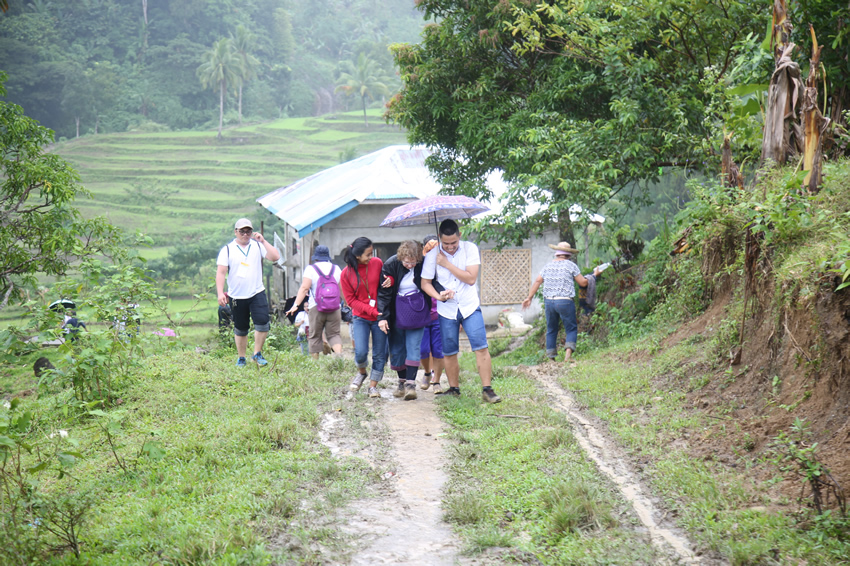
Revisiting Katipunan: The Trail to Hopevale

By Keziah G. Huelar


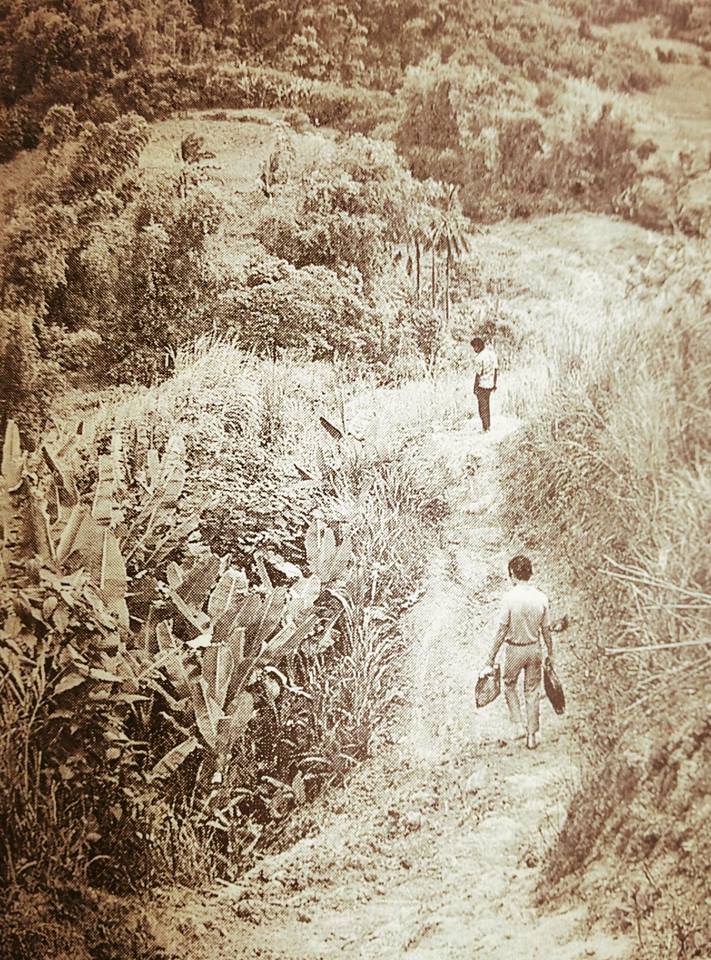
A picture of partnership – Philippine Baptists and an American Baptist missionary walk hand in hand in Hopevale.

In the words of Jennie Clare Adams, Hopevale was a “cathedral in the woodland wrapped in quietness—a sheltered haven in refreshing restfulness.” However, the trail to the missionaries’ refuge is just as difficult to traverse now as it was then.

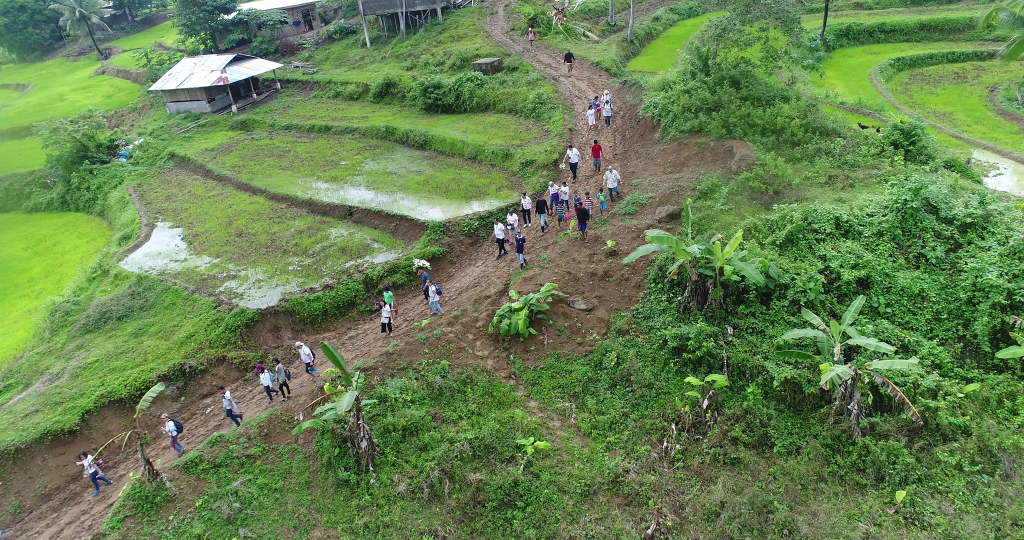
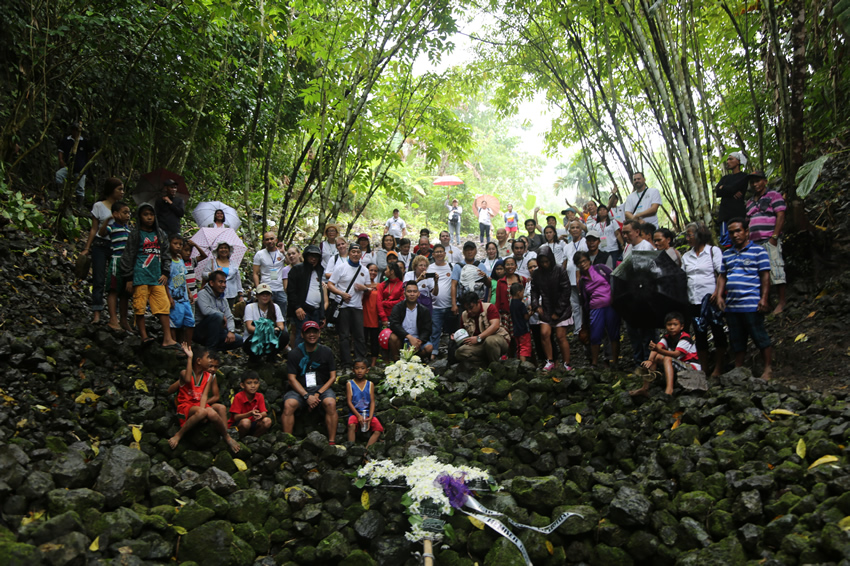
On December 19, 2018, more than 200 believers went on a pilgrimage to Hopevale. A caravan of more than 20 vehicles and motorcycles brought them to Brgy. Katipunan, Capiz, Tapaz. The journey uphill however was continued on foot. Despite the rain and the ankle-deep mud, they made their way up to the common grave of the Hopevale martyrs.

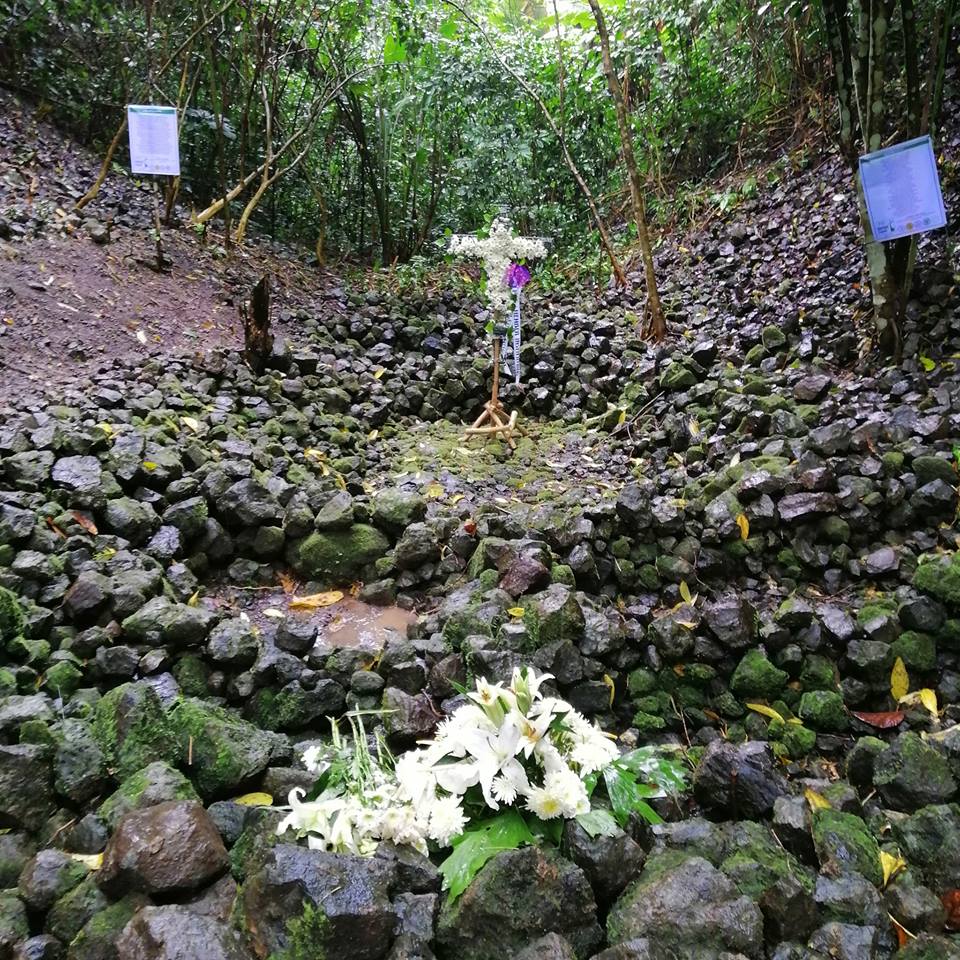
Upon reaching their destination, they offered a wreath of flowers.


Pilgrims walk towards the “Cathedral in the Glen” during the pilgrimage to Hopevale on December 18, 2018.

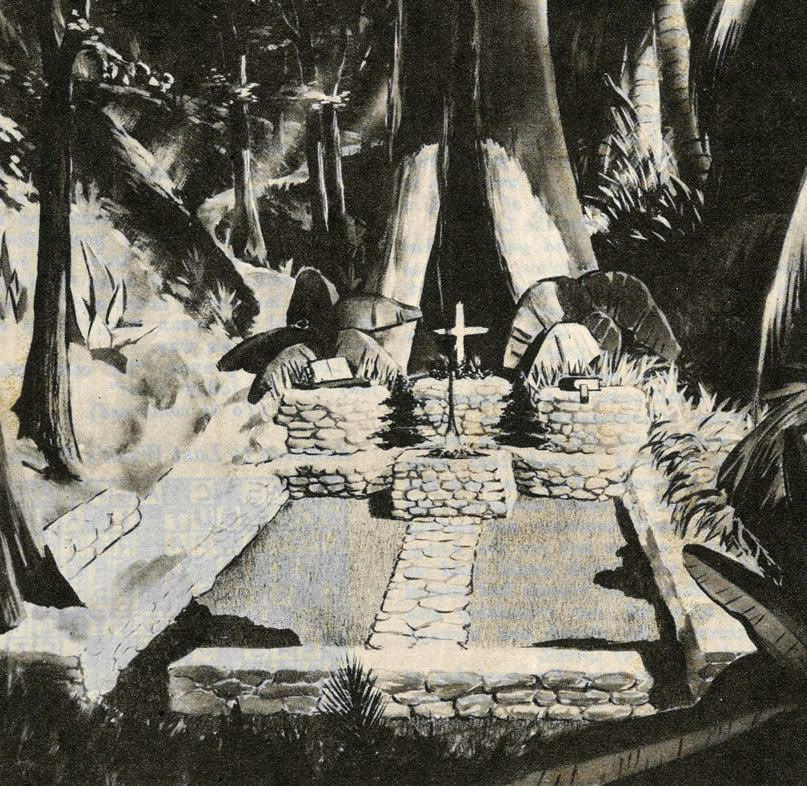
Louise Reid Spencer, the wife of Cyril L. Spencer, a mining engineer who took refuge with the American Baptist missionaries, described Hopevale Cathedral as a sight to behold: “The Hopevale Cathedral was a gem of outdoor architecture. Dr. Rose built the cathedral himself, every stone of it. It was open to the sky and, in its contours, formed by nature herself. The gulley where we had first taken refuge was transformed, by the loving labor of Dr. Rose, into a vision of beauty and inspiration.”

The pilgrimage to Hopevale is one of faith and remembrance—that the legacy of the martyrs will be remembered in words and in deeds.

Hopevale Martyrs affirmed their freedom in Jesus Christ

By Francis Neil G. Jalando-on


Flowers were put in the “Cathedral in the Glen” to honor the 11 American Baptist missionaries who were martyred 75 years ago.

On December 18, 2018, more than 200 people went on a pilgrimage to Hopevale, Tapaz, Capiz as part of the events for the 75th Hopevale Memorial. The rain made the journey difficult as the trail from Katipunan Evangelical Church to Hopevale Baptist Church became slippery and muddy. When the pilgrims reached Hopevale Baptist Church, Bgry. Aglinab, Tapaz, Capiz, they held a memorial worship service.

The idea, after the service, was to proceed to the Cross where the Hopevale Martyrs were buried and to the Cathedral in the Glen, an open church that Dr. Francis Howard Rose designed. Everyone waited for the sun to come out so that they could take the journey, but it was not meant to be. Although disappointed, the pilgrims also thought that it must have been God’s way of showing them a glimpse of what the 11 American Baptist missionaries experienced during their 20 months of stay in Hopevale before they were executed by the Japanese soldiers on December 20, 1943.

Looking back on World War II, missionary nurse, Jennie Clare Adams, read to the group on June 16, 1943, a poem that she wrote on January 12, 1943. The reading took place on a Wednesday. It must have been their prayer meeting time since Wednesday prayer meetings is an American tradition left by the American Baptist missionaries to Philippine Baptists. The poem that she read has a greater meaning and impact to those who have visited Hopevale.

May this poem affirm our freedom in Jesus Christ, and that no one or nothing can imprison us.

The Hills Shall not Imprison Me

I shall not let these hills imprison me,

Where I for refuge have been forced to flee,

Like walls they shut me in on every side

While offering a sheltered place to hid

Grim war who reaches out with bloody hands,

Some bitter price of every soul demands.

His cruel clutches tightened on our shores,

We felt his fingers touch our very doors,

Our work was soon in smoldering ruin laid,

Our home into an alien fort was made

In wooded hills we chose to hide away

And not in concentration camp to stay.

I shall not let these hills imprison me,

Where I in exile weary months must be.

Their towering peaks conceal from hostile view

But screen the sunrise and the sunset too.

The forest deep seems damp with dew and rain,

My thoughts turn homeward to a sunny plan

The sun emerging from the fields of grain

And sinking into meadow land again.

For I am prairie born where wheat fields grow

Where prairies grasses wave, when breees blow

With eyes that yearn to gaze on distant scene

Must I be cloistered in a small ravine?

I shall not let these hills imprison me,

I shall remember that I still am free,

No hills can from my soul a vision hide,

Nor hope be shackled long whate’er betide

Nor faith be shaken by a troubled day,

If prairie lessons ever with me stay.

O prairie land, whose massive breadth and length

Inspires the soul to greatness and to strength,

Whose sturdy trees withstand the stormy gale

And summer droughts cause not their leaf to fail.

Deep searching roots find streams of water pure,

And anchor on a hidden rock secure.

Faith is instilled by every pasture green

The far horizons teach a hope serene

The scenes of commonplace great lessons tell,

O prairie land, may I apply them well.

I shall not let these hills imprison me

The birds are not shut in, nor shall I be.

I shall look up, and up to azure sky

Beyond the wooded rims of hilltops high,

Beyond the walls that seem to shut me in,

Beyond disturbing sights and dismal dim.

I must be looking up if I would see

What love and goodness God has given to me.

I must look up beyond life’s walls and bars

If I would see the brightness of the stars.

Mine eyes I must lift upward and afraid

Remembering in whom my strength is laid

Each day I must more grateful learn to be

Remembering with joy that I am free

The freedom God alone can give today,

None other gives, and none can take away.

I shall not let these hills imprison me

For soon will sound the cry of victory

Then wanton war and drear exile shall cease

While we behold the glorious dawn of peace.

I shall lift up my heart in grateful prayer

To One who keeps us safely in his care

Then I shall pause to say a kind farewell

To lofty hills and quite forest dell

The hills where I have been so safe and free

Then quite hills that kindly sheltered me

Then I shall climb to yonder hilltop green

And feast mine eyes upon the distant scene

In exultation view the trail before

Then wend the joyous homeward way once more

I shall be grateful then that I am free,

And say, “Those hills did not imprison.”

CPBC General Secretary Narciso talks about “what’s next” for Hopevale

By Cyrus A. Natividad


Pilgrims braved the muddy trail to the “Cathedral in the Glen” in Hopevale, Tapaz, Capiz.

Convention of Philippine Baptist Churches (CPBC) General Secretary, Rev. Dr. Jerson V. Narciso, was a guest in the special edition of Looking Forward, a CPUTV public affairs program, last Friday, December 14, 2018.

Among many issues on the 75th celebration of the Hopevale martyrdom, Narciso talked about the impact of the commemoration on CPBC and Central Philippine University. He then explained the future plans and projects in relation to the remembrance of the martyrs.

Narciso mentioned the trust fund which would be used for the development and beautification of the Hopevale site. He hopes that this would result to the establishment of a yearly pilgrimage to Hopevale.


A caravan of more than 20 vehicles and 20 motorcycles went to Katipunan and then to Hopevale.

According to Narciso, CPBC and Central Philippine University will have a joint project for a museum to house historical artifacts of the Hopevale martyrs, the mission work, and various ministries throughout the years. Another plan of the CPBC is to train pastors and missionaries in creating ministries for the community.

The Hopevale story has also brought out the creative sense in Dr. Narciso’s as he suggests “a [film] to be produced for the Hopevale [martyrs].” He clarifies, though, that it “may be ambitious, but it will be possible with the support of everybody.” Narciso further explains, “The project can be realized in 3 to 5 years.”

The 4-day event for the diamond commemoration of the Hopevale martyrs included the launching of the Hopevale exhibit at the Ground Floor Lobby of the Henry Luce III Library and a “Dinner of Hope,” a fund raising campaign for Hopevale projects.

20K+ attend switching on of “Christmas Lights @ Central”

By Keziah G. Huelar


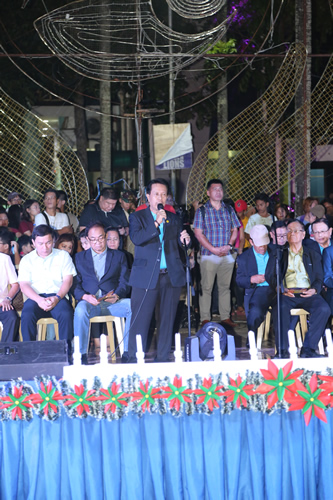
CPU President, Dr. Teodoro C. Robles, highlighted Christ as the center of the CPU Festival of Lights and Music.

Celebrating the Light of Life—The 2018 Festival of Lights and Music was attended by Centralians and guests who flocked to Central Philippine University to witness the switching on of “Christ Lights @ Central” at the Centennial Walkway on December 7, 2018.

The Festival of Lights and Music is an annual tradition of the University that has gone on for 27 years. The celebration ushers in the yuletide season and is an invitation to the alumni all over the globe to revisit the campus, rekindle their Central Spirit, and most importantly, celebrate Christ as the foundation and guiding light of CPU.


Engr. Isagani J. Jalbuena, President, CPU Alumni Association Inc. and Over-all Chairman, 2018 Festival of Lights and Music @ Central thanked the entire CPU community for their unconditional support to the events and programs of the CPU Alumni Association Inc.

Serenading the crowd and leading the gathering music was the CPU Symphonic Band with Mr. Ascension O. Bautista, Band Director, conducting. The invocation was then led by Rev. Cris Amorsolo V. Sian, Senior Pastor, University Church. It was followed by the singing of the Philippine National Anthem and the Alma Mater Song, with Ms. Crista S. Huyong, Coordinator, CPU Cultural Affairs Office, conducting.

For the Christmas greetings, Engr. Isagani J. Jalbuena, President, CPU Alumni Association Inc. and Over-all Chairman, 2018 Festival of Lights and Music @ Central, thanked the CPU community for their love of and support to the activities of the CPUAAI. He also highlighted that Christ is foremost at the center of the festival: “I would like to thank everyone who made this production successful. [We always hold emphasis that Christ is the Light of life and the center of this event.]”


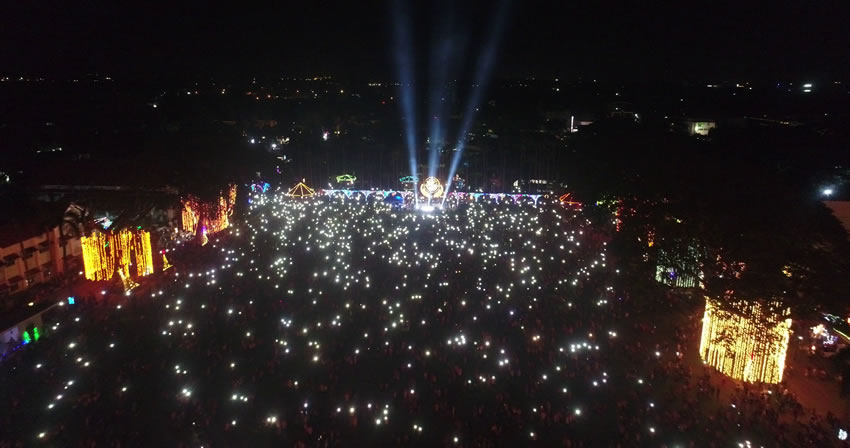
A sea of stars – more than 20,000 people came to witness the switching on of “Christmas Lights @ Central.”

CPU President, Dr. Teodoro C. Robles, welcomed Centralians and guests and acknowledged Christ as the center of the celebration. He also commended the CPU alumni here and abroad for representing Christ and CPU in their workplace: “We are thankful that you are able to share with us your precious time in celebrating the beginning of Christmas. [But] don’t think of this as just entertainment. This is to symbolize the celebration of the birth of our Savior, Jesus Christ and also, as part of the lights all over the world, our alumni who are serving many communities in different capacities.


Celebrating the Light of Life—The 2018 Festival of Lights and Music is a testimony of God’s faithfulness to CPU.

Hon. Demy P. Sonza, Board Member, 2nd District, on behalf of Iloilo City Governor, Hon. Arthur R. Defensor Sr., extended the greetings of the provincial government. In his message, Hon. Sonza thanked CPU for conducting events that promote Iloilo. He also recognized the CPU Festival of Lights and Music as a tribute to Christ, the sole reason for Christmas: “This is a celebration of Christ who came as the Light of life. This evening, the CPU community is switching on [a representation] of the greatest gift our God has given us, Jesus Christ. God, our Father, gave His only son that whosoever believes in Him may not perish but have eternal life.”

Hon. Sonny M. Angara, Senator, Republic of the Philippines, in his message, recognized the cultural and historical role of the university in Iloilo City: “[CPU] is such an important part of the community, being a historic school.”

The speeches were followed by a special dance number by the CPU Stereo Swaggers.

After which, one by one, Dr. Robles; Atty. Von Lovel C. Bedona, Chairman, CPU Board of Trustees; Engr. Jalbuena; Hon. Angara; Hon. Jeffrey P. Ganzon, Vice Mayor, Iloilo City; Ms. Junel Ann P. Divinagracia, Iloilo Tourism City Officer, on behalf of Hon. Jerry P. Trenas, Congressaman, Iloilo City; Mr. Gilbert Garcia, former Brgy, Captain of South Baluarte, Molo, on behalf of Hon. Joe S. Espinosa III, Mayor, Iloilo City; Mr. Dominador Co, Executive Assistant to the Mayor; Mr. John Michael A. Suelo, President, CPU Republic; and Mr. Rodaniel G. Sevilla, 2018 CPU Alumni Homecoming King,  officially switched on the lights.

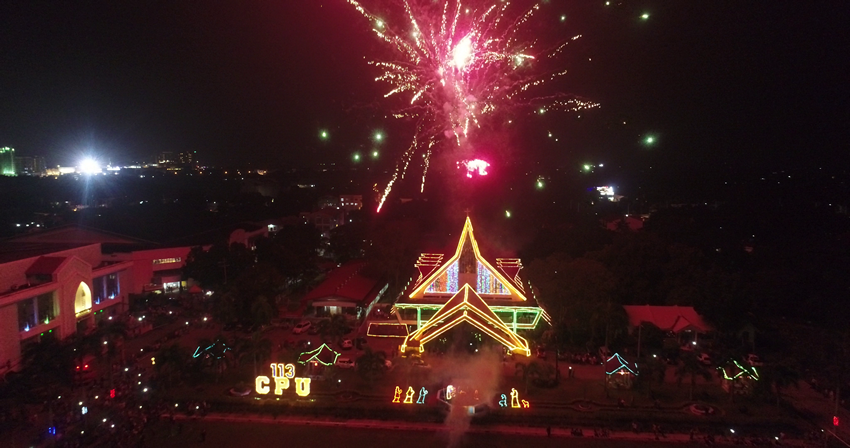
The main entrance of the university was lit, followed by the Administration Building, the flagpole area, the Smile Hill, the different college and department buildings, the trees and ornamental plants leading, finally, to the University Church. The switching on of lights is accompanied by Christmas carols played by the CPU Symphonic Band and a 15-minute fireworks display. An estimated crowd of 20,000 plus Centralians and guests attended the said opening.

Sen. Sonny Angara visits CPU

By Keziah G. Huelar


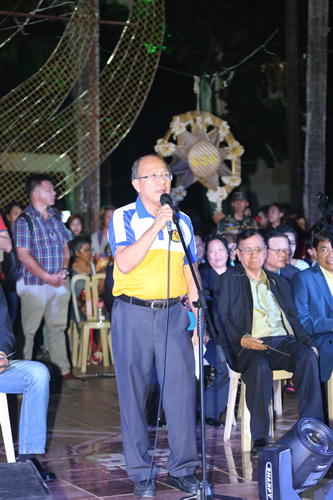
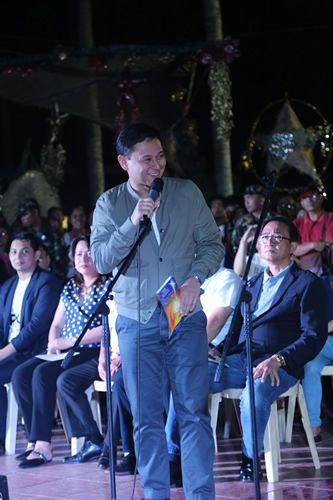
Sen. Sonny Angara addressing the CPU crowd during the 2018 Festival of Lights and Music.

Hon. Juan Edgardo Manalang Angara, widely known as Sen. Sonny Angara, visited CPU during its Festival of Lights and Music opening with the switching on of “Christ Lights @ Central” and induction of its CPU Alumni Association officers at the CPU Campus on December 7, 2018.

He, together with CPU President, Dr. Teodoro C. Robles; CPU Board of Trustees Chairperson, Atty. Von Lovel D. Bedona; CPUAAI President, Engr. Isagani J. Jalbuena; and other CPU and city and provincial executives switched on the Christmas lights and officially opened the 2018 Festival of Lights and Music @ Central.

With a deep love for Ilonggos, his wife, Elvira “Tootsy” Echauz-Angara, being an Ilongga, Sen. Angara shared his appreciation of the city and of CPU by familiarizing himself with the culture and history: “I love the warmth of the Ilonggo people. I feel very much welcomed here and I come here a lot. Today, I see how much [CPU] is an important part of the community because of its history and location.”

The senator also commended the growth and development of the city, highlighting that so much has changed since his last visit to Iloilo: “There has been a renaissance in Iloilo, [it] has been known as the Queen City of the South and Iloilo and CPU have that history not many have.”

As the Committee Chair of the Ways and Means and Local Government, Sen. Angara foresees more competitive workforce and industry that can compete in the ASEAN Region by providing more opportunities for investors: “We’re trying to lower corporate income taxes to attract more jobs. Our advantage is our people, our skilled young population. We want to be able to compete [among the] ASEAN [nations]. Especially [because we] have a common market, [we] can have a free market of goods and people.”

As a lawmaker, Sen. Angara makes it a goal to be informed of what is happening at the grass roots level: “You should have a good network of people in the locality. You just don’t rely on politicians. You also talk to civil organizations.”

Remembering his father, Sen. Edgardo J. Angara, he talked about the late Angara’s influence as a public servant: “Many times, if I had a problem, I would think how [my dad would] approach the problem. His work ethic, his values, taught me that the job of a lawmaker is to open doors for people [so] that they can walk through. It’s up to them to walk through that door but you have to open doors that are closed to them. That’s the main thing my father taught me.”

Sen. Angara is the co-author of  Republic Act 10653 which raises the take-home pay of Filipino workers by increasing the tax exemption cap for the 13th month pay and other benefits from P30,000 to P82,000; Republic Act 10708 or the Tax Incentives Management and Transparency Act (TIMTA)—a law that aims to promote transparency and accountability in the grant and administration of tax incentives to registered business entities; Republic Act 10754 or the VAT Exemption for Persons with Disability; RA 10699 or the National Athletes and Coaches Benefits and Incentives Act; the Free College Law and the Unified Student Financial Assistance System Act (UNIFAST); the Magna Carta for Women; and others.

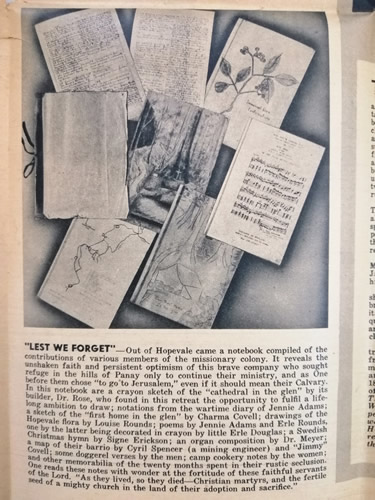
Hopevale Martyrs continued to study while in hiding

By Francis Neil G. Jalando-on


In the Cathedral in the Glen, our missionaries devoted their study of faith, flora and fauna.

How do we learn lessons? For most of us, we read books and study in schools like Central Philippine University, a school which ranked #18 in the country and #1 in Western Visayas with two CHED Centers of Excellence and four CHED Centers of Development.

While the American Baptist missionaries were in Hopevale, they read books to continue their learnings. After they were executed on December 20, 1943, one of the things that were recovered were their books. The list included novels such as the classic Count of Monte Cristo by Alexander Dumas and books on insight such as Prayers of the Social Awakening by a prominent figure in the Social Gospel movement, Walter Rauschenbusch. There were also those containing stories and poems. The topics varied from Christianity and religion to history, economics, biography, the sciences, as well as technology. All in all, there were 100 books about multiple topics that they read, and were later recovered.


Amidst the war, the American Baptist missionaries were able to write poems, compose songs and draw portraits inspired by their refuge in Hopevale.

Aside from reading books, they also observed their surroundings and learned from it. One of the Hopevale Martyrs, Jennie Claire Adams, a missionary nurse who was assigned to work in the Capiz Emmanuel Hospital, made a poem about a “Forest School.” She gave this poem to the three American children who were in Hopevale on February 1943. These three boys, Erle Douglas (son of American missionaries Mr. Erle Frederick Rounds and Mrs. Louise Cummings Rounds), Johnny and Terry (sons of Mr. Mark Walsh Clardy and Mrs. Fern Clardy, Americans who sought refuge with the missionaries) were bayoneted to death on December 20, 1943. Their young lives ended tragically, and they never got the chance to study at Central Philippine College again.

Here is the poem that describes the rich lessons that these three boys learned in a “Forest School”:

“Have you watched a butterfly in the rain

Or heard a tree frog’s glad refrain?

Have you waded in the brook on a sunny day

And gathered snails along the way?

Have you chased a lizard away from the chicks

Or watched the monkeys’ funny tricks?

Have you watched them scamper for berries and fruit?

Did you think their antics clever and cute?

The baby clinging so tight to its mother

The others chattering and chasing each other.

Have you dug in a hole for a crab or two

Or watched to see what a tagpo could do?

Can you tell a boyud from a centipede

Or budjapa leaves from a common weed?

Have you seen an orchid or a wild fig tree?

Can you name one half of the things you see?

How many bird names can you tell?

Have you found a cicada’s empty shell?

Have you hunted shoots from the bamboo clumps

Or gathered mushrooms from banana stumps?

Have the orchid blossoms dropped at your feet

Or the Doña Aurora flowers sweet?

Have you watched a mother bird or her nest?

Have you heard the darawidaw sing

Or watched a blackbird on the wing?

Have you noticed the way a hawk will fly

Like a diving plane against the sky?

Have you seen a wild pig or a deer

Or watched the hunters with net and spear?

If you have not learned these lessons sweet

Your education is not complete.

Let’s wander into the forest shade

Where a little hut of grass is made.

We will sit on a log or a bamboo stool

And learn many things in the forest school.

There are many things we ought to know

That in a forest live and grow.”

Rev. Dr. Francis Rose monitored the CPC campus during wartime

by Francis Neil G. Jalando-on


Rev. Dr. Francis Howard Rose was optimistic to come back and re-open Central Philippine College after the war. Although he did not see the campus rise again, his legacy is forever built in the tradition of excellence and faith of Centralians.

Before the American Baptist missionaries evacuated into the mountains of Tapaz, Capiz in 1942 due to World War II, Rev. Dr. Francis Howard Rose was the Acting President of Central Philippine College from 1938 to 1941. Before that, he was the Acting Principal of Jaro Industrial School from 1914 to 1916.

There were no classes during the war and technically, one can say that Dr. Rose was still the president during that period. Indeed, Dr. Rose still acted in that capacity when he continued to monitor what was happening in the campus.

In a letter dated May 18, 1943, marked “Strictly Confidential” (due to the content of the letter that described their whereabouts), and addressed to a certain “Dr. Decker and all at the Rooms” of the American Baptist Foreign Missionary Society in 152 Madison Avenue in New York, Dr. Rose narrated a report of what happened to the campus of CPC.


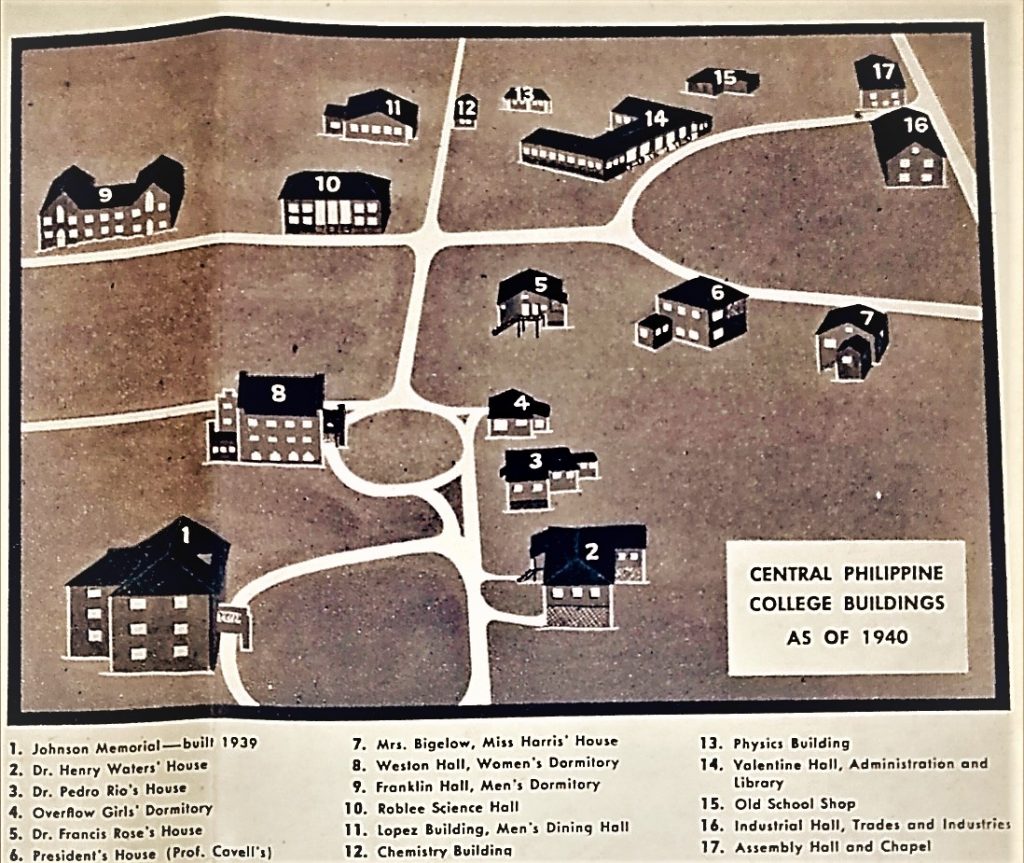
An aerial map of Central Philippine University before World War II.

Here is a portion of his letter:

“At C.P.C. the following have been destroyed: 1. All our books in both libraries, together with the buildings housing them, i.e., the building named after the former Industrial School head (note: Rose was referring to William O. Valentine Hall) and the new building named after the first head of the B.M.T.S. (note: Rose was referring to Anna V. Johnson Hall). These constitute by far our greatest loss, equal perhaps to 50% of our C.P.C. property evaluation, or close to $200,000, as our recent inventory rated them. These were burned by our guests; 2. The chapel has been burned with all furniture except what had been previously looted, together with our new three-manual pipe organ (note: this was located in what is now the Kabalaka Center/Medical Laboratory Clinic); 3. Industrial Hall containing our campus lighting plant and our mission press (which was almost half paid for) (note: this was located in front of the Half-moon drive near the Lopez Jaena St.); 4. The frame house near the road (where the widow lived); 5. The concrete residence, gutted by fire. Nos. 2,3,4 and 5 were burned under the “scorched earth” policy – folly in this instance, as only a very temporary gain was obtained. Still undamaged are, therefore: 1. The Dining Hall for men; 2. The Men’s Dormitory; 3. The Women’s Dormitory; 4. The Science Building; 5. The temporary chemistry building; 6. The temporary Physics Building (new), and 7. Four remaining missionary residences, all frame houses. Apparatus and equipment has very likely been taken or looted.”

Dr. Rose was optimistic that they would come back and re-open CPC after the war. He wrote, “However, there is still a considerable amount of property available for reopening our work when hostilities are over, as the above list will suggest, especially to you who have seen the campus.” But this was not meant to be. Seven months after the letter was sent, the 11 American Baptist missionaries, including Dr. Rose and his wife Gertrude, were martyred because of their Christian faith in Hopevale, Tapaz, Capiz.

Dr. Rose was never able to report anymore because of his death. But after the war, the reported undamaged buildings—Weston Hall, Franklin Hall, and Roblee Hall—were later destroyed during the war.

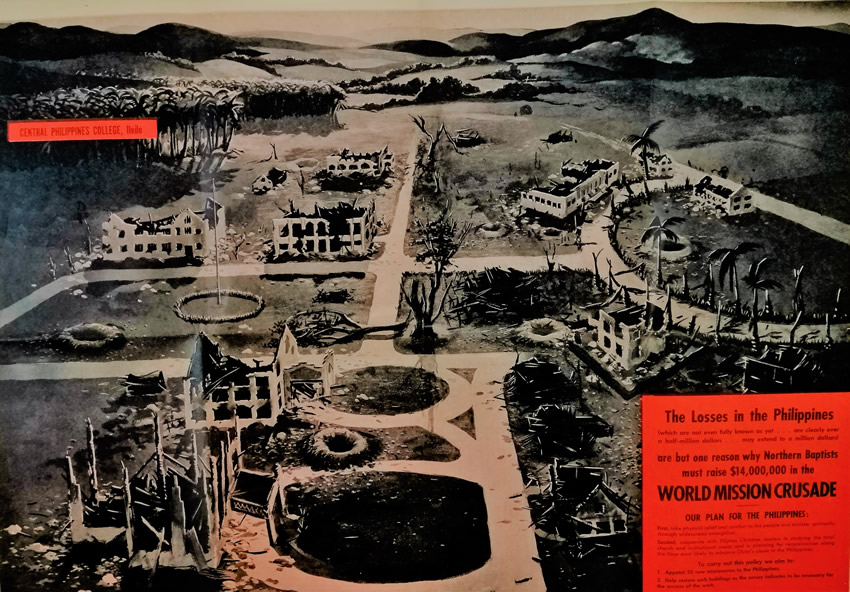
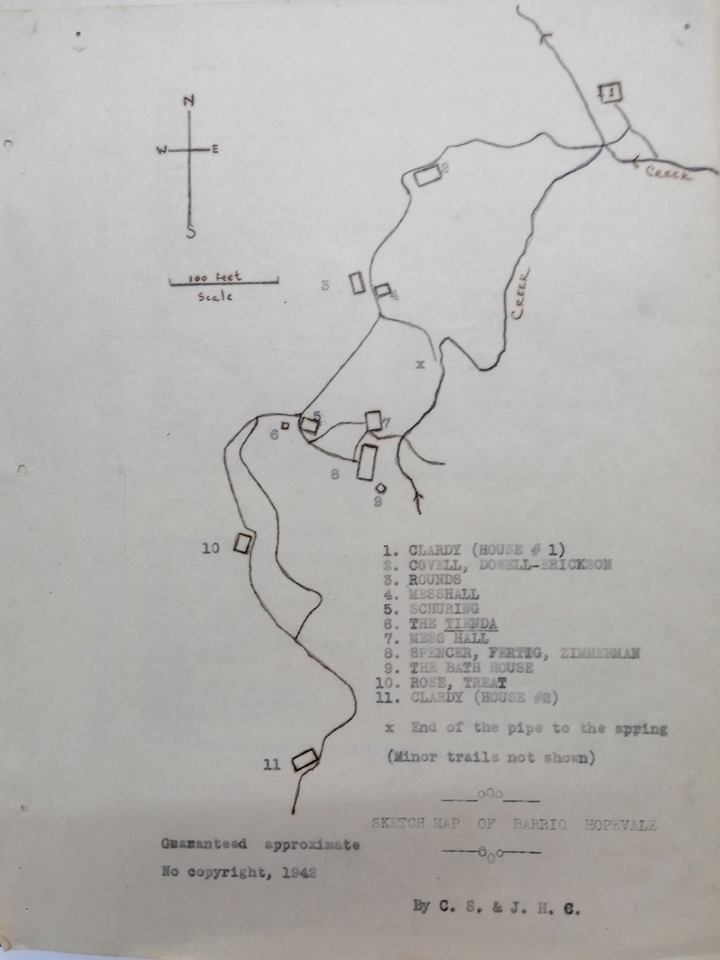
Recently, some archived materials have come to light: an aerial sketch of the campus of Central Philippine College before World War II and another aerial sketch of the destruction that happened in the campus after World War II. What is very interesting in the campus map sketch is that House No. 5 was the home of Dr. Rose and his family. It was destroyed during the war. This was the main reason why the CPC administration decided to build the original Rose Memorial Hall in the very place where Dr. Rose lived. It was indeed a fitting memorial.

On December 17-20, 2018, the Convention of Philippine Baptist Churches will spearhead the Hopevale Diamond Commemoration to be held in Central Philippine University, Filamer Christian University and in Hopevale, Tapaz, Capiz. If you attend, you will surely hear more stories about these American Baptist missionaries and their Filipino counterparts.

The difficult trail to Hopevale

By Francis Neil G. Jalando-on


The wandering trail that leads to the Hopevale Memorial is visited every year by Convention of Philippine Baptist Churches members.

As of 2018, the trail to Hopevale, Tapaz, Capiz is still difficult. However, there are now ongoing efforts to make a Hopevale pilgrimage trail so that people can go there to contemplate and reflect on what happened there. Looking back, more than 75 years ago, one can only imagine the way to Hopevale as the American Baptist missionaries evacuated to that area to hide during the war. There were no trails yet, no pathways to lead them where to go. They were trailblazers who were walking with faith and hope that the war would soon end so that they could go on with their missionary work.


Reflection and remembrance – the trail is a reminder that God paves the way for those who trust in Him.

Jennie Claire Adams, a missionary nurse, evacuated together with 10 other missionaries from then Central Philippine College, Filamer Christian College, and Capiz Emmanuel Hospital between April to May 1942.

On July 12, 1942, Missionary Adams penned a poem relating the trail to Hopevale to her own life’s pathway. Here is her poem:

Life’s Trail on my Wanderings

Through all my wanderings

My Lord has cared for me,

Although the path ahead,

I could not always see.

What though my feet should slip

What though my strength should fail

My Savior holds my hand,

While climbing up life’s trail.

The rocks may bruise my feet,

The thorns may pierce and tear

And heavy seems the load

That I am called to bear

But O, the heavy load,

Christ bore on Calvary

His nail-scarred hands and feet,

Were wounded there for me.

Then I should not repine

A little grief to bear

While He walks by my side

And I am in His care.

His promise I will claim

And trust Him day by day,

He never will forsake

He leads me all the way.

More than a year after writing this poem, specifically on December 20, 1943, Adams and 10 other American Baptist missionaries were martyred because of their Christian faith in Hopevale, Tapaz, Capiz.

On December 17-20, 2018, the Convention of Philippine Baptist Churches will spearhead the Hopevale Diamond Commemoration to be held at Central Philippine University, at Filamer Christian University, and in Hopevale, Tapaz, Capiz. If you attend, you will surely hear more stories about these American Baptist missionaries and their Filipino counterparts.

American Baptist missionaries lived in grass huts in Hopevale

By Francis Neil G. Jalando-on


Where safety and quietness reign, with room for thoughts and dreams and hopes, of peace on earth again – the poetic words of Jenny Claire Adams describing their refuge in Hopevale.

On April 10, 1942, Mrs. Ruth Meyer, wife of Dr. Frederick Meyer, wrote on her diary, “Bataan has fallen.”

The night before, April 9, 1942, 3rd Lieutenant Norman Reyes read the announcement written by Captain Salvador P. Lopez. The opening sentences read, “Bataan has fallen. The Philippine-American troops on this war-ravaged blood-stained peninsula have laid down their arms. With heads bloodied but unbowed, they have yielded to the superior force and numbers of the enemy.”

Six days later on April 16, 1942, the diary of Mrs. Meyer had this entry: “The enemy invaded Capiz and occupied the Mission compound. Frantic times. Night of the bodega looting.” On the following days, the missionaries and nurses in Capiz decided to evacuate and escape to the interior towns or into the mountains. They decided to scatter. On April 25, 1942, Mrs. Meyer wrote, “Evacuated our group to the Ula-ugan River. A new experience to live in grass huts—a feeling of safety in our seclusion.”

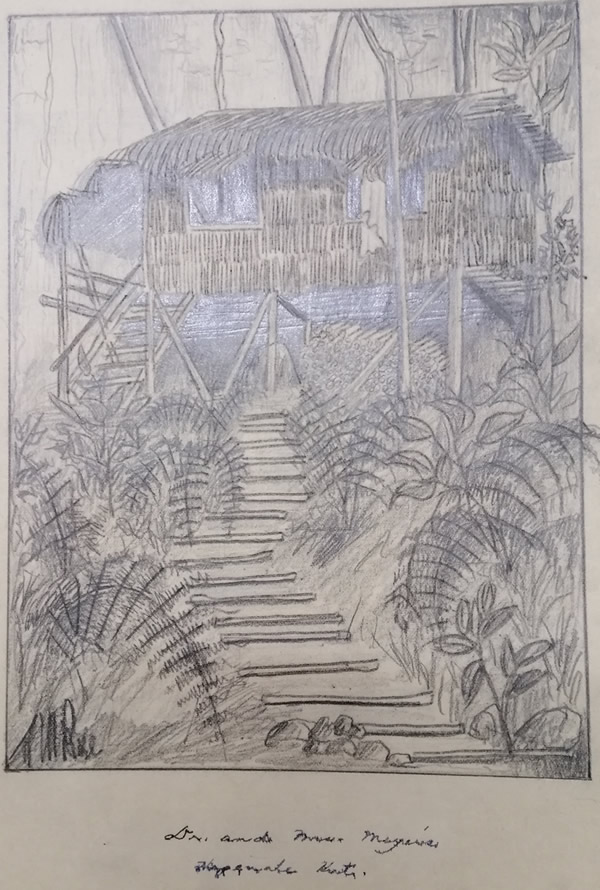
Later on, when the American Baptist missionaries settled in Hopevale, Tapaz, Capiz, they built grass huts as their home. Dr. Francis Howard Rose made a pencil drawing of their grass hut. The original drawing of their home in Hopevale is preserved in the Archives Section of the CPU Henry Luce III Library.

Jenny Claire Adams, a missionary nurse in Capiz Emmanuel Hospital, was with Dr. Frederick and Mrs. Meyer when they evacuated to Hopevale. Upon settling in their place of refuge in the mountains, she wrote a poem, dated May 23, 1942, describing the grass hut of the Meyers. She gave this poem to Mrs. Ruth Meyer on the occasion of her birthday on November 19, 1942.

Hut in the forest

By Jenny Claire Adams

There’s a little grass hut in the forest

Where the trees stand stately and tall,

Lifting their leaves to the sunlight

And catching the raindrops that fall.

Entwined by garlands of verdure

And flowers fragrant and fair

Boughs decked with clinging orchids,

Like flowers in the hair.

O little grass hut in the forest

Where birds gay-feathered and free

Join their sweet songs in medley,

Sharing their joy with me!

Bright fireflies flitting at night time

Like twinkling stars in the trees

Give a cheerful glow to the darkness,

And life to the spicy breeze.

O quiet grass hit in the forest,

With a crystal brook running near,

Gurgling and tumbling over the rocks

Its water so cool and clear

Lovely green ferns grow unhindered

Along the moist rocky banks,

Begonias lift blossoms dew-covered

And offer their silent thanks.

O peaceful grass home in the forest

Where safety and quietness reign,

With room for thoughts and dreams and hopes

Of peace on earth again.

O lovely ravine in the forest,

Where we patiently wait for a while,

Till the noise of the battle is over,

And we end our long exile.

More than a year later after writing this poem, on December 20, 1943, the 11 American Baptist missionaries were martyred because of their Christian faith in Hopevale, Tapaz, Capiz.

On December 17-20, 2018, the Convention of Philippine Baptist Churches will spearhead the Hopevale Diamond Commemoration to be held in Central Philippine University, Filamer Christian University and in Hopevale, Tapaz, Capiz. If you attend, you will surely hear more stories about these American Baptist missionaries and their Filipino counterparts.