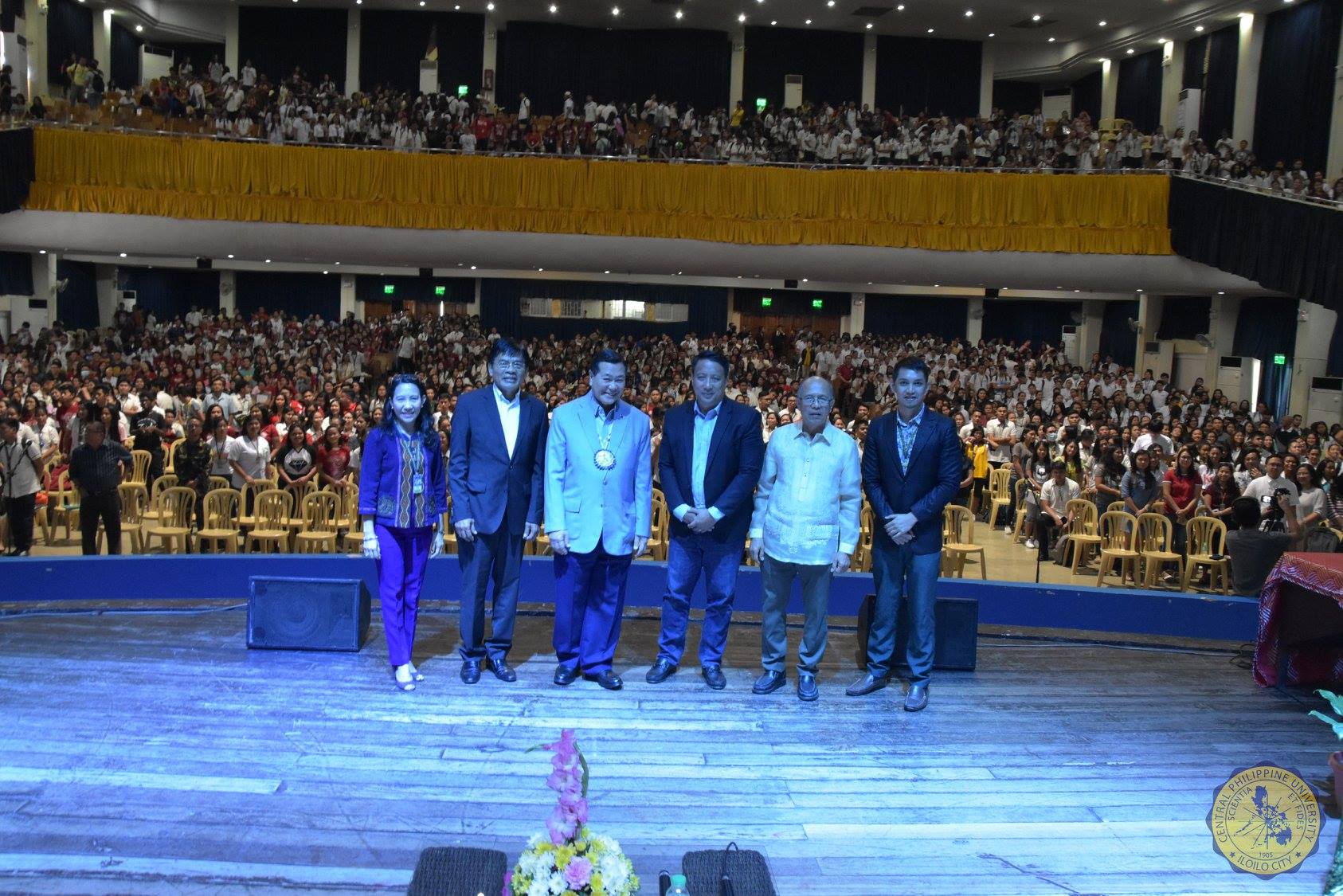
Hon. Antonio T. Carpio, Senior Associate Justice, Supreme Court of the Philippines with CPU Vice President for Administration and Finance, Dr. Florence P. Bogacia, Chairman, CPU Board of Trustees, Atty. Von Lovel D. Bedona, Vice Chairman, CPU Board of Trustees, Atty. Peter Irving C. Corvera, CPU President Dr. Teodoro C. Robles, and Mr. JM Suelo, President, CPU Republic President.
With the aim of enlightening Centralians on significant issues affecting the country, the Central Philippine University administration, Board of Trustees and the CPU Student Republic invited Hon. Antonio T. Carpio, Senior Associate Justice, Supreme Court of the Philippines to talk about the West Philippine Sea sovereignty at the Rose Memorial Auditorium on March 8, 2019.
The opening prayer was led by CPU Vice President for Student Affairs, Rev. Joniel Howard H. Gico.
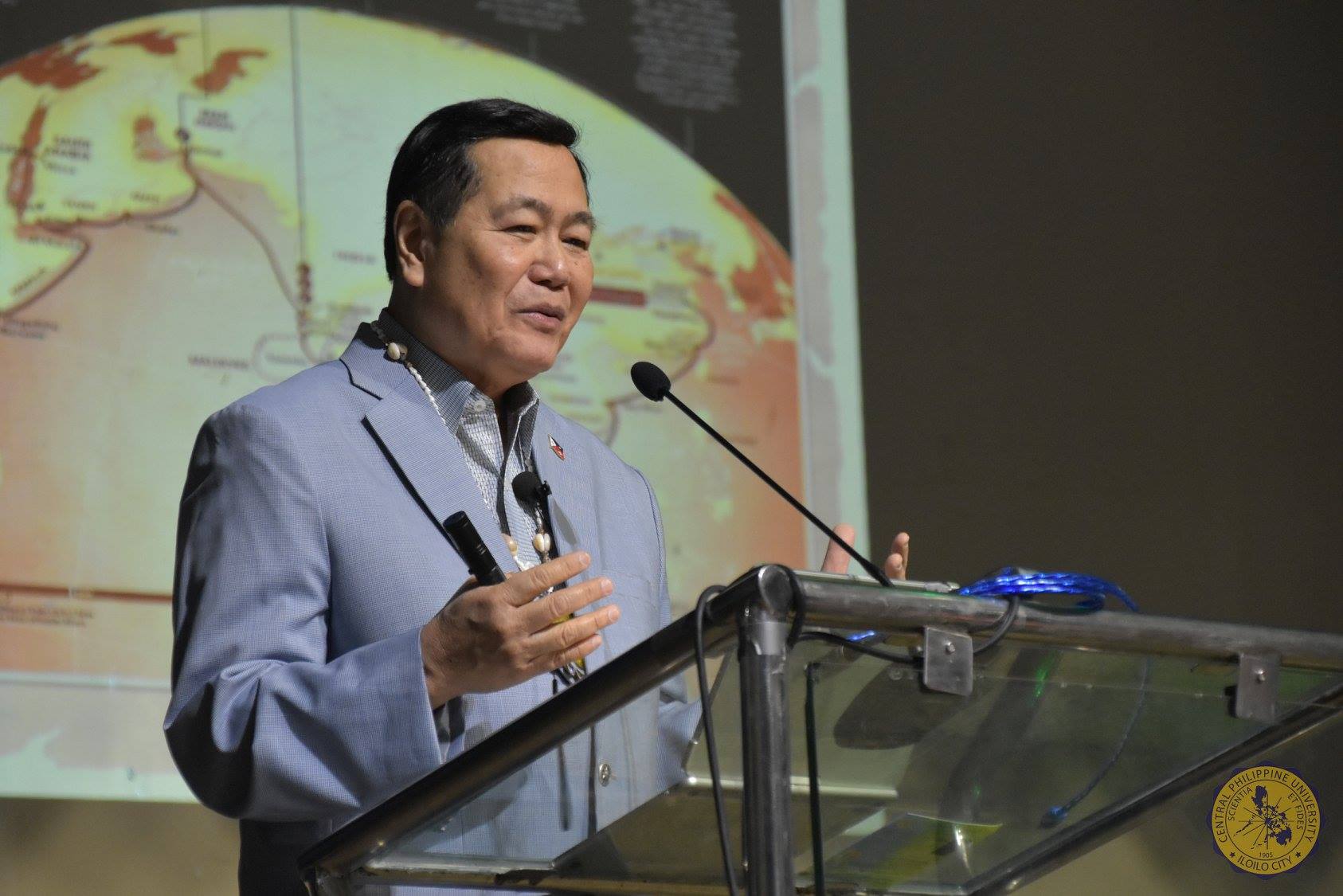
Hon. Antonio T. Carpio encouraged Centralians to be aware of national and international events in order to be aware of the issues that affect the country.
For the opening remarks, Chairman, CPU Board of Trustees, Atty. Von Lovel D. Bedona thanked Justice Carpio not only for being passionate in educating the Filipino people about the issues being faced by the country but also for inspiring Filipinos to love the Philippines and defend its sovereignty. “JusticeCarpio is a man competent enough to take on the issue on the West Philippine Sea. He is a man who took on the responsibility of educating us today for the purpose of protecting the next generation of Filipinos.”
Atty. Peter Irving C. Corvera, Vice Chairman, CPU Board of Trustees, introduced Hon. Antonio T. Carpio.
In his talk, Justice Carpio presented the economic and political significance of the South China Sea. “The South China Sea, to me, is the most important waterway in the world today. It is a very small sea which occupies 2.7% of the ocean’s surface but it is critical for world trade and for world security. $5.3 trillion in ship-borne goods traverse the South China Sea every year. Four leading exporting countries use the South China Sea for maritime and export trade.”
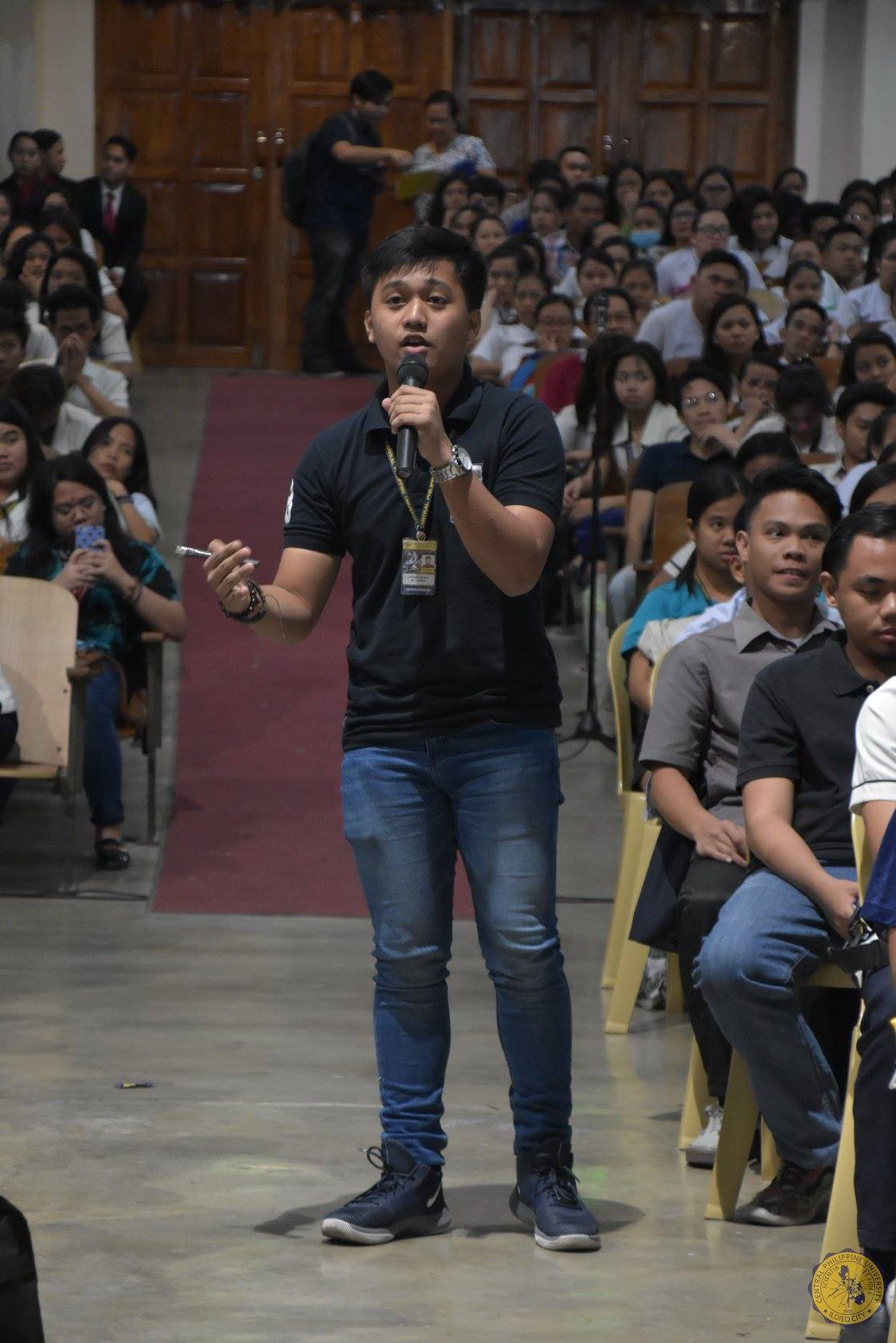
A Centralian asks a question during the open forum.
Justice Carpio goes on to discuss China’s historical claim on the West Philippine Sea. According to him, such rights have no bearing as the United Nations Convention on Law of the Sea extinguished all historical rights of all states. Instead the UN convention gave each state an exclusive economic zone, also invalidating China’s nine-dash-line claim.
A growing need to education and enlighten Filipinos – Justice Carpio encouraged Centralians to help raise awareness on territorial disputes currently being faced the country by being updated on national and international events. He also highlighted the importance of being united as a nation as we uphold our claim on the West Philippine Sea. After his talk, Justice Carpio answered questions from CPU students.
It was then followed by a short message given by CPU President, Dr. Teodoro C. Robles. In his message, Dr. Robles, thanked Hon. Carpio for sharing his time and expertise. He also hopes that Centralians the lessons they learned from Hon. Carpio’s talk will help them make wise decisions in the future. “This [forum] shows that we need more things to learn to make wise decisions that will affect not only our future but the of the next generation’s future.”
After which Dr. Robles, Atty. Corvera and Atty. Bedona presented a token and plaque of appreciation to Justice Carpio.
The closing remarks was then given by CPU Vice President for Administration and Finance, Dr. Florence P. Bogacia.
Albert Jan Matthew Java encourages Centralian to be united as the university ushers in a new set of CPUR officials.
Together in sea of tarpaulins and placards, Centralians, with their cheers, filled the Rose Memorial Auditorium with the Central Spirit—the 2019 Central Philippine University Student Republic Election Grand Rally is a spectacle of the supremacy of the student body in the voting process and their involvement in the future programs and initiatives of the next set of CPU Student Republic Officials.
This kind of exhibition has been witnessed by the university for 113 years. Being the oldest student republic in South East Asia, the CPU Student Republic has been an emblem, inspiring young leaders not only to serve Centralians but the community at large.
Throughout the years, the CPUR Elections have been dominated by two student parties—the Reform Party and Koalisyon Party. Both are veteran student institutions celebrating a deep commitment to student leadership and community service.
Koalisyon takes pride in its 35 years of history in the university. According to Albert Jan Matthew Java, CPUR President 2012-2013, Koalisyon’s beginnings started within the CPU College of Theology: “The real name of our party is Koalisyon ng Demokratikong Mag-aaral Para Sa Sambayanan, Our origins are really from the College of Theology. It [was] actually a coalition of two parties. Koa is a pro-student political party that pushes for the rights of the students. It has withstood the Martial Law; it [has] survived throughout the years.”
Jothamme Enriquez highlights that principled leaders are those who stand for what is right rather than what is popular.
Java became a part of the Koalisyon Party in 2006 when he ran for Board Member of the CPU High School Student Council. His journey with the party has continued to the time when he became the CPUR President until after his graduation as he mentors the next generation of Koalisyon leaders: “The vision [that has] passed on from generation to generation is that Koalisyon is for the students and by the students. Koalisyon advocates for servant-leadership. Being founded by theology students, Koa dwells on the leadership style of Jesus—which is servant-leadership. In order to be first, you have to be last—you have to serve first before you can lead.”
The Reform Party, on the other hand, was established in 2002. It was formed by five Totoong Partido ng Mag-aaral members, who decided to dissolve TPM and instead organize the Reform Party. According to Jothamme Enriquez, CPUR Senator, 2011-2012, Reform offers a liberal approach in its leadership style: “Ever since I became part of Reform, the party really believed in a more liberal approach [to] student government. We want leaders that are firm in their beliefs but open to new ideas.”
When asked what makes a good CPUR leader, Java highlights the importance of intentions not only in serving the students but in committing oneself to the cause of uplifting and protecting the welfare of Centralians: “For me it’s pure intentions; if you have any other ulterior motive aside from the pure intention of serving the student bod, at the end of the day, when you are stuck with all that you have to do, you will always go back to your motivation and intention. And if there’s just one, slight malice in your motivation, you will get tired of serving. If you have the purest of intentions in serving the students, whatever color you represent, whatever party you come from, whatever course you may be, I tell you, you are right for that position.”
Enriquez, on the other hand, shares that one’s principles are the backbone of serving the studentry: “Principles are important. We need student leaders that disregard the colors of the party and work for the entire studentry—even [for] those who did not vote for them. The moment one wins, the colors you represent don’t matter. I hope you do not forget why you are there in the first place. It’s cliché but it’s all about service and [the] principles you stand for.”
Sharing the challenges that come along with being a CPUR officer, Java and Enriquez agree that it is about handling expectations and implementing their events and advocacies successfully that keep them on their toes. “Just like any other person up in a position, there are always expectations. It’s a challenge because it’s always there but you don’t have to be stressed about it. It’s just a challenge; you can do something about it. At the end of the day, it’s how you manage those expectations and criticisms. You are in control of how you react. You have to react out of love,” Java says.
For Enriquez, the success of every activity depends not only on the CPUR officials. It is the entire student body participating and helping one another that ultimately determines how efficient the CPUR programs and initiatives are: “I hope we help the CPUR Officers because it’s a two-way street. Their activities won’t be as successful if we do not participate. I hope that students will also give credit to their CPUR officers because it’s motivational on their end and encourage them to do more—when [they] see the students enjoying or benefiting from what [they] did, even if [they] just work on the sidelines; when people remember [them] as a student leader serving and giving [their] best for CPU. Being in the CPUR means working behind the scenes most of the time—and it entails a lot of work.”
Emphasizing the Central Spirit, both student leaders share how their fellow CPU alumni mentors help them in their leadership journey. “We have that feeling of interconnected-ness with our alumni and [the alumni] always do what we can to mentor the next generation. We don’t just want to prepare them for the CPUR positions, we want to prepare them for the real world,” Java shares. Enriquez adds, “Until now, we still communicate with our adviser and other fellow alumni who are also part of Reform. We have developed a strong sense of commitment of serving the studentry and along the way, we also gained strong connections and friendships with one another that really embody the Central Spirit.”
As for their message to the Centralian community as the CPUR transitions to new student leadership in the next school year, Java and Enriquez encourage Centralians to be united and set aside party colors. “Let’s forget about the red and the green and go back to the blue and the yellow,” Java urges.
Enriquez also encourages those candidates who did not win to continue serving Central in their own capacity. According to her, the opportunity to serve is not limited in being a CPUR official: “There are so many ways to serve Centralians. You don’t have to be in the CPUR to serve. It’s a wrong notion to believe that you have to be in position to help your fellow Centralians. At the end of the day, yes, the CPUR primarily serves the students but behind the CPUR are also volunteers and willing Centralians, [who] help. The CPUR officers cannot do the task alone.”
As CPU welcomes a new era of student leadership, both the Koalisyon and Reform are united in serving Centralians. At the end of the day it is not the colors they represent during the election but the service and commitment they offer to Centralians for the pride of Central and, most importantly, for the glory of God.
Rev. Joseph Morris Forbes encouraged Centralians to establish a legacy of excellence and faith.
Social media nowadays has a feature which shows your “memories” or enable you to “rediscover your day.” This is because we love to dwell on the fond memories that we have. Along this vein, Central Philippine College President, Rev. Joseph Morris Forbes, wrote to Centralians in 1949, “As one of your teachers and counsellors, I hope and trust that you are happy in your memories… But I hope that they are not too satisfying. Those who do not have some inter-mixture of disappointment in their memories will never press on to a higher achievement. As true Centralians, you consider life as an ascending pathway; thus, tomorrow must be better than today.
Rev. Forbes became Acting President of Central Philippine College on September 19, 1947. He handled the tremendous job of rehabilitation, reorganization and administration. He also taught philosophy, the subject nearest to his heart; English; sociology; education; and Bible. As a pastor, he emphasized the Christian education that Central offers. He said, “There is a great place for the kind of Christian education that is being offered here at Central. More and more, the Philippine government will need good Christian leaders of faith and integrity.”
As we face a world today in which success is sometimes defined by the amount of material resources that we have, we have to be reminded of the words of Paul in 1 Timothy 6:10 that says, “For the love of money is a root of all kinds of evil. Some people, eager for money, have wandered from the faith and pierced themselves with many griefs.”
In the same manner, Central Philippine College President, Rev. Joseph Morris Forbes, wrote to the class of 1950, “May every sacrifice that your parents and you have made bear some very real fruitage in providing you a means of success, and as Centralians, you know success to be measured in terms of spiritual values, rather than in material emoluments.”
However, Rev. Forbes was not just a philosopher. He was also “a doer, an indefatigable worker, a man of action.” The 1955 CPU Golden Book of Remembrance says this about him: “He would often be seen not only directing, but also working with the road workers. He was just as friendly with them as with the faculty and students. When walking the campus, he can be seen setting a stone in its right place or pulling out some unsightly weed or picking up pieces of paper. Rev. Forbes bending over a hoe, or carrying some stray piece of lumber or scrap iron, or pushing the lawnmower, was a common sight.”
All throughout these years, Centralians from 1905 up to the present, are challenged to excel in every endeavour that they face, and to become exemplary in their actions. Rev. Forbes has left us a challenge to make a lasting mark in this world—“As Centralians, each of you must make a worthy achievement in the realms of service to our present day community life. The College program has endeavoured to make you aware of the standards of Christian citizenship in a deeply troubled world. It has sought to inspire you to commit your life to that valiant struggle for a world of justice and brotherhood (sisterhood).”
(References: Centralite 1949, 1950, Golden Jubilee Year 1905-1955 Souvenir Program)
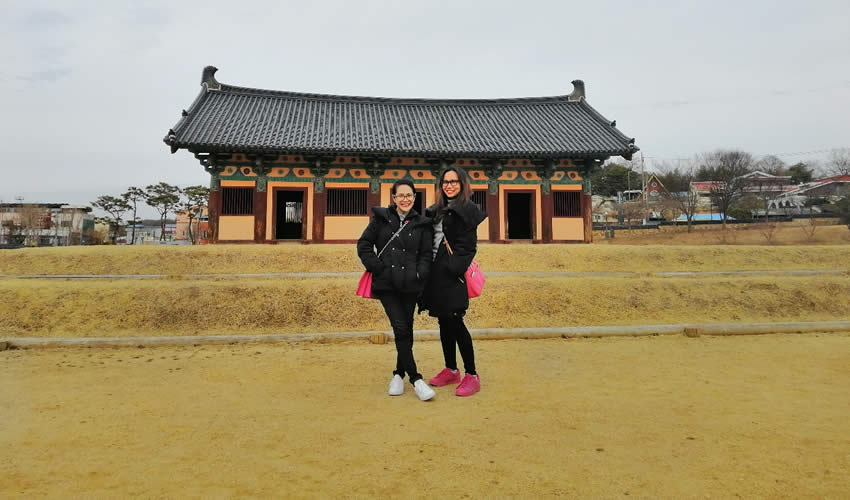
Prof. Sharlene Gotico and Prof. Mellianne Mangana stayed for one year as exchange professors at the Korea University of Media Arts (KUMA) in Sejong-si, South Korea.
Prof. Sharlene Gotico of the Department of Languages, Mass Communication and Humanities (DLMCH) and Prof. Mellianne Mangana of the Senior High School Department are back at Central Philippine University after completing a one-year Exchange Professor Program at Korea University of Media Arts (KUMA) in Sejong-si, South Korea.
Prof. Gotico and Prof. Mangana left for Korea in March 2018. While at KUMA, they handled English language credit courses for university students. At the same time, they also taught English classes for the university’s after school program and during the summer and winter language camps. They also had English enrichment classes for dormitory residents.
This Exchange Professor Program is one of the activities undertaken by CPU and KUMA as stipulated in the Memorandum of Understanding between the two universities. For many years now, CPU has been sending teachers to KUMA to teach English classes in the said university. A few years back, KUMA students were at CPU to participate in the short-term English classes facilitated by the Office for International Relations and Cooperation and taught by professors from the DLMCH.
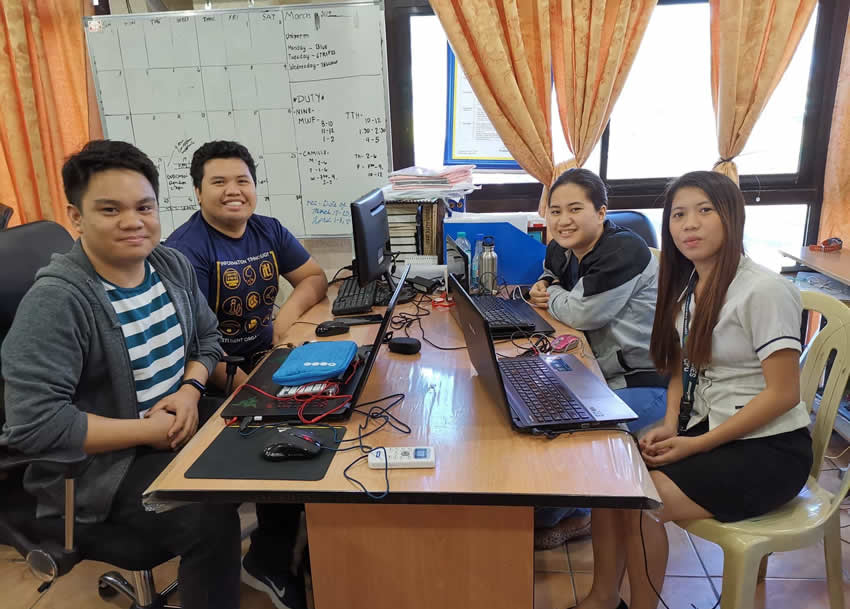
RV E. Esgrina and Ren Lurenz B. Madrilejo (both left) hopes that the CPU Mobile Info app will promote the university here and abroad.
After re-launching The Centralian Link, the official publication and media forum of Central Philippine University, the Office of Communications, headed by its Director, Rev. Francis Neil G. Jalando-on has been exploring initiatives to further improve the efficiency of delivering news and information to Centralians here and abroad.
Thus on January 14, 2019 with the guidance of University Webmaster, Mr. Mark Clemens J. Ortaliz, Office of Communications on-the-job trainees RV E. Esgrina and Ren Lurenz B. Madrilejo took on the task of developing the “CPU Mobile Info” Application – a downloadable android mobile app for the public to give them real-time information and announcements of university events, entrance examinations, etc. It is also user-friendly version of the university website.
Esgrina and Madrilejo are both senior students taking up Bachelor of Science in Information Technology at the CPU College of Computer Studies. According to Esgrina, the purpose of developing the app was not only to keep up with the technological trends but to make it easier for Centralians to navigate the CPU website through their mobile phone. “The app will give Centralians easier access to information and announcements through their mobile phones which is more convenient. It will also give other people a chance to get to know the services offered by the university in a user-friendly portal.”
Madrilejo shares that the task of developing the app wasn’t easy but with the guidance and support of the Office of Communications they were able to come up with an interface that responsive to the needs of the community-at-large. “At first we doubted if we can really make the app but Sir Mark encouraged us in every step of the making the app.”
The app provides simple mobile navigation for easier access.
As a tag-team, Esgrina was responsible for the mobile interface while Madrilejo took on the task of developing the content. Madrilejo shares that while developing he learned new things about the university such as its history and other significant events. “The app will really help you get to know CPU.”
CPU Mobile Info provides a simple platform that will help users know more facts about the university, its job openings, school calendar, etc. It also provides a feedback mechanism to provide an on-line assessment of the services and programs offered by CPU.
One salient feature of the app is its easy access to Seeds of Faith, a daily devotional guide for readers. Such feature highlights CPU’s commitment in sharing the Word of God not only to Centralians but to the world-at-large.
According to Rev. Jalando-on, the Office of Communications is set to launch the said app in Google Play Store on April 2019. Meanwhile, you can download the latest beta version of this Android app in https://www.dropbox.com/s/z4355mttlvqvlxb/cpu_app_m_v14.apk?dl=0
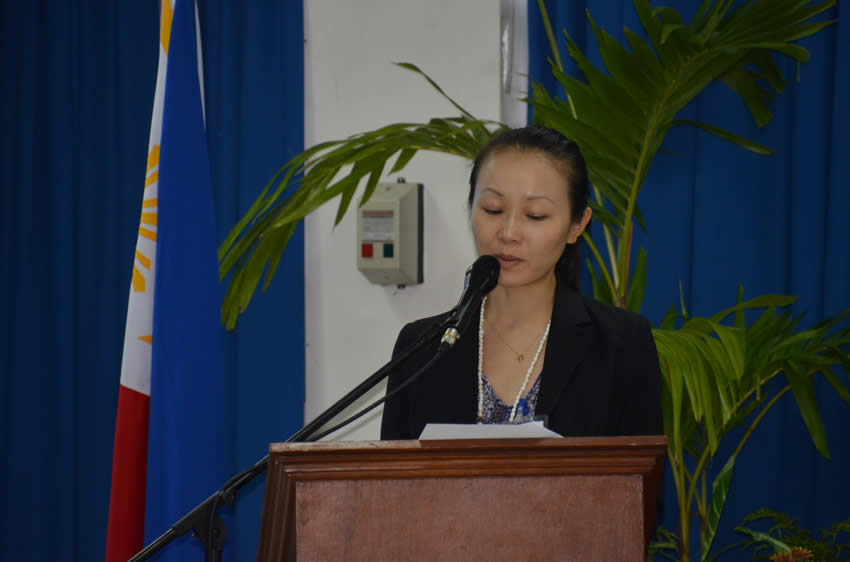
Ms. Rong Qian, Senior Economist, World Bank, highlights the importance of working together to move forward economically.
ILOILO CITY, March 21, 2019 – To propel shared growth and prosperity, the country needs to focus on creating more and better jobs, upskilling its workforce, investing in health and nutrition, focusing development efforts in Mindanao, and managing disaster risks. Further, policy reforms are needed to remove constraints in domestic and foreign competition, regulations that stifle entrepreneurship and small and medium-enterprises and restrictions on foreign participation in the economy.
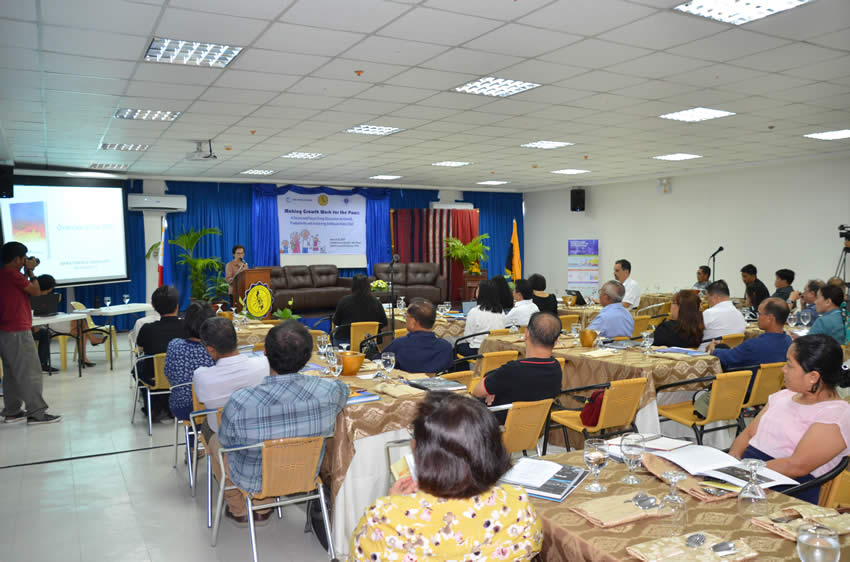
These are among the highlights of the discussions during the multi-sectoral forum on Making Growth Work for the Poor held March 21, 2019 at Central Philippine University (CPU) in Iloilo City.
The forum—jointly organized by CPU Knowledge for Development Community (KDC), the National Economic and Development Authority (NEDA), and the World Bank—focused on growth and productivity as milestones for achieving AmBisyon Natin 2040, the country’s long-term vision of matatag, maginhawa, at panatag na buhay.
It sought to generate discussion of development issues using the World Bank’s poverty assessment and productivity reports, engage with stakeholders from government, civil society, and the private sector in the regions, provide input to the World Bank country partnership framework for fiscal year 2019 to 2022, and provide input to NEDA’s upcoming regional consultations for the Philippine Development Plan (PDP) Midterm Update.
Ms. Teresa Guadalupe, Senior Economic Development Specialist of NEDA Region 6 discussed the economic and social progress in Western Visayas.
Mr. Reynaldo Cancio, NEDA Director of the National Policy and Planning Staff, said, “We have taken major strides in our reform agenda but more is needed to keep growth working for the poor.”
Ms. Teresa Guadalupe, Senior Economic Development Specialist of NEDA Region 6, presented the region’s progress toward AmBisyon based on PDP and the Regional Development Plan.
As input to the discussion, Ms. Rong Qian and Ms. Sharon Faye Piza, Senior Economist and Economist respectively of the World Bank, presented the highlights of two reports: Making Growth Work for the Poor: A Poverty Assessment for the Philippines and Growth and Productivity in the Philippines: Winning the Future.
KDCs comprise 19 universities, policy and research institutions in the Philippines that promote knowledge sharing about development issues, in partnership with the World Bank Group.
The KDCs nationwide include Asian Institute of Management in Makati (Makati city); Ateneo de Naga University (Naga City); De La Salle University – Jesse M. Robredo Institute of Governance (City of Manila); House of Representatives KDC (Quezon City) National Economic and Development Authority (Pasig City); Notre Dame University (Cotabato City); Palawan State University (Puerto Princesa City); the Philippine Institute for Development Studies (Quezon City); Saint Paul University Philippines (Tuguegarao City); Silliman University (Dumaguete City); the University of San Carlos (Cebu City); University of Southeastern Philippines (Davao City); University of the Philippines Los Baños (Laguna); University of the Philippines School of Economics (Quezon City); Western Mindanao State University (Zamboanga City); Xavier University – Ateneo de Cagayan; and the World Bank Office in Manila.
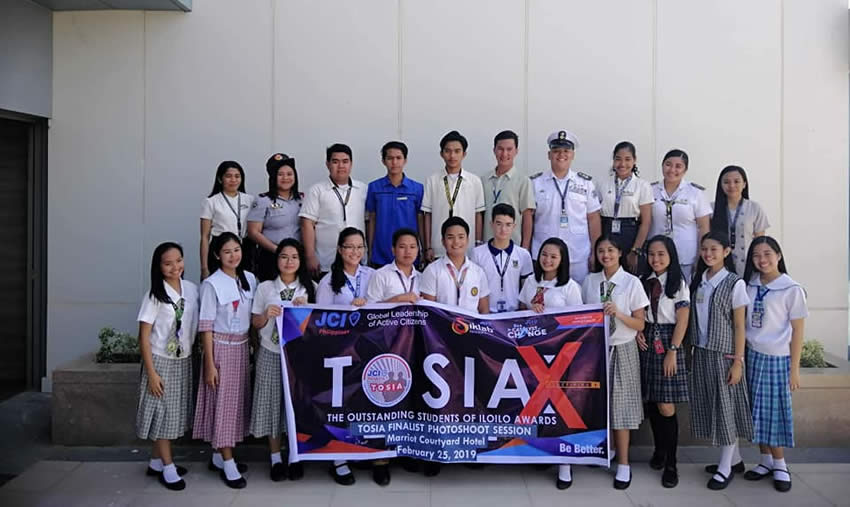
Recognizing student leaders and young innovators in Iloilo – TOSIA semi-finalists in their group picture. Photo Credit: Sandro Silverio
Centralians Peter John Abaygar, Chriselda Elaine Ador, and Vance Raphael Praire were hailed as finalists in the 10th Search for The Outstanding Students of Iloilo Awards (TOSIA) during the recently concluded awarding ceremony, Salute to Excellence, at Robinsons Place Iloilo, Iloilo City on March 17.
Peter John Abaygar, a 5th Year Bachelor of Science in Civil Engineering and the incumbent governor of CPU College of Engineering, and Niegil Libo-on, from the College of Arts and Scienceswork student and a CPU Republic Senator made their way to TOSIA Circle of Five College Category. Meanwhile, Vance Raphael Praire, of the CPU Junior High School is part of the TOSIA Circle of Five Junior High School Category.
Abaygar, in his speech, shared that his inspiration to do and excel more were his parents who always supported him when it came to his extra-curricular activities. He also highlighted the importance of his college as he received the said award. Abaygar was also proclaimed as the TOSIA Speaker and TOSIA Leader.
Libo-on, on his part, stressed how proud he was to be a CPU work student. He emphasized that work students were more than just work students. He gave himself as an example of a work student who was also a “youth leader, a community builder and now, a TOSIA Circle of Five.”
Praire, on the other hand, acknowledged how his journey to TOSIA went from being a Color Guard for last year’s TOSIA Awarding Ceremony, and now, belonging to the TOSIA Circle of Five.
Junior Chamber Inc. Regatta on its 10th year Search for The Outstanding Students of Iloilo Awards recognized institutions that have TOSIA Finalists for five consecutive years in which CPU Junior High School received a citation.
The awardees are grateful for the support of the administration, their coaches and mentors, and most especially to God, who sufficiently gives heavenly wisdom and strength.
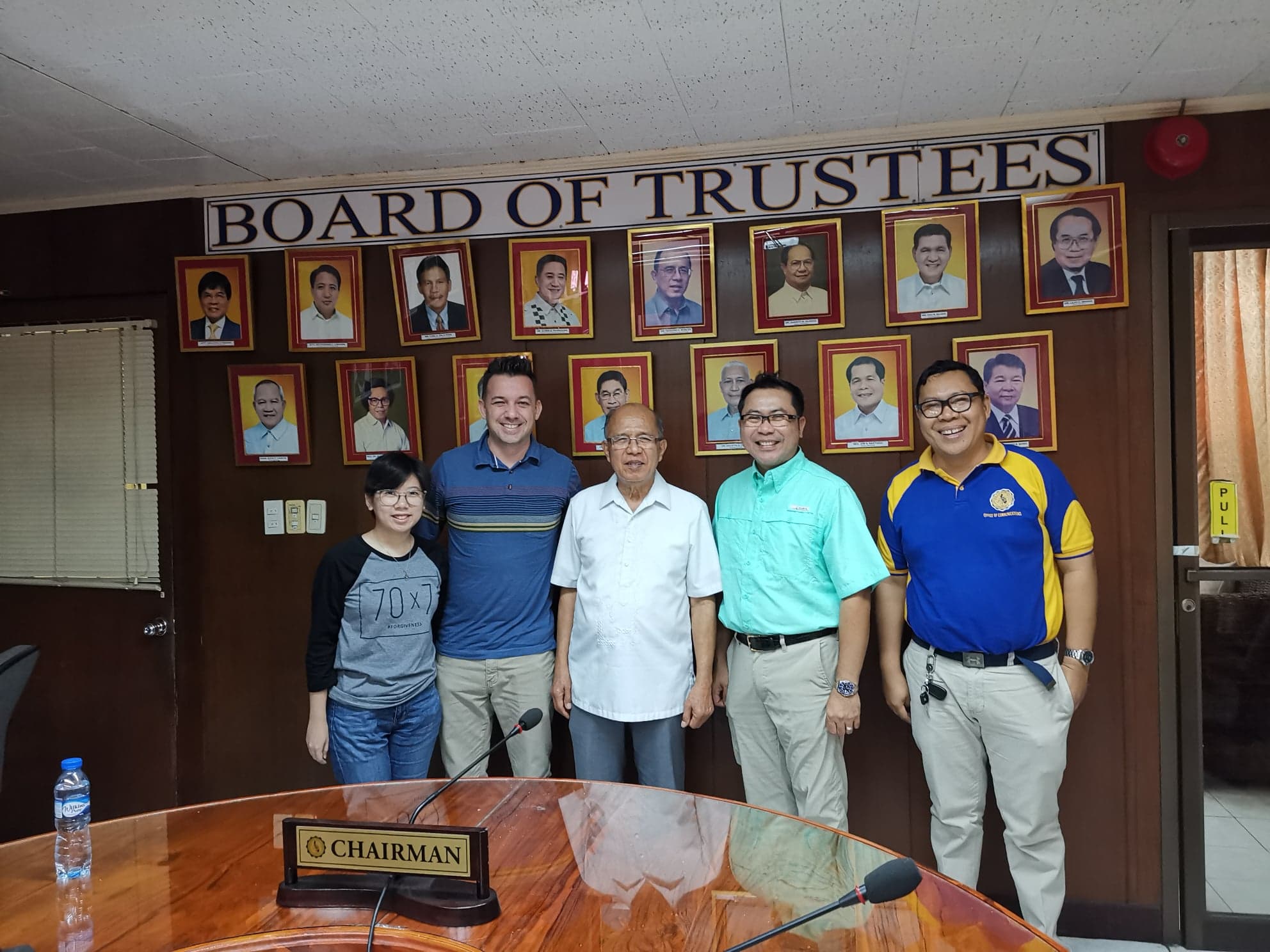
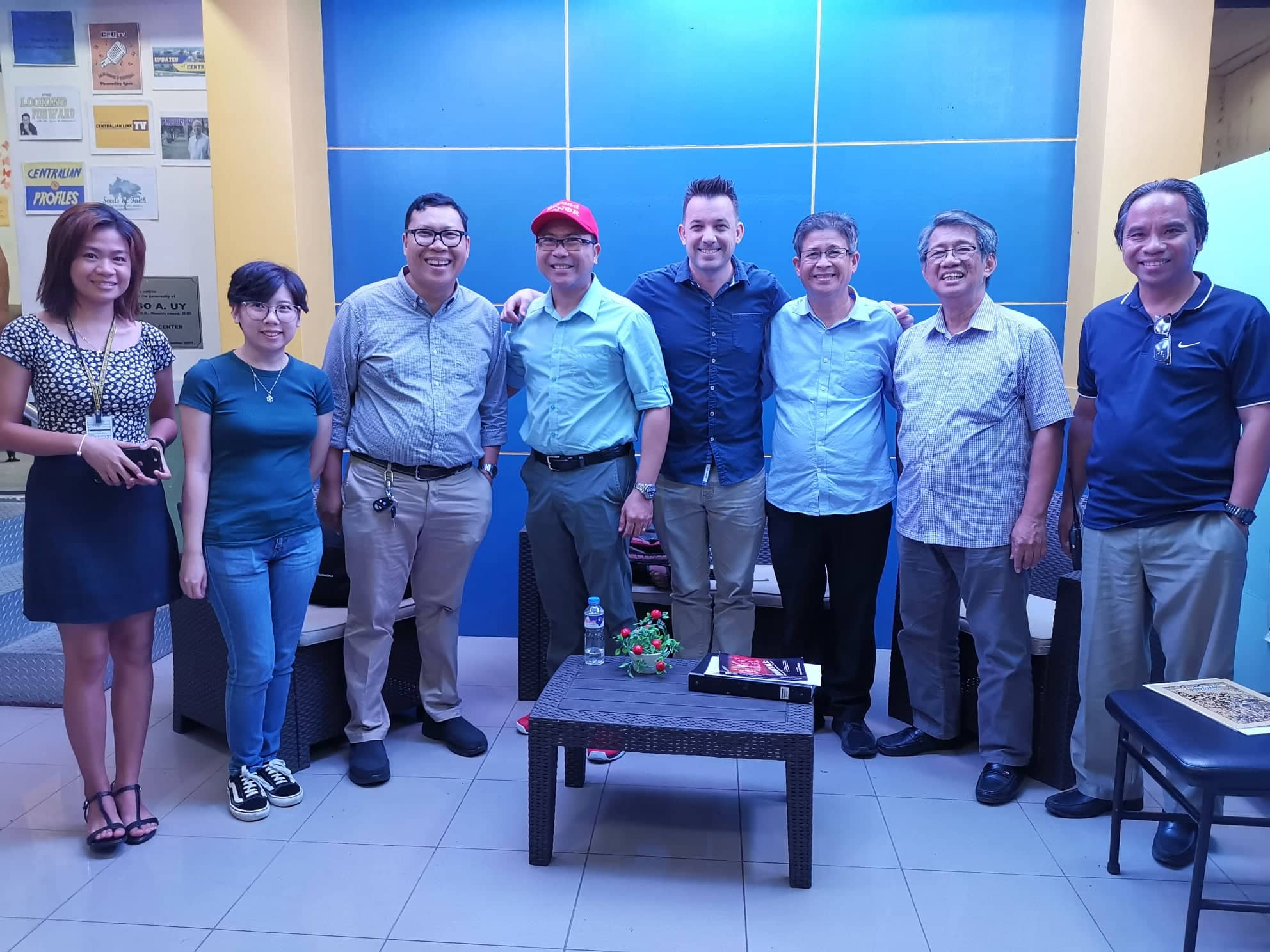
Mr. Francis Lara Ho (second from right) with CPU President, Dr. Teodoro C. Robles and CPU Office of Communications Director, Rev. Francis Neil G. Jalando-on.
An epiphany – a dazed sunrise peaks as an orchestration of sound and sight reveals the beauty of the university campus, footsteps and conversations about life, love and study echo the air, it is another dawn at Central.
For Francis Lara Ho such a display is credited to the faithfulness of God and His abundant grace. A graduate of the CPU College of Nursing in 1994, much of Ho’s life is grounded in his commitment to serve God and share His gospel to the four corners of the world.
His testimony is one of unwavering faith and overwhelming favor.
A nurse, missionary and businessman, Ho shares that his faith as a believer flourished during his stay as a student in CPU. “Here in CPU my faith grew. I was a believer before I came [to CPU] but when I came here it was like being planted in a garden where it is so fertile – and so here, my roots got deeper, my trunk got stronger, my branches grew a lot of fruits that allowed me to weather the storms of life.”
Coming back to CPU was a powerful experience for Ho, his purpose was not only to re-visit memories of the campus but to research and gather information for a production of a movie based on the lives of the Hopevale martyrs. “We want to produce the very powerful story [of the Hopevale martyrs]. [Visiting the site where the martyrs died] I did not expect to shed a few tears – it was sacred ground to put yourself in the position of the missionaries where they bled and died and because of that we [left] with inspired and transformed hearts.”
According to Ho, they plan to premier the said movie on December 2020 and have it globally distributed by February 2021.
Mr. Francis Lara Ho together with CPU Office of Communications Director, Rev. Francis Neil G. Jalando-on and Rev. Dr. Jerson B. Narciso, CPBC General Secretary.
Sharing his desire to produce such a movie, Ho highlighted the significance of the martyrs’ testimony in encouraging believers to live their faith to the fullest and share the gospel to all nations.
As for his experience in the ministry, Ho has served as missionary in the countries of China, the Middle East, the United States and many others. Although the journey was not easy, Ho shares that God has been continually faithful in providing him strength and perseverance to uphold the gospel. “I left Iloilo with God’s promise that he will provide and strengthen and [He never failed me].”
Ho encourages his fellow Centralians to walk with God and to pursue His will and purpose. “If you’re a Centralian here or out there, walk with God. I’m not that old; I’ve seen the world; I’ve been to many countries; I worked as a missionary, a nurse and a businessman and it all boils down to one thing – your relationship with God, nothing else matters. Impact people’s lives by inspiring them with your life, impact them for Christ. And lastly, be proud of your legacy as Centralians.”
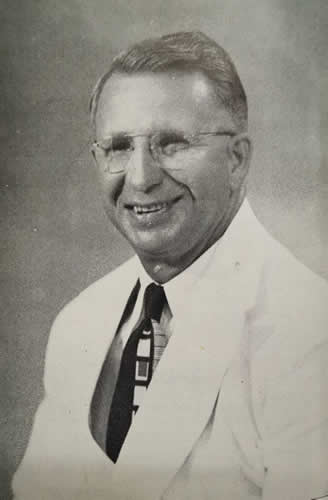
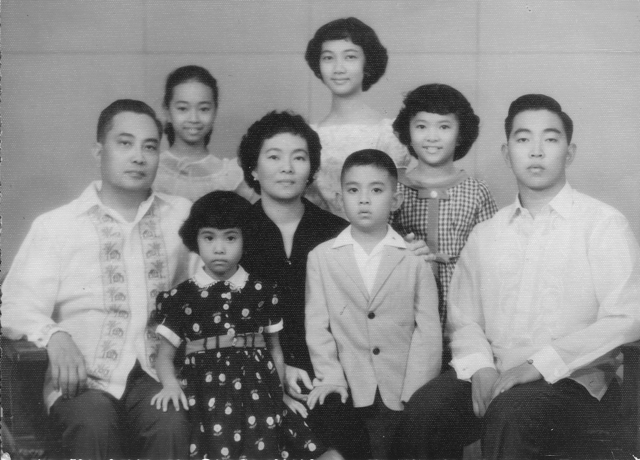
Dr. Eduardo J. Gonzaga and his family devoted their lives in the service of Centralians.
Have you passed by the Gonzaga Mansion near Gate 7 and wondered who owned it before it was donated to CPU?
The original owner of the house which is now a CPU hostel was the Gonzaga family, led by their patriarch Dr. Eduardo J. Gonzaga, an eye surgeon. Dr. Gonzaga was the Chairman of the CPU Board of Trustees when Central Philippine University celebrated its Golden Jubilee in 1955.
Writing in the context of 1955, Dr. Gonzaga reflected on CPU’s role in relation to the Philippines and the whole of Asia: “In the dynamic nationalism that is burning in the hearts of the Asiatic countries and elsewhere, there is an outstanding need for a unique institution like Central Philippine University. For here, the cardinal principles of democracy, freedom of worship, freedom of speech, freedom of thought and freedom of press are taught and practiced by the faculty and students. The future leaders of the Orient must be grounded in these democratic doctrines or Truth dies and Tyranny reigns supreme.”
Dr. Gonzaga was particularly thinking about what was happening in China when the communists took over the country in 1949.
Dr. Gonzaga challenged the Centralians to always shine in whatever they do, and for the university to excel in the country. He said, “…When I spoke to a group of Central people, I pointed out to them a motto that has always challenged me and which, I think, should challenge you: ‘Second best is never good enough.’ This seems a very idealistic precept, but it rings true against the anvil of experience.” Dr. Gonzaga, at that time, was referring to the historical milestone that CPU has achieved since its very humble beginning. The university status of the school was just two years old from April 1, 1953.
As Chairman of the CPU Board of Trustees, Dr. Gonzaga reminded everyone of the value of hard work and the legacy of the work study program of the university: “Central, as far back as I can remember, has taught us the dignity of labor and, along with it, the power to think. She has taught us the virtues of truth and honesty and has awakened in our consciousness a most important thing called conscience. These cannot be found in your textbooks, and there is no other place where these are more clearly seen and lived than in Central.”
Recalling his time as a student of Jaro Industrial School, he wrote, “Thirty-five years ago I stood looking at the four buildings that made the Jaro Industrial School There were only a few of us then, a mere handful compared to your more than two thousand. Most of us then wore bakya instead of shoes, and some were barefooted. Many of us were working students and poor boys… It has not been an easy task, the going being uphill as most of us can remember. We are by no means on ‘that top’ yet, but the past has shown us that we can eventually get there.”
If Dr. Gonzaga were alive today, then he would see that his vision has been fulfilled. CPU is now the only university in Iloilo which has an autonomous status granted by the Commission on Higher Education. It ranks no. 1 in Western Visayas, and no. 18 in the Philippines for the most number of academic programs hailed as Centers of Development and Centers of Excellence based on the list of the Commission on Higher Education.
The son of Dr. Eduardo and Mrs. Anita Gonzaga is Dr. Otoniel Gonzaga, a world renowned tenor who was the first and the last Filipino tenor to sing Verdi’s Otello. Central Philippine University conferred the honorary Doctor of Music degree to Otoniel for his extraordinary achievements in the field on March 2001. A few years ago, the Gonzaga family donated the Gonzaga Mansion to Central Philippine University which is situated in two lots. The adjacent lot, which was bought by Central Philippine University, will soon be the place where a modern dormitory will be built
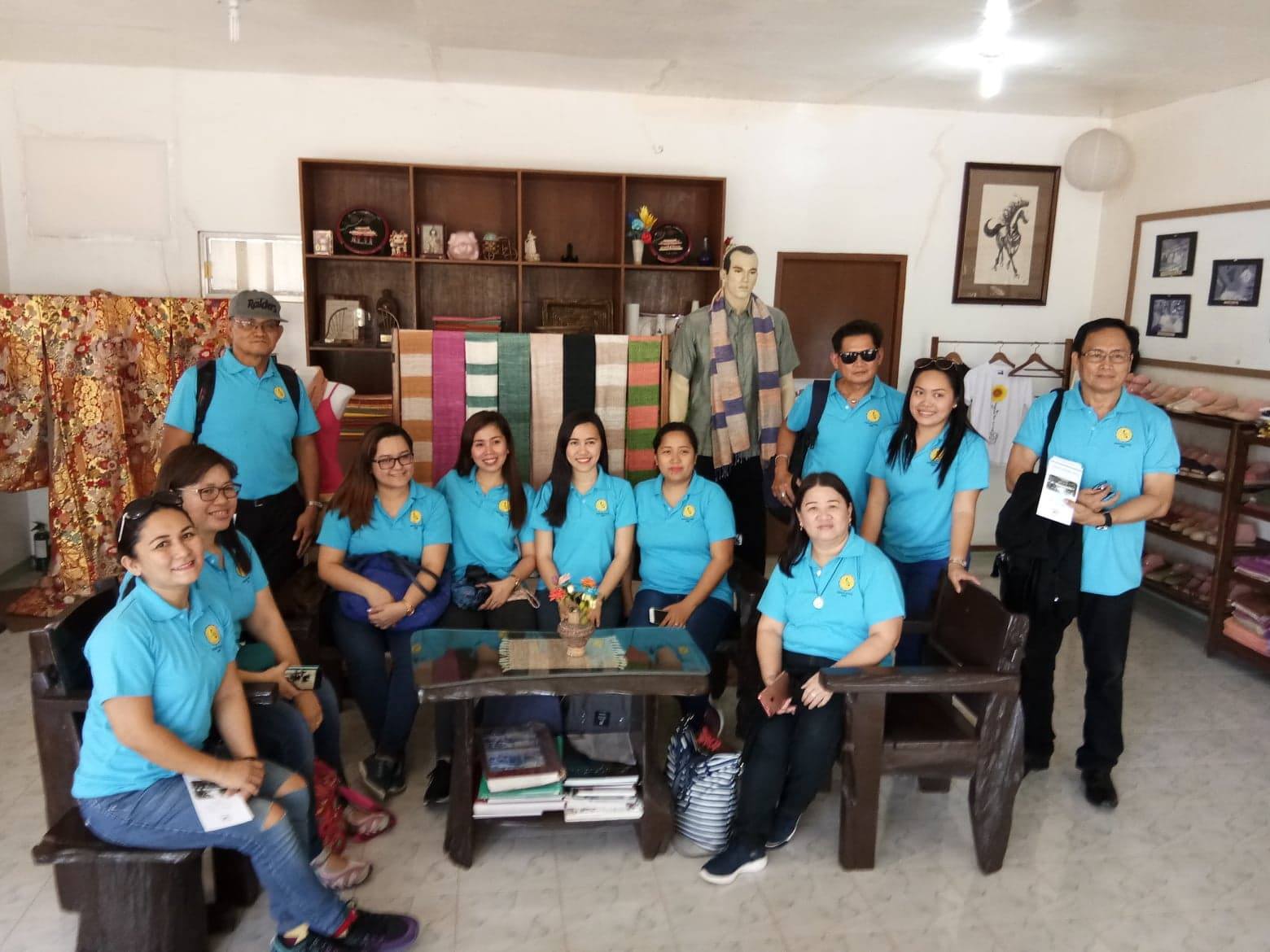
Dr. Mario Tajanlangit (far right) with his graduate students.
On March 18, 2019 the International Marketing Class (D. Mgt. 736) of Dr. Mario Tajanlangit made an in-depth study of two prominent industrial enterprises in Bacolod City and Bago City, Negros Occidental. They studied the silkworm textile production of the Organization for Industrial, Spiritual and Cultural Advancement (OISCA) in Bago City and the timeline of development and production of Bacolod City’s popular product BongBong’s piaya.
OISCA is a Japan-Philippine cooperation enterprise originally established to educate and train young people in agriculture. Later, it developed a silkworm production laboratory in a 20-hectare lot in Brgy. Tabunan, Bago City. The property was donated by the governments of Japan and the Philippines. The integration of silk production created a demand for local consumption and indirect exportation of silk. The industrial development grew as employment progressed with the out of school youths and jobless folks in nearby communities.
The group of CPU graduate school students was shown how the valuable textile is produced. From the production of the silkworms, to the release of white silk substance, and to the making of artistic and colorful textiles. The students made observations and asked questions of the trainees and operators of the facility to get an understanding of the whole operation.
OISCA’s enterprise also produces medicinal and beauty products from organic plants grown by the students. Silk sandals and ternos are elaborately produced with silk materials from OISCA’s production labs.
According to one of the technicians, what sets apart OISCA is its practice of social responsibility: “Social entrepreneurship is complimentary to social responsibility.”
On the other hand, Bong Bong’s Pasalubong Center produces the delicious piaya which is supplied all over Bacolod and Panay. Remarkably, they produce 35,000 piaya daily, not counting the pastries, barquillos, and other bread products.
The piaya factory also prides itself with three more facilities in the outskirts of Bacolod. They also serve tourists and students, and they have their own training center for their staff and marketing representatives.
The visiting group was allowed to cook their own piaya and they were then given the product they produced for free.
BongBong’s Piaya can be considered as the fastest growing delicacies enterprise in Bacolod City. The family enterprise started with very small capital of 1,600 pesos. Because of the family’s dedication and determination, the small bakeshop became what it is today—the BongBong’s Pasalubong Center. However, the company has decided to not branch outside of Western Visayas. They wish to adhere to the concept of selling their products to tourists from coming from the other parts of the Philippines and the world.
BongBong’s Piaya’s marketing mantra is “Ikaw lang, wala nang iba.” This expresses their dedication to serve the best products to their customer, and thereby gain their customer’s loyalty to buy only from the best.

 CPU Articles